Citizen Portal
Sign In

Spotsylvania board directs rules for data centers after months of public concern

Spotsylvania County Board of Supervisors · October 28, 2025

Loading...

AI-Generated Content: All content on this page was generated by AI to highlight key points from the meeting. For complete details and context, we recommend watching the full video. so we can fix them.

Summary

After hours of public comment and a joint work session with the Planning Commission, the Spotsylvania County Board of Supervisors directed staff to draft data‑center development standards that preserve vegetation, establish a 300‑foot buffer in sensitive contexts, require view‑shed analyses, and cap I‑2 building height at 75 feet.

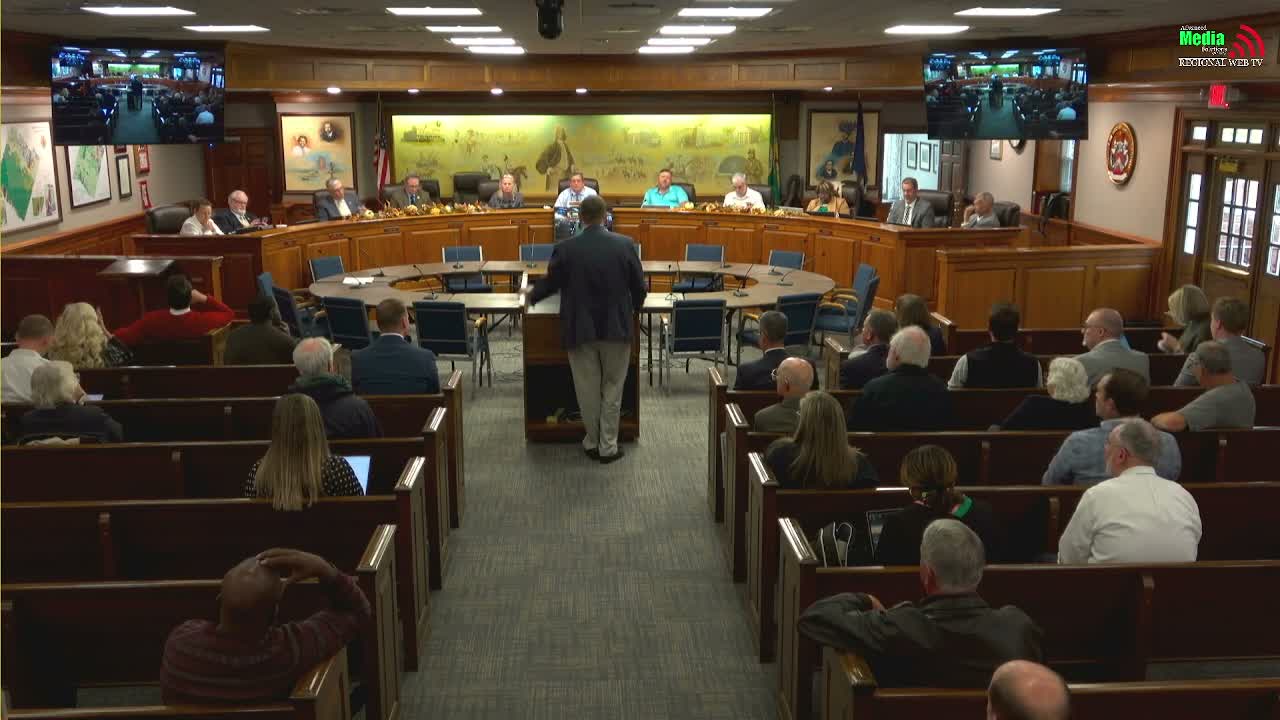
The Spotsylvania County Board of Supervisors set a path Oct. 28 for new rules to govern data‑center development after a lengthy joint work session with the Planning Commission and more than two hours of public comment.

Developers, residents and county staff debated setbacks, visual screening, generator standards and water use as the board weighed a range of proposals. Nicholas Cummings, a land‑use attorney for a potential purchaser of a site rezoned for data‑center use in 2023, told the board applicants seek predictability and urged the county not to apply new standards retroactively to recent rezonings. "We ask that you instead please strongly consider allowing sites that were approved for data center use with the rezoning within the last five years or so to keep their rights," he said (public comment).

Several developers asked the board to avoid a blanket 1,000‑foot setback. Kyle Crosby of Kettler, which owns the Crossroads Technology Campus property, said the company has invested more than $100 million in site infrastructure and that very large buffers would effectively prevent development: "The data center standards as currently drafted, particularly the proposed 1,000‑foot setback, would effectively prevent the development of our site as a data center campus," he said.

Residents from Lee Hill and nearby neighborhoods urged far larger separations and said data‑center projects can change neighborhood character and consume water. Donnie Folkes, speaking for residents, proposed 200 feet and disputed claims that data centers consume water at the scale often alleged; "200 feet is responsible," he told the board.

Staff presented the draft ordinance that would allow data centers as a permitted use in I‑1 and I‑2 zoning districts if they meet development standards; projects that cannot meet the standards would need a special‑use permit. The draft includes provisions for preserved vegetation, an 8‑foot landscaped berm where gaps exist, required screening of mechanical equipment, tier‑4 or equivalent generators with sound‑dampening enclosures for emergency use only, a ban on groundwater and rainwater harvesting for industrial cooling, and view‑shed analyses for sites within 1,000 feet of sensitive resources.

After discussion, the board voted to require a 300‑foot vegetative buffer adjacent to residential properties and to preserve existing mature vegetation within that buffer or install an 8‑foot berm and replant where gaps exist. The board also approved language that will require a view‑shed analysis where projects are located within the defined distance of residences or other listed sensitive uses. Members also set a 75‑foot maximum building height in the I‑2 district, with any exceptions to be handled through rezoning or special‑use review.

The board asked staff and the county attorney to research whether the locality can lawfully prohibit direct withdrawals from the Rappahannock River for industrial cooling; staff noted withdrawals are primarily governed by state permitting. The board directed staff to draft ordinance language reflecting the board’s consensus and send it through the Planning Commission and public‑hearing process.

The board and Planning Commission repeatedly emphasized that standards should be enforceable and site‑sensitive. "Every single piece of land that is identified here has different characteristics," one Planning Commission member said; staff responded that the view‑shed requirement and the option to approve alternative standards with rezonings are intended to preserve site‑by‑site flexibility.

Next steps: staff will draft the ordinance reflecting the board’s directions, hold public hearings (planning commission and board), and return the item for final legislative action. Until the board adopts new standards the county’s existing zoning and site‑plan rules continue to apply.