Get Full Government Meeting Transcripts, Videos, & Alerts Forever!
Get email alerts on the Data Centers topic
No spam. Unsubscribe anytime.
Spotsylvania supervisors split over proposed 1,000‑foot data‑center buffer; public pushes for smaller setbacks or case‑by‑case reviews
Summary
Public speakers representing landowners and residents clashed over a proposed 1,000‑foot buffer for data centers. Developers say it would make some industrial sites undevelopable; other residents and at least one supervisor favor larger buffers to protect neighborhoods. The board asked staff to pursue a joint work session with the Planning Commission rather than immediately adopt ordinance changes.
The Spotsylvania County Board of Supervisors spent a large portion of its meeting debating draft design standards for data‑center development, focusing on a proposed 1,000‑foot buffer between data center structures and residences, schools, churches and parks.
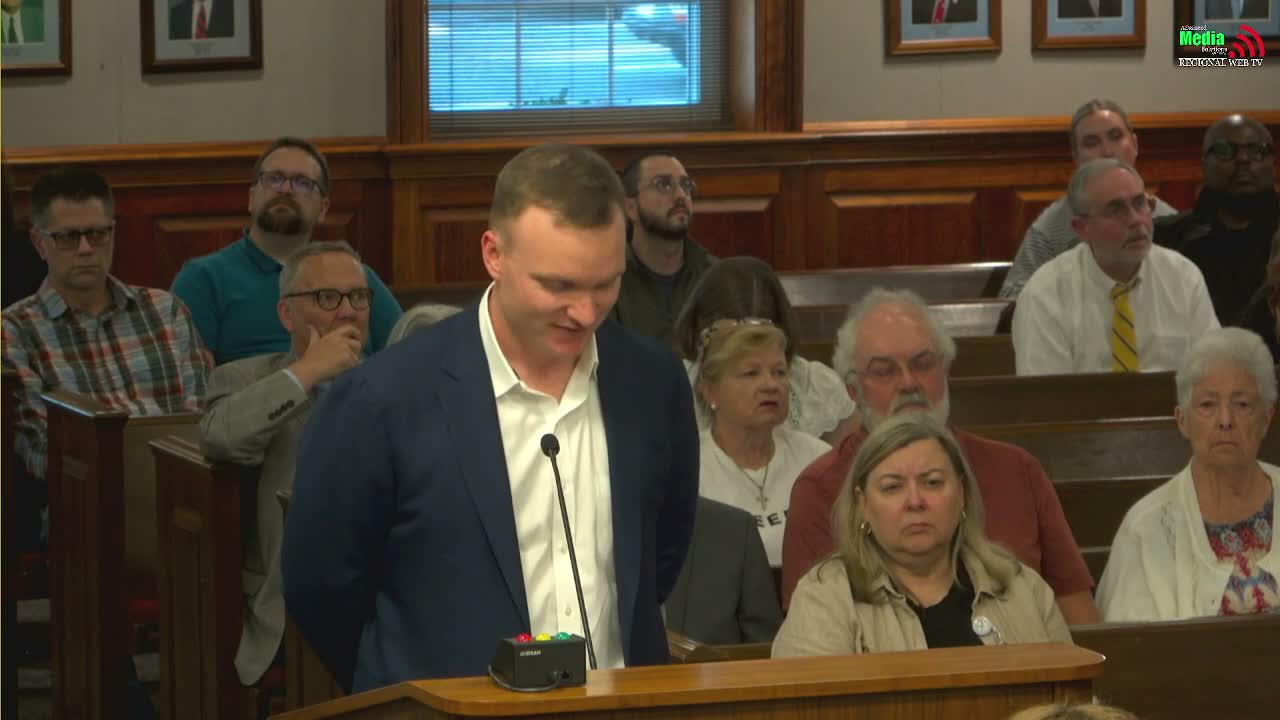
Developer representatives and long‑time landowners told the board the 1,000‑foot requirement would make important industrial parcels effectively unusable. Kyle Crosby, vice president of land at Keller and owner of the Crossroads Technology Campus, said his company has invested more than $50 million in site engineering and power infrastructure and that the draft buffer would reduce the project’s developable area to roughly 8 percent. He asked the board to delay advertising the draft standards and form a working group with property owners and industry experts to find a compromise.
Several residents from multi‑generation families urged smaller setbacks. Judith Folkes and Donnie Folkes, who said their land has been zoned industrial for decades, called a 1,000‑foot distance an extreme restriction and proposed 200–300 feet, pointing to previous approvals that used smaller setbacks and arguing data‑center tax revenue helps fund schools and county services.
Other speakers and board members urged caution. Michael Konietchnya and others said that where data centers have been approved so far they often sit 900–1,000 feet or more from adjacent homes and argued the larger buffer protects quality of life, reduces visual and noise impacts and reflects lessons from other jurisdictions. County staff and multiple supervisors emphasized the difference between a buffer (an area of preserved vegetation, berms and open space) and a setback (a structure‑to‑property‑line measurement) and said the current draft provides explicit requirements for preserving existing vegetation or installing an 8‑foot earthen berm in gaps.
Supervisors debated options: advertise the proposed language as a public hearing item; ask the Planning Commission to revisit its earlier recommendation (a Planning Commission work session had recommended a 100‑foot buffer with no structure closer than 300 feet to a residence); adopt a numeric middle ground (500 feet was floated); or require Special Use Permits (SUPs) for data centers so each large site is evaluated case‑by‑case. Several supervisors said they favored a joint work session with the Planning Commission to resolve technical definitions and avoid repeated legal readvertisements.
Staff warned that some changes to the zoning ordinance may legally require another Planning Commission review if they are substantive. The board asked staff to coordinate with the Planning Commission and pursue a joint work session (the board planned to seek a date around the Oct. 28 meeting), and it directed staff to return with refined options and possible conditions rather than immediately adopting the 1,000‑foot standard.
What happens next: the board will schedule further work sessions and a public hearing. Staff recommended providing the public with a potential range for setbacks during advertising so citizens know what outcomes are possible. The zoning change process will return to the Planning Commission for discussion and formal recommendation before the board votes on any ordinance amendment.