Get Full Government Meeting Transcripts, Videos, & Alerts Forever!
Get email alerts on the Land Use Data Centers topic
No spam. Unsubscribe anytime.
Spotsylvania supervisors approve Hunters Ridge South rezoning amid debate over wetlands, traffic and proffers
Summary
The Board of Supervisors voted 5–2 on Aug. 26 to rezone about 73 acres at the southern end of Cosner Drive for a data‑center campus (Hunters Ridge South), accepting proffers that include upgrading and extending Cosner Drive, environmental studies and Tier‑4 generator commitments. Residents pressed for larger cash contributions and stronger wetland protections.
Spotsylvania County supervisors voted 5–2 on Aug. 26 to rezone roughly 73 acres at the southern terminus of Cosner Drive to an I‑2 industrial classification, clearing the way for a data‑center campus the applicant estimates could total as much as 2,278,000 square feet. The approval came after more than two hours of public testimony centered on wetlands, traffic and whether proffers offered by the applicant go far enough.
Staff and the Planning Commission recommended approval with a set of proffers that commit the applicant to design and mitigation measures including: architectural treatments, a 125‑foot minimum building setback and 75‑foot parking setback, a 15% open‑space minimum, noise limits measured at nearby residences (65 dBA), geotechnical and water‑quality impact studies, low‑impact stormwater best‑management practices with a target of treating 90% of on‑site nutrients where feasible, infiltration feasibility testing, Tier‑4 generator specifications, and transportation commitments to upgrade and extend Cosner Drive to four lanes to the project property line. The proffers also include cash contributions of $100,000 toward Germanna Pointe Extension and $100,000 to the county Career and Technical Education program.
Charlie Payne, counsel for the applicant, told the board the site is next to existing transmission infrastructure and nearby Cosner Tech data‑center approvals, and said the development is consistent with the county’s employment‑center land‑use designation. Payne also framed the economic rationale at the public hearing, saying data centers are a major economic target for Virginia: “Data centers are the number‑one economic development target industry in the Commonwealth of Virginia,” he said, emphasizing tax and investment benefits.
Residents and neighbors urged a different balance. Multiple speakers from Lees Hill and adjacent neighborhoods asked the board to move more slowly, demand stronger proffers, and do more to mitigate cumulative impacts. Several witnesses raised concerns about Massaponics Creek and the planned removal of approximately 1.6–1.9 acres of wetlands on the site, questioned whether the county’s wastewater and electric systems can reliably support the development, and called the $100,000 Germanna Pointe contribution and $100,000 CTE payment too small relative to the scale of the project.
“Time is of the essence” to finalize countywide standards, resident Michael Konyeczny told the board, urging the board to adopt the 1,000‑foot setbacks and other measures staff had circulated for data‑center standards. Other residents asked the board to require closed‑loop cooling, to ensure wastewater capacity, and to limit the number or total acreage of data centers in particularly sensitive districts.
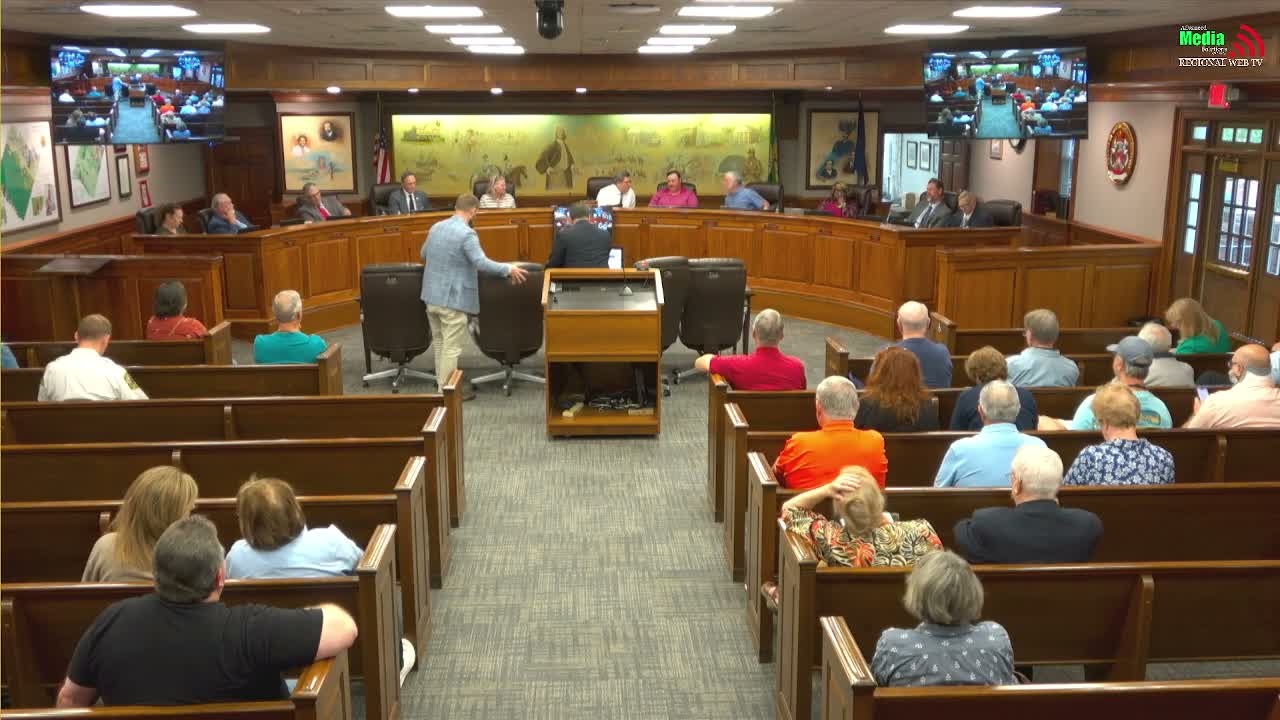
Supervisors debated those concerns at length. Supervisor Hayes said she supports the board’s prior direction to adopt strong standards but also repeated constituent worries about wetlands and cumulative impacts. At one point Hayes moved to table the application to allow more study and outreach; that motion failed. Dr. Frazier then moved to approve the rezoning with the proffers as presented; the motion passed with a recorded tally of five in favor and two opposed (Miss Hayes and Mr. Jacobs voted no). The motion’s mover was Dr. Frazier; a second was not verbally recorded in the minutes.
The board and staff emphasized post‑approval compliance steps: proffered water‑quality and geotechnical studies must be completed prior to site‑plan approval, noise studies are required for each building prior to certificate of occupancy, and the county will enforce proffers through the site‑plan and permitting processes. Staff also reiterated that on‑site low‑impact BMPs and infiltration will be required “to the fullest extent feasible” and that potable water is not to be used for permanent industrial cooling if a reuse option is available.
Separately, the board agreed to host a joint informational meeting on Sept. 23 with Dominion, REC, AWS and the Planning Commission to give residents, the board and staff a technical briefing on power, water and other infrastructure concerns. Staff requested supervisors and citizens submit technical questions in advance so utility and applicant representatives can prepare answers.
Next steps: the applicant must complete required technical studies and submit site‑plan materials that demonstrate compliance with the proffers, and the county will review those documents before approving any building permits.