
Neighbors cite power, water, noise and trust issues as QTS data center expands
Get AI-powered insights, summaries, and transcripts
Subscribe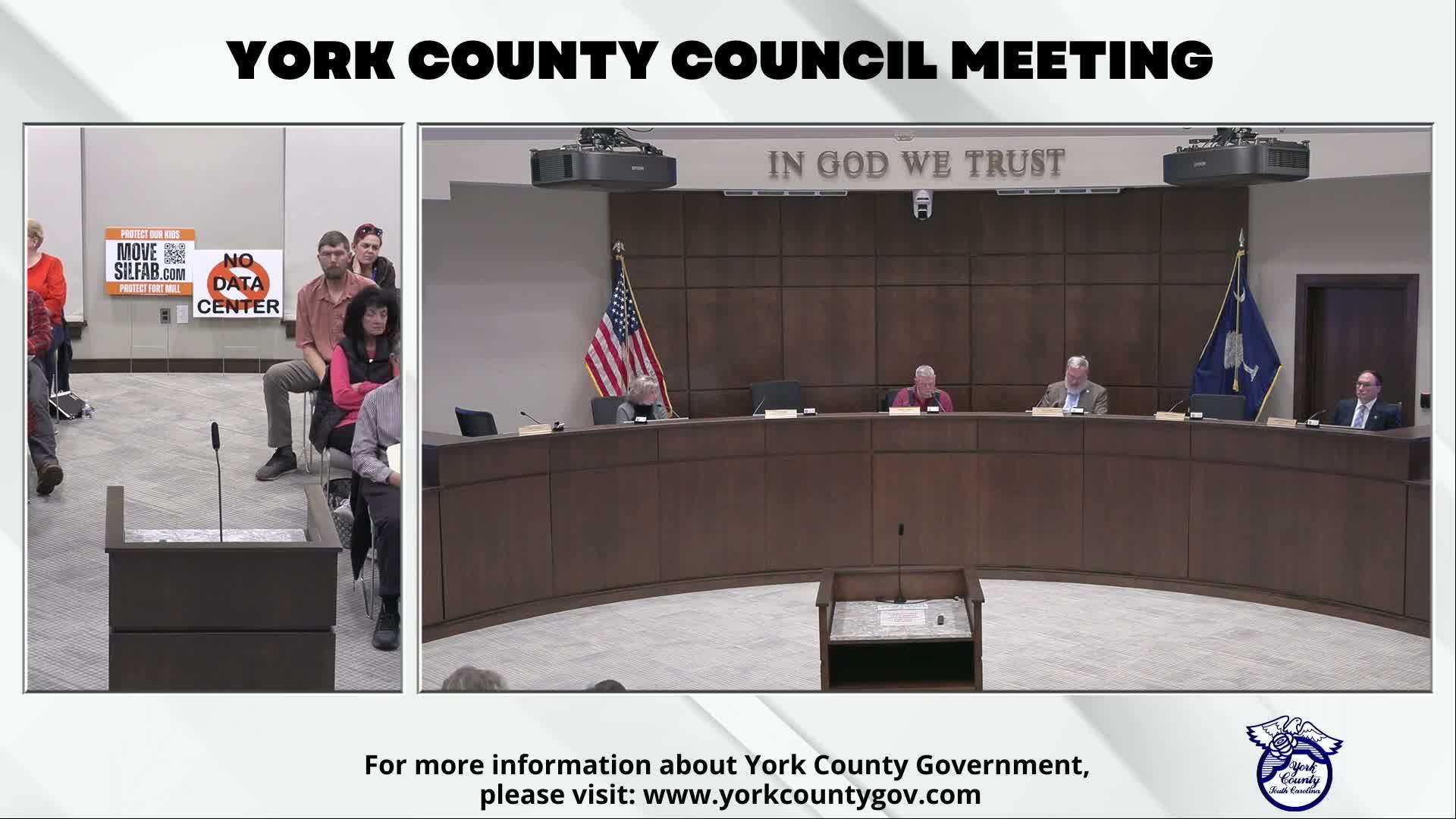
Summary
Residents raised wide-ranging concerns about QTS data center expansion — including noise, power demand, water use, environmental impacts and alleged misleading public statements about future buildout — and urged the council to re-evaluate siting and protections for nearby neighborhoods.
Multiple residents spoke at the public forum about concerns tied to expansion of QTS data-center projects in York County. Speakers described the projects as encroaching on residential areas and raised potential consequences ranging from increased noise to water and power stress.
Sean Donahue, who lives near the site, said the area is residential and lacks sufficient buffers and protections; he called on the council to reconsider where the county allows data centers to be placed. Dan Sitchi compared concentrated data-center development to a spreading disease, saying what was described as a single building has grown to multiple facilities and that the company recently acquired more acreage for further expansion.
Ginger Harper Thompson raised agricultural and environment concerns: whether utilities will meet electricity demand without passing costs to consumers, whether water supply and discharge from closed-loop systems could deplete or pollute local water sources including the Catawba River Basin, and whether tall buildings and complex electrical systems pose fire and emergency-response challenges.
Judy Penland, whose tree farm borders planned QTS expansion on Parham Road, accused QTS of denying planned expansion at recent meetings while permit documents show multiple buildings; she said residents feel misled and that the project has harmed neighborhoods.
Council staff later clarified during a separate agenda item that a proposed distribution substation in the Big Allison Creek development is not related to the QTS project and is intended to serve residential growth and new schools, not the QTS load.
No regulatory action on QTS was taken at the meeting, though residents said they would return with more information.