
Pomona Unified outlines CTE priorities, student survey results and plans for dual enrollment
Get AI-powered insights, summaries, and transcripts
Subscribe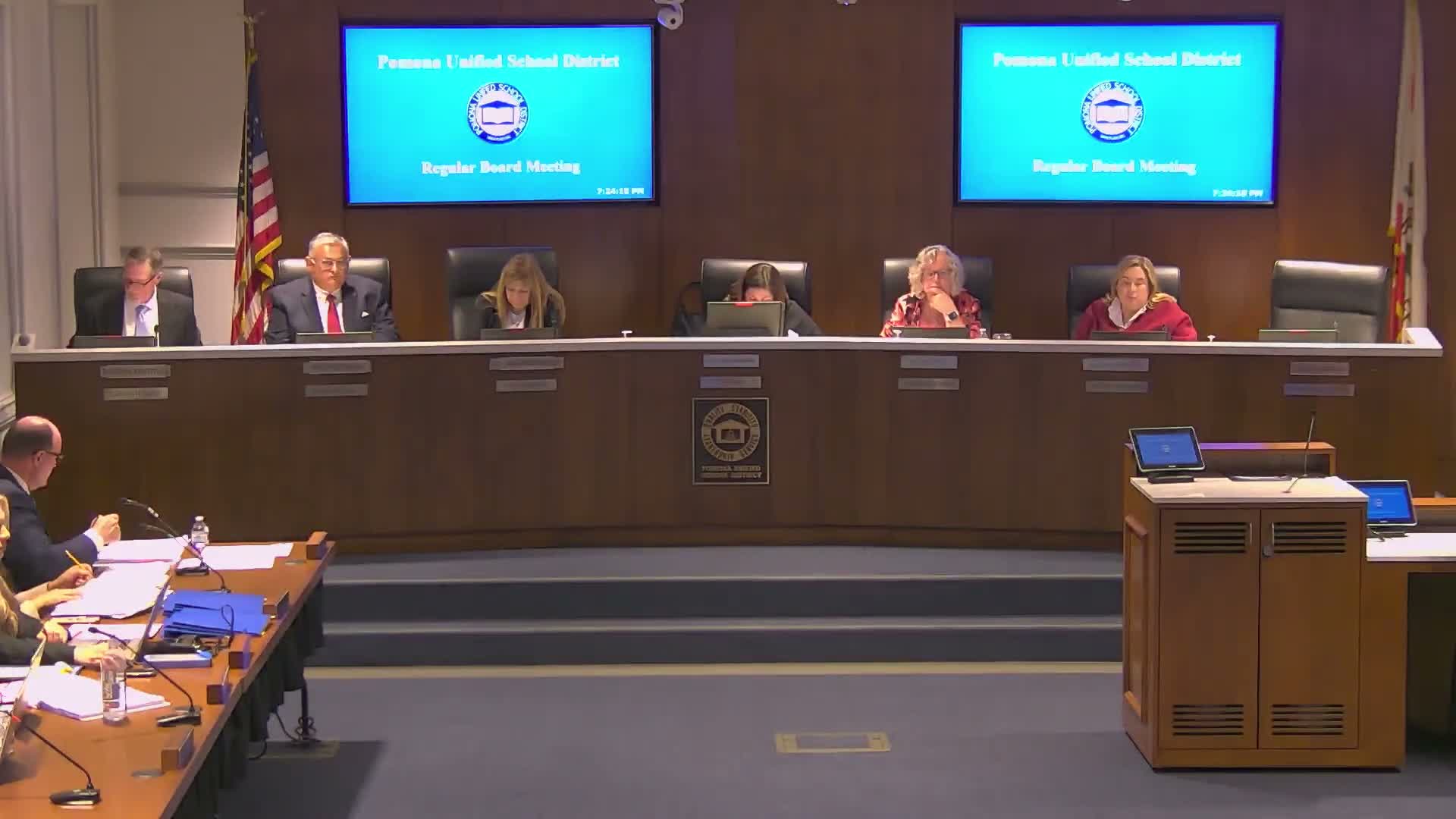
Summary
District staff presented CTE/ROP pathway data — more than 400 student survey responses — showing top interest in health sciences, arts/media, fashion and construction. Staff described current labs, dual-enrollment options with Mt. SAC, and an April career/job fair; the board requested a June follow-up with school-level breakdowns and success metrics.
Luis Rodriguez presented district Career Technical Education (CTE) and ROP findings and answered board questions during the Feb. 11 meeting, reporting early results from a live student survey and LA County labor-market data used to guide pathway development.
Rodriguez said the survey had been answered by more than 400 students in grades 8–11 and that the top four industry sectors students identified were health science and medical technology, arts/media/entertainment, fashion and interior design, and building construction. He said registered nurses and other medical careers showed consistently high student interest and that EDD/Labor Market Information data for LA County indicated family‑sustaining jobs in health and education sectors.
Rodriguez described available supports and structures: Paxton (Paxton Patterson) labs at several middle and high schools, partnerships with Mt. SAC for some dual‑enrollment CTE classes elsewhere, internal certificates and industry credentials (food handler, OSHA), and the district's black CTE cord for graduation completers. He noted the San Antonio ROP Fairplex campus attendance trend: 28 students in 2023–24, 32 in 2024–25, and 53 reported for 2025–26 (he later said the current live number is about 50 after some dropouts).
Board members pressed staff on implementation details: which schools offer specific CTE classes, how field trips and employer partnerships convert student interest into pathways, teacher qualifications for dual enrollment (Mt. SAC requires professional degree and experience), retention of CTE teachers after a salary reclassification, and transition plans from exploratory classes into multi‑year pathways. Rodriguez said some pathways are two‑year sequences with second‑year, hands‑on projects and that the district is expanding construction trades across multiple high schools next year.
The board requested a report back in June with a detailed breakdown by school of survey results, a list of the most successful programs and metrics showing where CTE completers go after graduation (employment or further education). Rodriguez also invited board members to an April 10 career and jobs fair coordinated with AJCC and EDD.
What this means: The district is using student interest data and regional labor-market information to prioritize pathways, and the board has signaled interest in data-driven investment and clearer school‑level implementation plans.