Get Full Government Meeting Transcripts, Videos, & Alerts Forever!
Get email alerts on the Refuse Rate Study topic
No spam. Unsubscribe anytime.
Hanford council directs staff to pursue phased refuse rate increases under Prop 218
Summary
After a consultant presentation showed a $3 million operating shortfall and rising tipping‑fee pressures, council gave formal consensus to pursue a phased rate scenario (Scenario 2) and begin Prop 218 notices and the 45‑day review process.
Public Works Director Russ Sterling and consultant R3 presented a solid waste rate study showing the refuse division entered the fiscal year with about a $3,000,000 operating reserve shortfall and a current fiscal‑year projected shortfall of $274,000.
Staff and consultants identified main cost drivers: higher tipping fees at the Kings County transfer station (KWRA), vehicle replacements, compliance with SB 1383 organics mandates, capital contributions to vehicle replacement reserves and potential future needs for GPS route management and a customer relations management system.
R3 modeled multiple rate scenarios. Scenario 1 proposed a steeper initial increase (12–15% catch‑up) with 5% escalators; Scenario 2 phased increases (examples included a 10/10/5/5/5 approach) intended to soften the year‑one impact while preserving long‑term sustainability. Staff noted the model assumes no electric vehicle purchases in the near term and does not include possible future KWRA tipping‑fee increases unless and until the county adopts them.
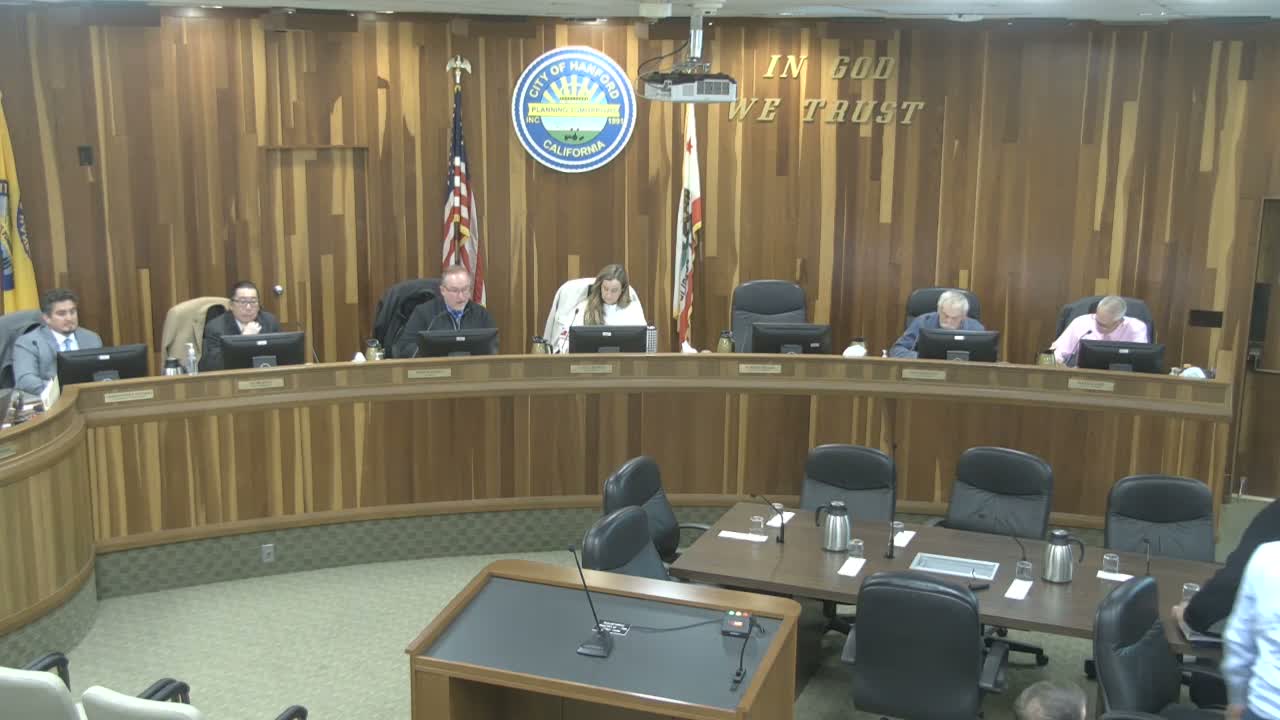
Council discussion emphasized the city’s dependence on a transfer station in Kings County, the possibility that Avenal or other regional facilities might close or increase fees, and that state mandates require ratepayers rather than general funds to cover new obligations. After discussion the council provided formal consensus by roll call to proceed with Scenario 2, to authorize staff to prepare Prop 218 notices and begin the 45‑day protest period, and to return with a draft resolution at a future meeting if the community process allows.