Get Full Government Meeting Transcripts, Videos, & Alerts Forever!
Get email alerts on the Safety Committees topic
No spam. Unsubscribe anytime.
Utah Government Trust outlines how to build effective safety committees
Summary
A Utah Government Trust webinar advised monthly standing meetings, mixed management-and-frontline membership, concise agendas and minutes, simple near-miss reporting, and root-cause incident reviews to strengthen workplace safety and meet Trust program requirements.
Jason (Presenter, Utah Government Trust) led a webinar advising local-government employers how to form and run effective workplace safety committees, urging monthly standing meetings, clear agendas, and measurable goals to improve safety culture and performance.
The presenter said a safety committee is "really the heart and soul of your safety program," and argued that relying on a single safety professional is unlikely to succeed. He recommended committees include both upper management representatives and frontline staff so that those who do the work can surface practical hazards and solutions.
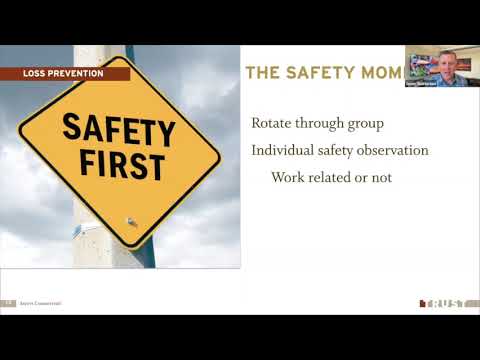
The talk prioritized practical meeting design: keep meetings short (about an hour), hold them regularly (monthly or at least not quarterly), circulate a simple agenda in advance and place the most important items first. Assign a rotating "safety moment" and a scribe to take minutes that record decisions, assigned follow-up tasks and next meeting responsibilities so the committee can track progress.
On incident investigation, Jason said the committee's role is to review first reports, witness statements and supervisor investigations, then probe to root causes rather than simply disciplining individuals. "Ask why until it hurts," he said, to find corrective actions—policy changes, procedures or equipment purchases—that prevent recurrence.
For metrics, the presenter advised combining trailing indicators such as OSHA recordable incident rates and lost-time rates with leading indicators like monthly facility inspections and consistent completion of department training topics. Committees should publish performance updates to the whole organization to share successes and spur ideas for improvement.
During the question-and-answer period, Michael (Moderator, Utah Government Trust) and Jason discussed committee size and reporting practices. Jason said committees of four to six active members are often more effective than very large meetings, but department representation remains important. On near-miss reporting he recommended a short, separate near-miss form (or a simple email/suggestion box) to encourage reporting; optional anonymity can help reporting rates, but follow-up may then be limited.
On discipline, Jason recommended a largely non-punitive approach so workers feel safe reporting issues; he suggested that disciplinary consequences be reserved for intentional violations and that any penalty for failing to report should outweigh the perceived gain of hiding an incident.
The webinar closed with an offer from the presenters to assist attendees in developing or attending safety-committee meetings and with shared resources including sample agendas and metric templates the Trust will provide.
The webinar focused on best practices and did not include formal votes or legally binding directives; next steps for attendees are to draft or review a safety charter, set measurable safety goals and establish a standing meeting cadence.