
UTAs, transit funding and initiative reform: LPC hears governance proposals and Senate president’s vision
Get AI-powered insights, summaries, and transcripts
Sign Up Free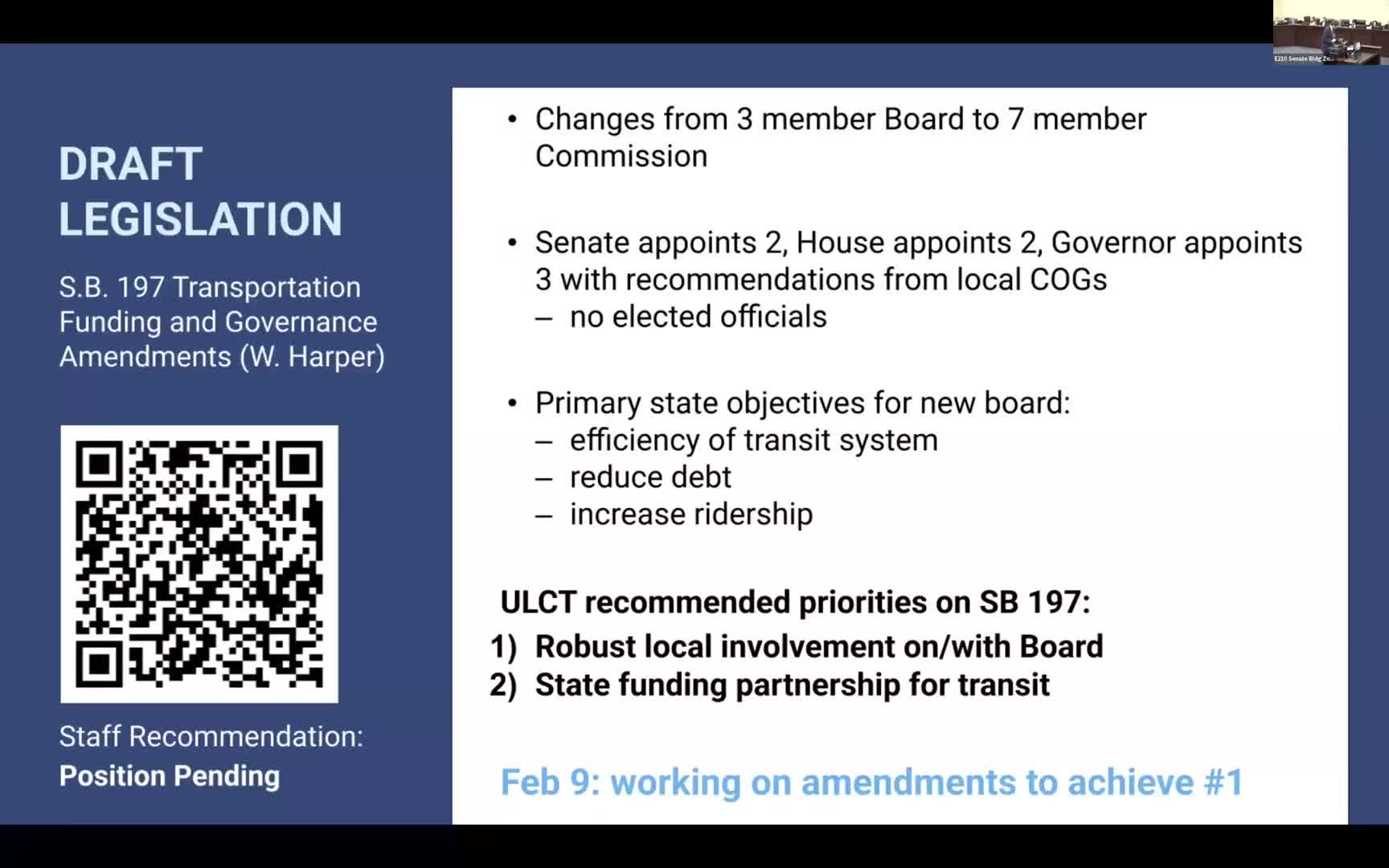
Summary
Staff presented proposed changes to Utah Transit Authority governance and asked cities for priority feedback; Senate President Adams urged major investment in regional transit and previewed legislation addressing the initiative process and legislative authority.
Staff at the LPC meeting described proposed transportation measures affecting UTA governance and other mobility policies, then Senate President Adams addressed the group on infrastructure and initiative-process concerns.
Cam (facilitator) summarized a governance proposal that would restructure the Utah Transit Authority from its current three-member full-time board plus a local advisory commission to a seven-member part-time commission. Staff said the league's engagement principles are (1) preserve robust local involvement and (2) secure additional state resources if the state increases governance control. "Principle number 1 was about ensuring there was still robust local involvement in that UTA governance process," staff said.
The larger transportation bill from Senator Harper was described as multi-topic: transit funding changes for Salt Lake and Utah counties, towing/dispatch fee provisions, and Salt Lake City roadway tiering that could affect lane-width standards. Staff asked cities with particular stakes (for example, towing costs or downtown lane standards) to flag the issue so league staff can pursue amendments.
Senate President Adams addressed the LPC and emphasized transit as a future-facing priority. He recounted a legislative delegation visit to Ukraine and then framed a regional mobility challenge: "The future is transit," Adams said, arguing for faster and more frequent rail service. "When we can go from Provo to Salt Lake in half the time it takes to drive, we will fill FrontRunner," he said later adding, "We need a 150 mile an hour train." Adams said the legislature is considering structural and funding changes to support transit growth.
Adams also raised concerns about the initiative process and previewed forthcoming work on initiative authority: he described initiatives' potential to shift state governance and said he will run legislation and consider a constitutional amendment to clarify the balance between legislative authority and direct initiatives.
Next steps: staff will collect priority responses from cities on UTA governance and specific rail and towing provisions, and will follow up with jurisdictions affected by proposed lane-width or tiering language. The Senate president signaled additional bills on initiatives forthcoming from the legislature.