Get Full Government Meeting Transcripts, Videos, & Alerts Forever!
Get email alerts on the Zoning Rezone topic
No spam. Unsubscribe anytime.
Developers seek D‑1 rezoning at 265 East 100 South; council presses for enforceable community benefits
Summary
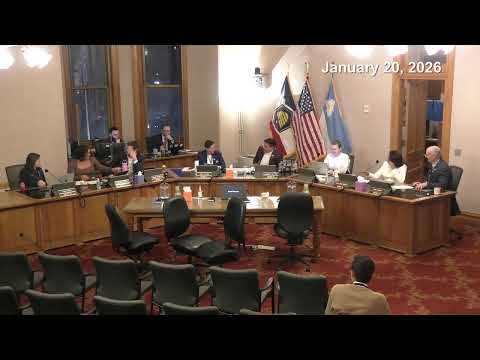
A developer asked the Salt Lake City Council to rezone a 2.19‑acre downtown parcel from MU‑8 to D‑1 to enable a high‑density mixed‑use project. Council members pressed the applicants on solar impacts to an adjacent historic church, pro formas comparing MU‑11, and enforceable development‑agreement commitments for affordable family‑sized units.
A developer asked the Salt Lake City Council to rezone about 2.19 acres at 265 East 100 South from MU‑8 (mixed use) to D‑1 (Central Business District) to allow a large mixed‑use building with ground‑floor retail, residential units above and underground parking.
John Anderson, planning manager, told the council the Planning Commission forwarded the request with a 7–1 recommendation and staff proposed a 225‑foot height cap with any portion over 200 feet subject to design review. Anderson said the applicant offered three community benefits: 20% of units at up to 80% AMI, at least 8% three‑bedroom units for families, and roughly 3,000 square feet of ground‑floor space reserved for local businesses.
Developers David Hunter and Ben Hayden urged council members the site is a rare contiguous downtown parcel and that greater height enables the density they say the city needs. "We will listen. We will accommodate," one applicant said when asked about neighborhood concerns.
Council members pressed for more concrete mitigations. Councilmember Lopez Chavez highlighted a nearby church that recently invested heavily in rooftop solar and asked how the project would avoid shading those panels and address seismic and construction impacts. Council members asked for a pro forma that shows how the project would work under MU‑11 and other alternatives, and cautioned that community benefits must be written into a binding development agreement that "runs with the land" so a future owner cannot renege.
Planning staff said a development agreement could record the community benefits and that enforcement tools exist, including withholding permits or daily fines for noncompliance; affordable housing incentives commonly carry multi‑decade covenants.
No formal action was taken at the work session; applicants were asked to return with more detail, including financial assurances and specific mitigation proposals for the church’s solar system and construction impacts.
Next steps: council staff indicated the item will return with additional analyses and, if council supports rezoning conceptually, any community benefits would be included in a subsequent development agreement required before final approval.