Get Full Government Meeting Transcripts, Videos, & Alerts Forever!
Get email alerts on the Utah Attorney General Debate topic
No spam. Unsubscribe anytime.
Republican Utah attorney general candidates clash over conflicts, social media suits and federal overreach
Summary
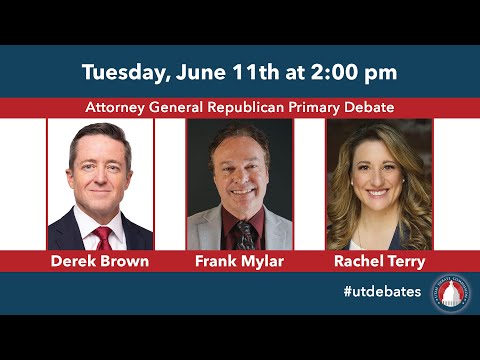
At a University of Utah debate hosted by the Utah Debate Commission, Republican primary candidates Derek Brown, Frank Mylar and Rachel Terry traded sharp contrasts on conflicts of interest, social‑media litigation, federal overreach and trust in the attorney general’s office.
At a debate hosted by the Utah Debate Commission on the University of Utah campus, Republican primary candidates for attorney general Derek Brown, Frank Mylar and Rachel Terry outlined sharply different emphases on conflicts of interest, social‑media litigation and the office’s role pushing back against federal agencies.
Moderator Glenn Mills opened the discussion and set a format of timed answers and brief rebuttals. Frank Mylar, who was awarded the first response in a pre‑debate drawing, framed himself as the most experienced attorney in the race, citing more than 36 years of practice and roughly 12 years working in the attorney general’s office. Rachel Terry highlighted roughly 20 years of legal practice, her time prosecuting educator misconduct and seven years at the attorney general’s office, and said she currently directs a state agency that oversees a team of attorneys. Derek Brown described the attorney general as “your attorney,” said the office runs “over 500 people,” and stressed his combination of private‑sector, legislative and national experience.
The debate turned heated when Terry accused Brown of past lobbying and legal work for companies that the attorney general’s office has sued or is investigating, specifically naming Facebook and citing prior tobacco‑industry ties. Terry said the next attorney general should “not bring conflicts of interest to the office.” Brown rebutted that he no longer represents those companies and called his prior work a reason he understands the legal and policy nuances involved in holding platforms accountable. Frank Mylar pressed for an internal conflicts officer and said conflicts should be run across the office’s caseload.
On social‑media litigation, Mylar said he would bring in outside conservative legal groups he’s worked with; Terry argued the office should continue the litigation and insisted the person leading those decisions should not have a history working for social‑media companies; Brown said he would continue suits when platforms violate the Utah Consumer Sales Practices Act and stressed his experience working with technology platforms.
On federal overreach, candidates broadly endorsed a more assertive state posture. When a video question raised Senate Bill 57, Derek Brown said the measure helps the state resist federal rulemaking on public lands, the Environmental Protection Agency and education; Mylar and Terry also supported litigation and negotiation as tools to push back.
The candidates were united in saying the AG should defend Utah laws in court: on a legal challenge from the Utah Education Association to a school‑choice scholarship, all three said they would defend the state. They also all described themselves as pro‑life and said they would enforce Utah’s post‑Dobbs statutes.
On criminal justice and public safety, Brown emphasized collaboration with county attorneys and sheriffs and providing resources; Mylar pointed to his criminal practice on both prosecution and defense sides; Terry said the AG must ensure consistent application of the law so victims and communities feel protected.
Each candidate pledged more transparency if elected. Mylar and Brown said the AG’s calendar and other records tied to official duties should be public; Terry said the calendar issue is in litigation under the Government Records and Management Administrative Act (GRAMA) and pledged to disclose her calendar and hold town halls.
The debate closed with each candidate’s final appeal to voters and a moderator reminder that Tuesday, June 25 is election day. The commission’s broadcast and an archive are available at utahdebatecommission.org.