Get Full Government Meeting Transcripts, Videos, & Alerts Forever!
Get email alerts on the Public Policy topic
No spam. Unsubscribe anytime.
Debate highlights policy divides on public lands, social media lawsuits and campus rules
Summary
Candidates split on how aggressively the attorney general should litigate over federal lands, whether to continue social-media lawsuits targeting children’s harms, and how to respond to House Bill 261 concerns on campus; positions map broadly to negotiation vs litigation and enforcement priorities.
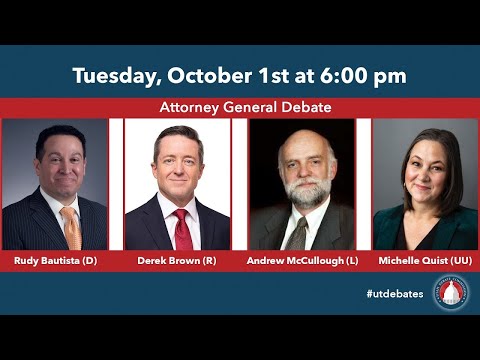
CEDAR CITY — Policy disagreements at the Utah Debate Commission event focused on public lands litigation, social media lawsuits and recent campus-related legislation.
On public lands, Derek Brown said both negotiations and lawsuits are necessary and noted that the state already has more than 60 current cases on the issue. "It has to be both," he said. Rudy Bautista cautioned that state takeover rhetoric can mask privatization motives and said federal lands remain open for public use. Michelle Quist said she will exercise judgment about when to use state resources to litigate, citing practical concerns such as road maintenance and county rescue needs. Andrew McCullough said he is skeptical of state attempts to assume control of federal lands and worried the state could “shoot itself in the foot.”
Regarding social media, candidates described competing priorities. Quist said first-amendment protections are paramount and noted current cases are under injunction; she said the AG should prioritize balancing constitutional rights with harms to children. Brown said he would continue existing lawsuits and has engaged with academics and therapists to find policy solutions. Bautista emphasized parental responsibility and warned government regulation can lead to unintended consequences.
On House Bill 261 and student protections, candidates gave varied responses: Bautista said existing privacy protections remain; Brown said the AG should work with the legislature in advance to identify legal issues and then defend valid laws; McCullough and Quist stressed protecting individual rights and speaking up where students face discrimination.
The debate did not produce formal policy commitments beyond candidates’ stated priorities; these were campaign positions to be pursued if each candidate is elected.