Get Full Government Meeting Transcripts, Videos, & Alerts Forever!
Get email alerts on the Homeless Services topic
No spam. Unsubscribe anytime.
State officials outline plan for 15.85‑acre transformational homelessness campus; many program details unresolved
Summary
State Office of Homeless Services presented a proposal for a 15.85‑acre campus at 2200 North, citing completed due diligence and an intent to request capital and operating funds in the governor’s budget; council members pressed for clarity on services, governance, public safety and funding levels.
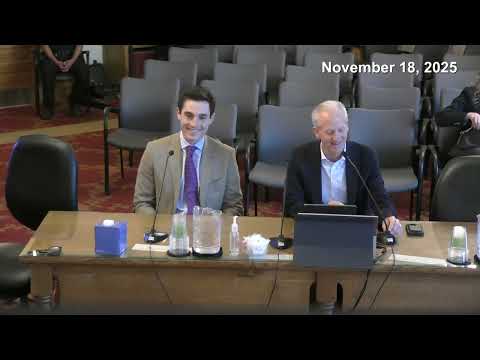
State Office of Homeless Services interim and outgoing leadership told the Salt Lake City Council work session on Nov. 18 that a proposed transformational homelessness campus would be a human‑centered hub linking shelter, services and pathways to stable housing.
“We intend to change history here,” Wayne Niederhauser said, describing the campus mission as moving people from needing help to a pathway of “thriving.” He said the state identified a 15.85‑acre parcel at 2200 North (announced Sept. 3, 2025), has entered a purchase contract with Salt Lake City that officials hope will close after the legislative session, and completed soils and traffic reports. Niederhauser said roughly 0.5 acre of wetlands were found but characterized them as non‑jurisdictional, meaning no Army Corps §404 permit is required at this stage.
Niederhauser said the state has already done planning work and has hired AJC Architects; the board will next solicit input from partners including the Salt Lake Valley Coalition on Homelessness, the Utah Homeless Network, Salt Lake City and Salt Lake County. He said design discussions include a single controlled ingress/egress, fencing for security, trauma‑informed design and transportation links to connect residents to jobs and services.
Council members asked detailed questions about program design, operations and funding. Council Member Pui and others pressed whether programmatic choices (behavioral health models, harm reduction, length of stays) are driving the design, and whether evidence‑based behavioral health experts are under contract; Niederhauser said that programmatic partners have not yet been retained and that program details remain to be determined during design and procurement.
Several council members noted the fiscal and operational tradeoffs of a campus versus scattered‑site or micro‑shelter approaches. Niederhauser cited recent practice and costs: “Over the last four winters we’ve spent $41,000,000 in winter response and have gotten almost 1,000 extra people off the street,” he said, arguing the city needs a year‑round facility. He also provided nightly cost estimates used in planning comparisons — current resource centers about $53.55 per night and a campus projected about $65 per night — and said the state has modeled capital and operating needs while coordinating with the governor’s office of planning and budget (GOPB).
Council Member Dugan and others pressed who will lead operations and what accountability will look like. Niederhauser said an operating nonprofit would likely run the site under board direction and that state, local governments and philanthropic partners will be engaged. Nick Coleman, who introduced himself as interim coordinator in December, said the office’s short‑term commitment is to maintain transparent engagement during the transition.
Several council members raised public‑safety and neighborhood impacts and asked how the campus would avoid becoming a regional “drop‑off” location. Officials said mitigation, regulations and inter‑jurisdictional cooperation (League of Cities and Towns, Association of Counties) will inform policy, but they also said some of those mechanics remain to be negotiated.
What’s next: presenters said the governor’s proposed budget (released in early December) will indicate how much state support is available for capital and operations and that many design and governance details will be resolved through subsequent procurement, board formation and community engagement. The council did not take any formal votes on the campus during the work session.