Get Full Government Meeting Transcripts, Videos, & Alerts Forever!
Get email alerts on the Agriculture Pests topic
No spam. Unsubscribe anytime.
USDA pledges up to $750 million, import suspensions and expanded surveillance to fight screwworm threat near Texas border
Summary
U.S. Agriculture Secretary Brooke Rollins and Governor Greg Abbott announced a multi‑pronged federal response to the reemergence of the new world screwworm near the U.S.–Mexico border, including import suspensions, immediate sterile‑fly production steps and plans for a large new U.S. production facility.
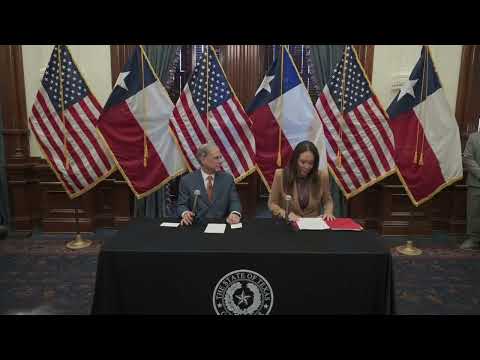
U.S. Agriculture Secretary Brooke Rollins, joined by Governor Greg Abbott and state and federal officials in Austin, announced a broad federal push to prevent the new world screwworm from entering the United States and harming the cattle and livestock industries.
Rollins said the administration has already suspended live cattle, horse and bison imports through U.S. ports of entry along the southern border and has taken steps to expand sterile‑fly production and surveillance. "We have suspended live cattle, horse, and bison imports through US ports of entry along the southern border," she said, and described investments in both U.S. and Mexican production capacity.
The USDA plans a three‑part expansion: immediate measures to boost supply, a large domestic production facility, and a separate technology fund to accelerate detection and response while construction proceeds. Rollins said the agency launched an $8.5 million sterile‑fly dispersal facility in South Texas and invested about $21,000,000 to renovate a production facility in Mexico "to produce up to 100,000,000 more sterile flies needed for eradication." She later told attendees, "We will invest the federal government up to $750,000,000 on this facility," describing the plant in Edinburgh, Texas, as one that would "triple our current output and eliminate our sole reliance on Panama and Mexico for sterile fly supply." She said the investment should create about 300 jobs.
Rollins also announced a separate technology and innovation fund, saying the USDA is "launching up to 100,000,000 in addition to the 750,000,000 to identify and deploy cutting edge technologies" such as novel traps, lures and modular sterile‑fly units. The technology funding is intended to accelerate response capabilities while construction of the Edinburgh facility proceeds.
To strengthen surveillance and first‑line detection, Rollins described plans to ramp up staffing and field assets, including hiring USDA mounted patrol officers known as "tick riders" and training detection dogs from the Beagle Brigade. "The tick riders are mounted on horseback and will provide the first line of defense against a new world screwworm outbreak along the U.S.–Mexico border," she said.
On international cooperation, Rollins said USDA officials are working directly with Mexican counterparts and that Mexico has agreed to halt animal movement in affected zones. She described ongoing auditing of Mexico's surveillance and daily contact with Mexican officials to verify reported results.
Rollins said federal agencies including the Food and Drug Administration, Customs and Border Protection, the Department of Energy and the Environmental Protection Agency are coordinating work on medical countermeasures and other innovations to combat the pest. "FDA has been a strong partner and is currently undergoing expedited avenues to ensure animal medical countermeasures are available," she said.
When asked about the timeline for additional production sites, Rollins said existing airbase infrastructure will be fast‑tracked and estimated that a facility at Atmore Air Base could be moved toward operation within about a year, though she cautioned that it "won't happen tomorrow or next week." She reiterated that import suspensions and other restrictions will remain "as long as it is necessary" to keep the pest out.
Governor Greg Abbott framed the announcement as essential to protecting Texas ranchers and the national food supply, warning of potential "billions of dollars of losses a year" if the screwworm spreads. He said the threat is both a regional and national concern and thanked federal partners for the coordinated response.
The officials did not present a firm start date for the Edinburgh facility, and Rollins characterized several figures — including the $21,000,000 Mexico investment, the $8.5 million South Texas dispersal facility and the up‑to‑$750,000,000 domestic commitment — as parts of a plan to rapidly expand domestic capacity and surveillance. The administration said it will continue to work with state and local partners as the response unfolds.