Get Full Government Meeting Transcripts, Videos, & Alerts Forever!
Get email alerts on the Homelessness topic
No spam. Unsubscribe anytime.
Salt Lake City urges state action after report shows 18% rise in homelessness
Summary
Salt Lake City leaders, citing the Utah Office of Homeless Services’ 2025 annual report, said the state’s point‑in‑time count found 4,584 people experiencing homelessness (an 18% increase) and called on state leaders to fund shelter construction and operations before winter overflow.
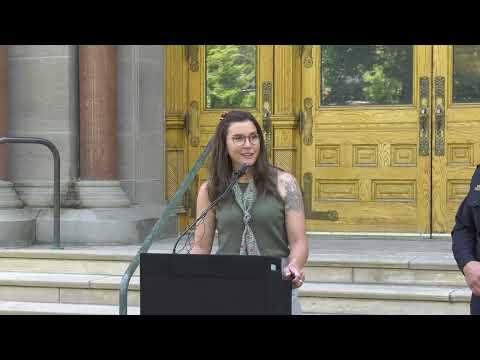
Salt Lake City’s mayor, speaking at a press event announcing the Utah Office of Homeless Services’ 2025 annual report, said the state’s point‑in‑time count showed 4,584 people experiencing homelessness on a single night — an 18% increase from 2024, an additional 715 people — and urged state leaders to provide both capital and operating funding for new shelter space.
The mayor said the city has plans for 1,300 additional shelter beds and has made land available but has secured only about one‑third of the capital funding needed and no operational funding for the initial phase. "We have a plan for 1,300 more shelter beds. We have made land available. Yet as of today, we have only 1 third of the capital funding needed to build the first phase and not a penny of operational capital," the mayor said.
The mayor framed the increase as a statewide humanitarian crisis and called on Governor Cox, Senate President Adams and Speaker Schultz to lead on legislation that funds both construction and ongoing operations. She said the city is coordinating with the Utah Office of Homeless Services, the Administrative Office of the Courts, legal defenders, Salt Lake County leadership (including Mayor Jenny Wilson), the county jail chief, District Attorney Sim Gill and Representative Tyler Clancy to bring legislative requests this fall.
Salt Lake City also highlighted program outcomes that point to the effectiveness of housing coupled with services: the state report, the mayor said, found 75% of emergency shelter stays lasted less than 90 days before restabilization and 93% of individuals in permanent supportive housing either retained that housing or moved to other permanent options.
Chief Fred of the Salt Lake City Police Department, who spoke after the mayor, said officers and co‑response social workers are increasing enforcement and outreach. "We will hold you accountable if you do that," Chief Fred said of public drug use, and he urged a combined approach of enforcement against distribution networks and expanded treatment resources. "We do need more shelter beds. We do need more mental health beds, and we do need more jail beds," he added.
The mayor voiced support for approaches that target high‑utilizer individuals and cited Miami‑Dade County’s long‑running program as a model under review with local partners. She said the city has invested heavily in affordable housing in recent years — contributing to what she estimated as over 6,000 affordable units — and is allocating $5,000,000 to the private market to create deeply affordable housing. The city also opened a tenant resource center at the Community Development Corporation of Utah on Seventeenth South, the mayor said.
The mayor warned that roughly 900 winter shelter beds created this year were supported by legislative funding that may not continue past April; without renewed funding, she said, people in those beds could be left without options next winter. She urged expedited legislative action ahead of upcoming high‑visitation events, including the Salt Lake City Temple reopening and the 2034 Winter Olympic Games.
The press event concluded with leaders saying they will continue interagency work and bring concrete legislative requests to the state this fall.