Get Full Government Meeting Transcripts, Videos, & Alerts Forever!
Get email alerts on the Archaeology topic
No spam. Unsubscribe anytime.
Utah SHPO staff identify small rock‑art figure as 'Fremont dog' in brief presentation
Summary
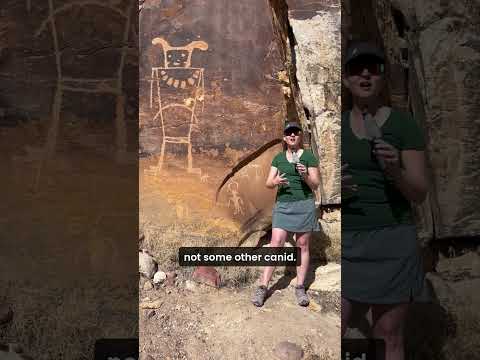
A staff member at the Utah State Historic Preservation Office identified a small vernal‑style rock‑art figure as a 'Fremont dog,' citing features such as a tail carried upward and large ears as evidence that the image represents a domesticated dog likely used in hunting and social contexts.
A staff member of the Utah State Historic Preservation Office gave a short presentation explaining why a small vernal‑style rock‑art figure should be read as a "Fremont dog." The presenter said the office has been studying classic vernal‑style rock imagery and singled out the small figure for interpretation.
"This is a Fremont dog," the staff member said, noting that several iconographic markers distinguish the image from other canids. The presenter pointed to features such as a tail carried upward and pronounced ears, and said these traits are typical of domesticated dogs in the archaeological record: "Domesticated dogs are some of the only canids on the planet, maybe the only canids on the planet, that will have a tail that goes up ears too." The presenter added, "These guys loved some big ears," as an additional stylistic detail.
The speaker said dogs appear frequently in hunting scenes in regional rock art and explained that, while the specific panel discussed may not depict a hunt, the broader iconographic record supports the inference that the Fremont people kept and used dogs in hunting and social contexts. "We assume that the Fremont had dogs," the presenter said, adding that the images sometimes show dogs participating in hunting or appearing as companions.
The presentation was a brief interpretive note rather than a formal report; no new data or dates were offered during the remarks. The talk concluded after the presenter summarized the visual reasons for identifying the figure as a dog and reiterated that the iconography supports an interpretation of domesticated dogs in Fremont culture.