Get Full Government Meeting Transcripts, Videos, & Alerts Forever!
Get email alerts on the Police Drone Operations topic
No spam. Unsubscribe anytime.
West Valley Police showcase drone unit, citing search-and-rescue, fire and evidence roles
Summary
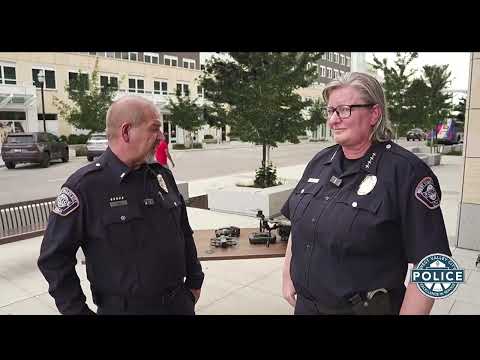
Chief Colleen Jacobs hosted a virtual community meeting demonstrating the West Valley Police Department’s drone team. Lieutenant Burke described training, FAA requirements, equipment and routine uses — search-and-rescue, fire response, disaster surveying and evidence collection — and Officer Cali gave a live demo.
Chief Colleen Jacobs hosted a virtual community meeting to introduce the West Valley Police Department’s drone team and demonstrate how officers use unmanned aircraft for search-and-rescue, fire response and evidence collection.
Lieutenant Burke, who leads the unit’s presentation, said the department now fields 14 certified drone pilots. He described the training pathway as an FAA-approved online course plus an insurer-run pilot course, costing about $400 in total and requiring roughly 20–30 hours of study plus testing. "I've had batteries that last me anywhere from 40 minutes all the way down to 12 minutes," Burke said, underscoring limitations on individual flight time.
The unit’s fleet, Burke said, includes quadcopters used for interior and exterior work and a thermal-imaging system from FLIR; the transcript referenced 'DGI' drones, which the department meant as DJI-brand platforms commonly used for similar municipal programs. Drones and pilots are required to be registered and licensed by the Federal Aviation Administration (FAA) for commercial operations, Burke said, and the department uses phone-based airspace-authorization tools to request approvals to fly in controlled city airspace up to 200 feet.
Burke described a range of operational roles beyond traditional policing: locating lost children and adults, assisting on commercial structure fires, surveying damaged infrastructure after disasters, supporting emergency-management planning and helping with large-scale public-health logistics (he cited work supporting COVID testing at the Maverick Center). He also described using drone photography and video to gather evidence in arson investigations for prosecutors.
In one illustrative account, Burke said a drone’s thermal imaging located a fugitive hiding inside an elevated tanker at a construction site; officers were able to coax the person out and take him into custody without injuries. For live demonstration, Officer Cali piloted a drone about 100 feet aloft and used optical zoom and thermal modes to locate and display a staged subject on screen.
On night operations, Burke said drones can fly after dark if they meet federal lighting and operational criteria, including anti-collision lighting visible for up to three miles. He emphasized that controlled-airspace rules apply across the city and that pilots are expected to maintain FAA commercial credentials when operating for compensation or on department duty.
Burke described the drone program as an "increasingly requested" interagency resource and "the wave of the future," noting external agencies ask the department for photographic surveys and infrastructure inspections the drones can perform without exposing personnel to heights or hazards. He said pilots are on-call rather than on fixed daily shifts and that routine indoor and outdoor practice helps maintain proficiency.
Chief Jacobs closed the session by inviting residents to visit the department’s West Fest booth and previewing the next community meeting on recruiting efforts. The department did not announce new policy changes or vote on new authorities during the presentation.