Get Full Government Meeting Transcripts, Videos, & Alerts Forever!
Get email alerts on the Housing Plan topic
No spam. Unsubscribe anytime.
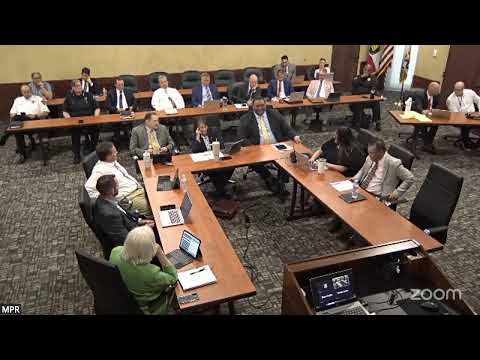
Council hears update on West Valley—s required moderate-income housing plan
Summary
Community Development Director Steve Pastrick presented an update to the city—s moderate-income housing plan, noting new housing data and a draft that selects nine strategies (two required for areas with light rail) to guide five-year implementation and satisfy state review requirements.
Community Development Director Steve Pastrick presented the city—s proposed update to its moderate-income housing plan at the May 27 study meeting, describing data changes and the implementation framework the state requires.
"We're actually required to have a moderate income housing plan for the state," Pastrick said, adding the city has maintained versions since the late 1990s and last adopted an update in 2022. He said the update incorporates recent housing pricing and rental data and sets out goals and strategies the city intends to implement over a five-year period.
Pastrick explained the plan organizes households into income tiers (extremely low, very low, low) tied to area median income levels and compares West Valley City to other Salt Lake County cities using census data. He said about 5% of the city's housing stock is income-restricted and that the city's larger share of renter-occupied units contributes to relative affordability.
Because the city includes light-rail stations, state code requires the plan include at least five strategies; Pastrick said the draft lists nine strategies (including two required items) as a precaution so the state has options to certify and to demonstrate the city is exceeding minimum requirements. He cited past rezonings and station-area planning (for example, conversion of a former Kmart site) as examples of actions that the city can document to earn implementation credit.
Councilmembers asked why the plan lists nine strategies instead of five; Pastrick said additional strategies provide insurance if the state does not accept some items and help demonstrate proactive city work in the housing policy area. He also described how the city intends to document projects that have already moved through zoning and permitting to show ongoing implementation.
Next steps: staff will finalize the draft for public review and submission to the state for certification consistent with statutory timelines.