Get Full Government Meeting Transcripts, Videos, & Alerts Forever!
Get email alerts on the Evidence Management topic
No spam. Unsubscribe anytime.
Chief Jacobs hosts evidence-room livestream; staff detail chain-of-custody, storage and retention
Summary
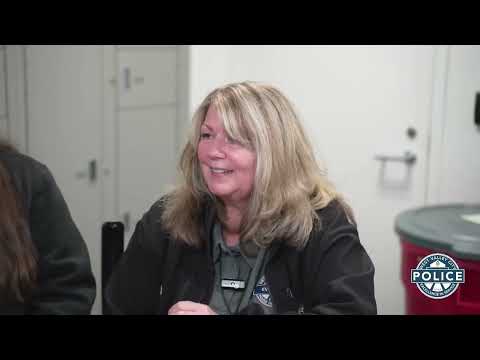
Chief Colleen Jacobs hosted a livestream inside the police department evidence room where evidence supervisor Tracy and technicians Amy and Bailey outlined intake procedures, chain-of-custody safeguards, storage for high-risk items, retention timelines and how owners reclaim property.
Chief Colleen Jacobs opened a monthly community livestream from the police evidence room and introduced Tracy, the unit's evidence supervisor, and technicians Amy and Bailey to describe how the department handles property and evidence.
Tracy said the evidence unit supervises four technicians and treats much of its work as a form of records stewardship. "We kind of consider ourselves almost librarians of the evidence," Tracy said, adding that the team's responsibilities include tagging items, obtaining signatures, maintaining seals and preserving an unbroken chain of custody from intake through final disposition.
Why it matters: secure, well-documented handling of evidence preserves the integrity of criminal cases, protects officers and property owners, and supports court processes.
The intake process and categories Tracy walked viewers through the intake room and explained that officers bring items to be packaged with supplied materials and a printed evidence tag. Staff categorize incoming property as seized (for court/investigation), safe-keep (owner identified), found property, or disposal (items to be destroyed). "We ask them to categorize their evidence into 4 item statuses," Tracy said, describing how each status determines whether an item will be held for trial, returned to an owner, listed publicly, or scheduled for destruction.
Secure storage and hazardous evidence The evidence unit keeps high-risk items (drugs, firearms, valuables) in dedicated rooms behind double-locked doors, with cameras in every room and biometric access limited to evidence staff. For biological samples and materials that require refrigeration, staff use refrigerated units. On hazardous substances such as suspected fentanyl, Tracy said staff now prefer packaging items intact and sending them to the State Crime Lab, which will accept whole items to avoid reopening potentially dangerous packages. "If there's any doubt ... they're just immediately package it and we take it to the state crime lab," Tracy said.
Coordination with state labs and temporary holds Tracy explained that items requested for specialized testing (DNA, pills, toxicology) are placed in temporary-hold boxes and entered into the state system before delivery. The department schedules weekly transfers but will expedite items if necessary.
Retention, disposal and auctions Technicians described retention rules used by the unit: found and safe-keep property is held 90 days, misdemeanors are retained two years and felonies four years. Before destruction staff research the court status, contact the district attorney and detectives for authorization, then remove identifying information and destroy items (documents are shredded, other items destroyed as appropriate). Items eligible for auction go to public sale, with proceeds placed in the public use fund; staff said they first attempt to return property to owners when feasible.
Owner notification and pickup An evidence technician described the "notice to claim property" process: the department mails a two-copy notice (one scanned for records, one mailed to the owner) listing case and contact information and asking owners to make an appointment so staff can prepare property and confirm releasability. Staff said walk-ins are assisted when possible, but calling ahead reduces delays and prevents unnecessary trips if an item remains seizable for court.
Staff welfare and recruitment Staff acknowledged the emotional strain of handling sensitive or graphic items. An evidence technician said the department offers an in-house therapist and encourages peer conversations for support. A recent hire, Bailey, said she is learning on the job and cited work'life separation strategies she learned from a family member who worked at the West Valley Police Department.
Capacity concerns and next steps Tracy warned that legislative changes extending retention times have increased storage needs and said the unit strives to purge and maintain balance but acknowledged space could become constrained if inflows continue to rise. Chief Jacobs closed the session by thanking viewers and announcing the next community meeting scheduled for Wednesday, April 9, when the department will discuss its crisis intervention team.