Get Full Government Meeting Transcripts, Videos, & Alerts Forever!
Get email alerts on the Parking topic
No spam. Unsubscribe anytime.
West Valley Council backs pilot to limit street parking in one neighborhood while ordering code-enforcement review
Summary
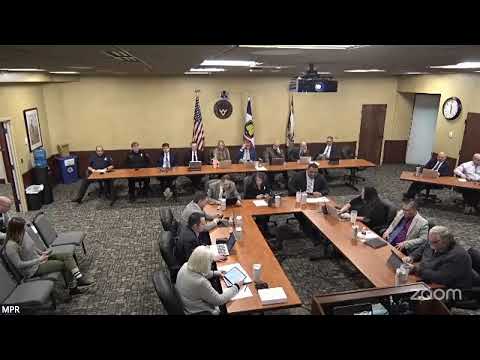
Council authorized a pilot to limit on-street parking to one side in a Treasure Isle subdivision and asked staff to align code-enforcement policy with the municipal code, citing concerns about enforcement, boarding houses and unintended consequences.
West Valley City Council agreed to try a limited pilot that would restrict on-street parking to one side of the street in a Treasure Isle subdivision and asked staff to schedule a separate work session to align enforcement policy with the city code.
Staff presented a curb-capacity method aimed at making parking decisions consistent. Under the method, curb length minus driveways is converted into potential parallel stalls; staff applied a 60% threshold to determine whether restrictions are warranted and reported the sample block came out to roughly 26 stalls — "right on the threshold," staff said.
Council members debated options, including a one-side parking restriction, an overnight ban (midnight–5 a.m.), and a permit system for residents. One council member suggested the one-side approach as an "achievable goal," while another warned it could simply push cars into nearby streets and punish legitimate residents. A back-and-forth focused on whether the measure would address what several members called a local proliferation of "boarding houses" that generate more cars than single-family occupancy.
Staff emphasized the proposal would be a pilot with explicit criteria, a study process and a hearing for affected residents before implementation. "We have a methodology that could be duplicated," staff said; council members who supported the pilot said they wanted a time-limited test (to the end of the year) with a follow-up review.
Council also asked staff to examine enforcement logistics and equity. Concerns raised included: how enforcement would be carried out day to day; whether permit systems could be administered; and the risk that restrictive rules would merely shift parking burdens to adjacent neighborhoods. One council member suggested counting boarding houses before and after the pilot to evaluate outcomes.
The parking discussion merged into a broader review of code-enforcement practice. Staff outlined discrepancies between administrative policy and the written code on topics such as enforcement of inoperable vehicles in backyards, landscaping standards, outside storage and use of administrative citations. Staff recommended aligning policy and code — or amending the code where council desires different standards — to remove ambiguity for enforcement officers.
Council directed staff to schedule an off-week work session (early evening) to take a deeper look at code enforcement procedures, potential code changes and implementation issues. The session is intended to allow staff and council members to review specific enforcement examples, clarify authority, and determine whether code amendments are necessary to support any new policies.
Next steps: staff will proceed with the pilot design and publish criteria and a hearing process; council scheduled a dedicated work session to reconcile policy and code. The council did not adopt a final ordinance at the meeting; the pilot and any code changes will return for additional consideration.