Get Full Government Meeting Transcripts, Videos, & Alerts Forever!
Get email alerts on the Energy topic
No spam. Unsubscribe anytime.
House Republicans highlight unanimous passage of nuclear consortium bill and warn of energy limits for AI data centers
Summary
Lawmakers said a 'nuclear consortium' bill passed the House unanimously and argued Utah faces energy constraints that could hinder AI/data center development; they described small modular reactors as a partial solution and cited Rocky Mountain Power capacity limits. Vote tally noted as 72‑0 in the House.
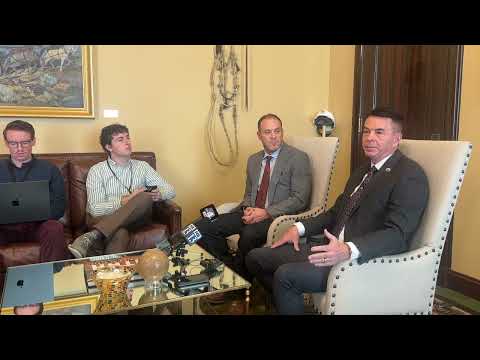
House members at a Republican press availability pointed to the House’s unanimous passage of a nuclear consortium bill and linked the vote to broader concerns about Utah’s energy capacity for future data centers and AI facilities.
"Yesterday, the nuclear consortium bill passes out, the house 72 to nothing. Unanimous," Speaker 6 said, noting the bill’s wide support. In response, Speaker 2 said he was not surprised and argued nuclear technology is now safer and an efficient way to address growing demand.
Energy and AI centers: Speaker 2 said Utah is seeing requests from companies for power to host AI data centers but that utilities such as Rocky Mountain Power have told applicants they lack the energy capacity to serve those sites. "There's companies out there that have approvals from local governments to put data centers, but they can't get the energy to put those data centers," Speaker 2 said, and warned that inability to supply power could lead those companies to locate in other states.
Nuclear as part of the solution: speakers discussed small nuclear reactors (often described as several years away) as a potential option to expand capacity. Speaker 2 said small reactors could be 4–6 years away, with larger reactors a longer horizon, and emphasized starting planning now.
No detailed implementation plan in transcript: the discussion framed nuclear as one pathway to bolster energy supply but did not include financing details, siting plans, or regulatory steps. The transcript records the vote tally (72‑0) but does not record further committee or Senate actions for the bill in this session.
What’s next: lawmakers said the state should continue discussing energy options and that federal and national attention on small reactors and energy security makes the subject timely; no timeline for deployment or specific follow‑up tasks were recorded in the transcript.