Get Full Government Meeting Transcripts, Videos, & Alerts Forever!
Get email alerts on the Immigration And Public Safety topic
No spam. Unsubscribe anytime.
Utah House Republicans unveil public‑safety bill package targeting immigration impacts, fentanyl and squatting
Summary
Utah House Republican leaders outlined a package of public‑safety bills they say respond to strains from recent immigration flows, proposing to raise certain misdemeanor penalties to enable federal deportation, strengthen anti‑squatting laws, increase penalties for fentanyl trafficking and expand interdiction units.
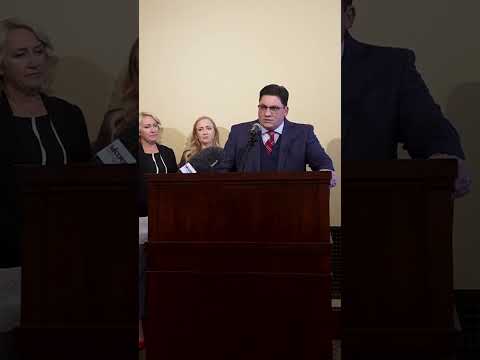
Representative Sam Lisenby opened a news briefing, saying "It is no secret that the Biden administration has failed to secure the southern border," and announcing a package of bills House Republicans say will reduce crime and relieve local services strained by recent migration.
The package — described by lawmakers as focused on public safety — includes a proposal to change a Class A misdemeanor threshold so some offenders would face a 365‑day sentence instead of 364 days, which Representative Perucci said would allow federal immigration authorities to pursue deportation after an offender serves a year in custody. "This bill will do just that," Perucci said, arguing the change is aimed at people who entered the U.S. illegally and then committed crimes in Utah.
Perucci, who represents the Herriman‑Riverton area, said her district has seen large increases in foreign‑born residents and immigration cases, and that schools and local services are under strain. She told reporters Herriman has seen "nine times the number of foreign born residents" and said immigration cases rose from 752 in 2020 to nearly 13,000 in recent years; she said some schools reported about a 126% increase in non‑English‑speaking students and that municipalities have had to boost budgets for translation and justice‑court services.
Senator Baldry said another bill will allow law enforcement to intervene earlier to remove people unlawfully occupying vacant homes and raise penalties for squatters who damage property or fraudulently lease or sell it. "Property owners need better, more lasting protection," he said, calling the changes necessary to stop repeat unlawful occupation.
Representative Wilcox described interim committee work on organized crime, gangs and retail theft rings and said legislation will expand tools to dismantle gangs and increase penalties for recruiting juveniles. He also flagged a rise in unlicensed drivers and supported legislation to increase penalties tied to unlicensed driving.
Representative Gwynn focused on fentanyl, calling it the leading driver of overdose deaths in Utah and citing federal data: "As much as 70% of the fentanyl pills on Utah streets contain a potentially lethal dose," she said, and later said law enforcement seized roughly 2,000,000 fentanyl pills in Utah in 2023. Gwynn said her bill would enhance trafficking penalties and create presumptive prison sentences and that she is working with the Department of Public Safety on expanding interdiction units.
Commissioner Jess Anderson of the Utah Department of Public Safety said DPS has stepped up drug‑trafficking enforcement, citing a State Bureau of Investigation narcotics sweep that he said led to arrests of 42 dealers in downtown Salt Lake City, 24 of whom he said were in the country illegally. Anderson said seizures in those cases ranged from about 50 to several thousand pills per person, that smugglers sometimes pay about $15,000 to be smuggled across the border, and that DPS has identified the Venezuelan transnational criminal organization Tren de Aragua (referred to in the transcript as "TDA") as operating in Utah.
Lawmakers emphasized they are focusing on crimes committed in Utah rather than immigration status alone and said the bills will be numbered and publicly released in the next week or two. Representative Lisenby closed by reaffirming support for lawful immigration and invited members of the public to contact House communications staff for further details.
The proposals described at the briefing are introductions and do not represent enacted law; lawmakers said formal bill numbers and texts will be available before the legislative session and did not say when any measure would receive a committee hearing or a floor vote.