Get Full Government Meeting Transcripts, Videos, & Alerts Forever!
Get email alerts on the Transit Future topic
No spam. Unsubscribe anytime.
California stays "bullish" on transit despite remote work, secretary says
Summary
State transportation secretary Toks Omishakin told San Jose Mayor Sam Liccardo that California will continue investing in transit, walking and biking even as remote work reduces ridership, arguing multimodal approaches and equity subsidies are necessary.
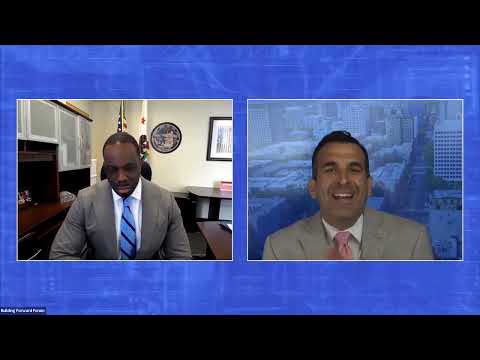
Toks Omishakin, secretary of the California State Transportation Agency, said California remains committed to public transit even as remote work and the pandemic have depressed ridership.
“Undoubtedly so. We're definitely still, still bullish on public transit,” Omishakin said, adding that transit must be part of a diverse, multimodal approach that includes ZEV investment, walking and biking infrastructure.
Why it matters: The pandemic altered commute patterns and ridership levels across the nation. How states respond — whether by prioritizing transit, adjusting service models, or shifting resources to other modes — will affect congestion, equity and greenhouse gas emissions.
Omishakin described pre‑pandemic baseline ridership as roughly 1.3–1.4 billion riders annually and said pandemic-era ridership fell into the "few hundreds of millions," noting the figures were offered as approximate summaries of systemwide impacts. He cautioned that zero‑emission vehicles alone “will not get us there” on greenhouse gas reductions and that transit and active modes must be part of long‑term strategies.
The secretary said the governor’s budget proposes additional investment in transit and active‑transportation projects and that those state commitments, together with federal funding, are intended to stabilize agencies and support equitable access. He also recommended targeted subsidies or programs to prevent pricing strategies from excluding low‑income riders.
What’s next: Omishakin urged transit agencies and local governments to plan for multimodal networks and to leverage state and federal funds to support service recovery, safety and equitable access.