Get Full Government Meeting Transcripts, Videos, & Alerts Forever!
Get email alerts on the Federal Funding topic
No spam. Unsubscribe anytime.
California aims to capture billions from federal infrastructure law, secretary says
Summary
California expects roughly $40 billion in formula dollars over five years from the Infrastructure Investment and Jobs Act and plans to compete aggressively for nearly $100 billion in discretionary transportation funds, Secretary Toks Omishakin said in a conversation with San Jose Mayor Sam Liccardo.
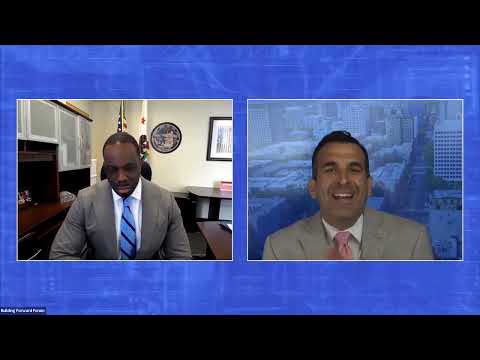
Toks Omishakin, secretary of the California State Transportation Agency, told a recorded session with San Jose Mayor Sam Liccardo that California is positioned to be a leading recipient of funds from the federal Infrastructure Investment and Jobs Act.
“We're projected to get roughly $40,000,000,000 over the next five years,” Omishakin said, and he added the state is well placed to compete for nearly $100,000,000,000 in additional discretionary transportation funds beyond formula allocations.
Why it matters: The Infrastructure Investment and Jobs Act funnels both formula and discretionary money to states and regions; states that can demonstrate priorities around equity, climate resilience and safety are likelier to secure competitive grants. Omishakin framed the law as a once‑in‑a‑generation investment that opens new opportunities for multimodal projects.
Omishakin said the statute’s focus on equity and climate aligns with California priorities and that the state’s existing leadership on climate and diversified mobility will help in competitive rounds. He pointed to state and local partnerships already underway and noted the governor’s budget proposals that would supplement federal funding for transit, walking and biking projects.
Context and numbers: Omishakin characterized the federal package as the largest infrastructure investment since the interstate highway era, citing both the overall federal totals and California’s projected shares. He emphasized two funding streams: formula dollars that come to the state automatically and discretionary funding that requires competitive proposals.
Local implications: Mayor Sam Liccardo raised the need to ensure federal money reaches local projects and asked how the state can help districts facing pandemic‑era cost escalations. Omishakin replied that state budget support and federal discretionary grants are both avenues to ease cost pressures.
What’s next: Omishakin urged local governments and transit agencies to prepare competitive applications emphasizing equity, climate, safety and multimodal benefits. He said the state will continue to provide technical support and pursue opportunities under both the governor’s budget and federal programs.