Get Full Government Meeting Transcripts, Videos, & Alerts Forever!
Get email alerts on the Caltrans People First topic
No spam. Unsubscribe anytime.
Caltrans secretary urges a ‘people‑focused’ shift, emphasizes safety, equity and multimodal investment
Summary
The secretary of the California State Transportation Agency described a shift at Caltrans from infrastructure‑first to a people‑focused approach, highlighting safety (Vision Zero/safe‑system), climate goals, equity and expanded active‑transportation planning across 12 districts.
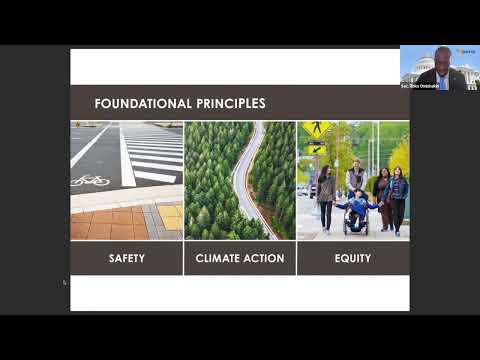
The secretary of the California State Transportation Agency told a CalBike audience that Caltrans is shifting its focus from building infrastructure as an end to designing the transportation system around people. The secretary said the department’s priorities now include safety, equity, multimodal access and climate action.
"We are building that for people at the end of the day," the secretary said, framing the change as moving beyond measures such as "on time, on budget" to outcomes that benefit all users regardless of ability, race, gender or income. He cited a safe‑system approach adopted at Caltrans and argued the state can reduce fatalities by reorienting policy and funding.
Why it matters: California's transportation sector accounts for a large share of the state's greenhouse‑gas emissions and a high number of traffic fatalities, the secretary said. He urged pairing investments in zero‑emission vehicles with stronger transit, walking and biking networks and closer alignment of land use and transportation planning so destinations are within shorter, walkable or bikeable distances.
Details: The secretary characterized safety as the top priority and cited a figure of about "3,600 people" dying annually on California roads, and "more than 10 people a day" as context for adopting a safe‑system policy. He referenced the U.K.'s multi‑decade reductions in road deaths as an example of what sustained policy and funding shifts can achieve. On climate, he said roughly "50%" of California's greenhouse‑gas emissions come from transportation and said investments in zero‑emission vehicles alone cannot meet the state's goals.
On equity, he urged moving from symbolic gestures—such as renaming facilities—toward systemic remedies for communities harmed when highway projects divided neighborhoods. He said reconnecting divided neighborhoods and prioritizing projects in underserved communities are central to Caltrans’ strategy.
The secretary closed by thanking CalBike leaders and local officials for partnership and said he would take a few audience questions before departing for another engagement.
Next steps: The secretary opened the floor for questions and signaled more detailed planning and funding announcements would come through Caltrans' district active‑transportation plans and the governor's budget process.