
Stearns County approves opioid-settlement projects including countywide media, recovery centers and naloxone access
Get AI-powered insights, summaries, and transcripts
Subscribe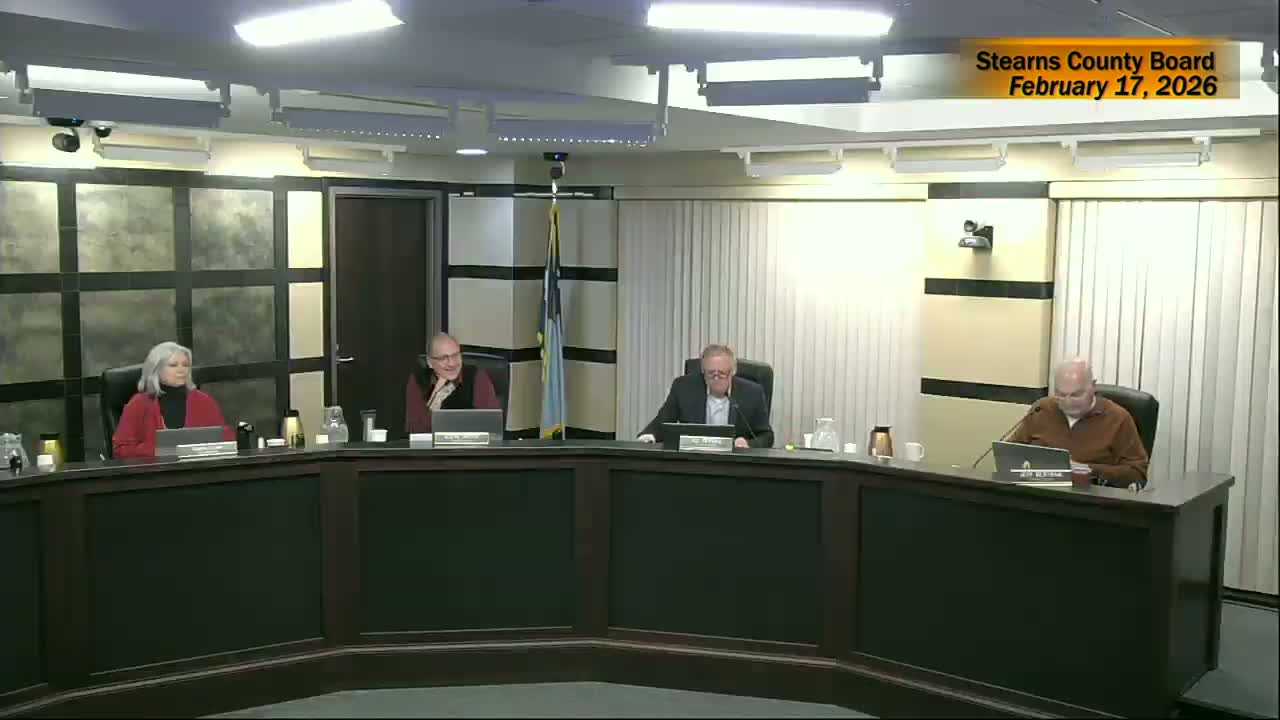
Summary
The board approved three awardees and six county-driven projects funded by opioid settlement dollars, including Townsquare Media for countywide outreach, CentraCare recovery centers in Sauk Center and Paynesville, and Steve Rummler’s Hope Network for naloxone access points. Commissioners debated media vs. boots-on-the-ground approaches before voting to approve the awards.
The Stearns County Board of Commissioners on Feb. 17 approved a set of programs funded by opioid settlements that county public-health staff say will fund 12 countywide initiatives addressing prevention, harm reduction, education and recovery.
Janet Goligoski, the county’s director of public health, told the board the procurement received 10 proposals, nine of which were interviewed and three of which were recommended for immediate approval: Townsquare Media to manage a countywide media engagement and build a public opioid dashboard; CentraCare to expand two addiction recovery centers, one in Sauk Center and one in Paynesville; and the Steve Rummler’s Hope Network to provide naloxone access points. Goligoski also described three county-driven projects, including a sheriff’s public-information site, a virtual addiction-recovery program for incarcerated individuals and continued support for a co-responder model with Central Minnesota Mental Health Centers.
Commissioners voiced a mix of support for the comprehensive approach and skepticism about some media elements. Commissioner Bertram said he preferred “boots on the ground” interventions such as bus wraps and on-the-ground recycling-style outreach rather than radio advertising alone; Goligoski responded that the recommended portfolio blends targeted media with local outreach and that the County will report back on measurable outcomes. Goligoski explained the funding source: national opioid settlements (including claims against the Sackler family and multiple manufacturers and distributors) that produced multi-year distributions to states and counties over a 13–18 year period, with the bulk of early funds front-loaded.
Commissioner Clark moved approval; the motion carried by voice vote. Goligoski said staff will notify applicants after the meeting, make scoring notes available, and offer debriefings to unsuccessful applicants.
The board’s approval authorizes the recommended contracts and county projects to move forward; staff will return with implementation details and an annual update in the fall on measurable progress and “needle moves.”