Burke County reports early drops in overdoses, expands outreach and treatment programs
Loading...
Summary
County staff reported a decline in overdose fatalities and emergency department overdose visits and described expansion of outreach and treatment programs including a BEAR outreach team, community navigator, low-barrier MOUD and family-centered recovery services. Commissioners approved the report and asked for continued data tracking.
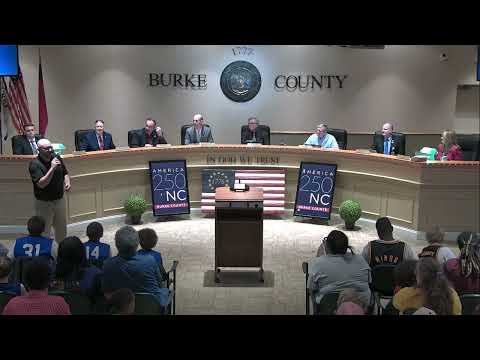
Katie Samuels, Burke County's opioid response coordinator, presented a dashboard update to the Board of Commissioners showing early positive trends and the operational status of nine funded programs.
Samuels said that in calendar-year 2025 there were 370 suspected overdose 911 calls, 93 of which were later verified as overdoses, and reported 50 verified overdose fatalities in 2024 (down from 60 the prior year). She also said emergency-department overdose visits have decreased and stressed that the county is shifting toward connecting people into treatment and long-term supports.
Samuels outlined program-level results: the Bear outreach team and community navigator are operational and making field responses, Burke County Recovery Court has 23 active participants with a 50% employment rate at graduation, High Country Community Health's low-barrier MOUD program has served 51 participants (100% with opioid use disorder) with early retention reported, and the family-centered treatment and recovery (FCTR) program is engaging families to prevent foster care entries.
The county has allocated roughly $25 million in disbursements to date and is tracking cash flow and program outcomes to prioritize future investments (Samuels estimated $400,000–$550,000 per year may be available for additional investments). She said the county is implementing a case-management system (Goldie) to better track repeat utilizers and outcomes.
Commissioners asked about timing for final 2025 fatality data (Samuels explained state vital-record certification lags and that more complete local estimates will be available as the county accesses the North Carolina Vital Records system). They also discussed ensuring service additions do not duplicate existing providers; Samuels said staff is conducting a provider assessment to check backlogs and need.
The board voted unanimously to accept the update and praised outreach and faith-community engagement, including naloxone training requests from churches.