Get Full Government Meeting Transcripts, Videos, & Alerts Forever!
Get email alerts on the Security And Land Use topic
No spam. Unsubscribe anytime.
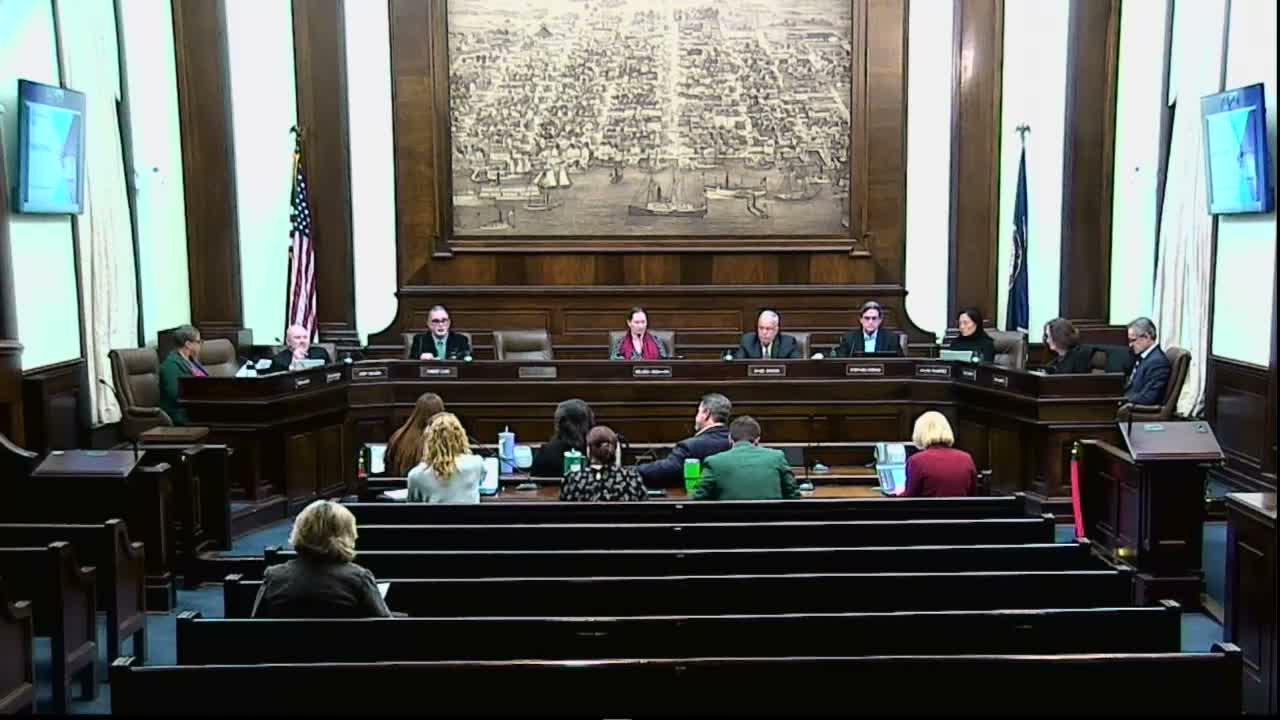
Planning panel approves 6‑foot fence at Beth El Hebrew congregation over precedent concerns
Summary
The Alexandria Planning Commission approved a development site plan amendment allowing a 6‑foot open fence at Beth El Hebrew Congregation to improve security, passing on a 4–3 vote after commissioners debated safety, aesthetics and precedent for front‑yard fence reductions.
The Alexandria Planning Commission on March 4 approved a request from Beth El Hebrew Congregation to amend a 1968 site plan and allow a 6‑foot open fence in what the city’s R‑20 zoning classifies as a required 70‑foot front yard.
Staff planner Maggie Cooper told commissioners the congregation received a federal grant to fund security improvements and is seeking a modification so a six‑foot, roughly 75 percent‑open metal fence could be installed closer to the sidewalk to direct visitor flow and protect children at play. "Staff is recommending approval," Cooper said.
Elizabeth Bayer, executive director of Bethel/Beth El Hebrew Congregation, said the congregation has received repeated federal homeland security grants and that "this fence ... is a benefit to keep the children safe when they play in the front yard," adding the grant program aims to "mitigate the loss of life" at houses of worship. Bayer said the property already has cameras and biometric access and that the additional fence would channel visitors to a single monitored entrance.
Opponents on the commission pressed for a narrower change. Commissioner Brown said he remained "very doubtful that this project makes sense," arguing a 4‑foot fence "is perfectly proper and allowed" and that allowing a six‑foot front‑yard fence risks setting "a terrible precedent for the rest of the city." Vice Chair Stephen Koenig voiced similar concerns about open‑ended precedent and the operational effectiveness of the proposed design.
Supporters countered that synagogues face a different threat profile. Commissioner Dube cited data and recent incidents and said "any level of safety we can give to these kids, I'm going to be supportive of it." Commissioner Ramirez and Commissioner Linehan said the fence as presented is visually open and set back from the sidewalk so it would not produce the same neighborhood impacts as a solid wall.
After debate, Commissioner Brown moved to deny the amendment; that motion failed when the chair counted three ayes and four nays. Commissioner Ramirez made a counter motion to recommend approval; it passed on a 4–3 vote. The record shows one recusal was not associated with this item. The Planning Commission was the deciding body for this particular site‑plan amendment, meaning the commission’s approval authorizes the modification without a required council vote under the rules staff outlined.
The approval allows the congregation to proceed with the fence as presented; staff and some commissioners noted the design and operational details (gates, sightlines and pedestrian impacts) will be important in implementation.