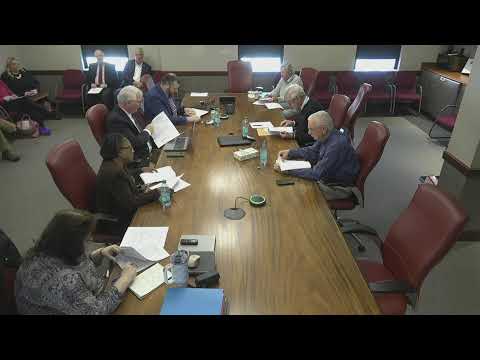
Health Education and Housing Facilities Board hears TEFRA notice and authorizes up to $12 million for 1 West Side Phase 3B
Loading...
Summary
The board held a TEFRA hearing and approved a resolution authorizing issuance of multifamily housing revenue bonds not to exceed $12,000,000 for 1 West Side Phase 3B, a 104-unit component of the West Side redevelopment, and heard details on financing, twinning, unit mix and a tentative 2027 construction timeline.
The Health Education and Housing Facilities Board of the City of Chattanooga on Feb. 17 held a TEFRA hearing and approved a resolution authorizing the issuance of multifamily housing revenue bonds not to exceed $12,000,000 for 1 West Side Phase 3B, a mixed-income development designed for low- and moderate-income residents.
Jim Grawley, a partner with Columbia Residential working with the Chattanooga Housing Authority, said the inducement will allow the project team to apply to the Tennessee Housing Development Authority for tax credits and bond allocations needed to build the 104-unit phase. "We're asking for less," Grawley said, explaining a change in federal law that reduced a previous 50% test to 25% and lowered the amount of bonding required. The city attorney confirmed the plan lists 104 units for this phase, a minor change from an earlier count.
Why it matters: the West Side redevelopment is a multi-phase effort partly funded through a Choice Neighborhoods grant from HUD. Grawley said the broader program includes seven phases; this phase is the first on the College Hill Courts footprint and will proceed only after residents move into replacement housing.
Project and financing details: Grawley described a financing approach known locally as "twinning," which splits a phase into an 'a' component (conventional debt and private financing) and a 'b' component (tax-exempt bonds). The 'b' portion is the part for which the board considered bond authorization. He said the financing package will combine bonds, low-income housing tax credits (both 9% and 4% types were discussed), private equity and conventional debt. Grawley said roughly 40% of units across phases are intended as replacement units for existing public-housing residents; additional units will be income-restricted workforce housing (about 60%–80% of area median income), with market-rate units intended to create an economic mix.
Timing and next steps: Grawley said the team plans to apply to THDA in March and anticipates closing this phase in 2027, with relocation and finishing work continuing into early 2027. After the presentation the chair called for a motion on a resolution authorizing the issuance of revenue bonds not to exceed $12,000,000; the board moved, seconded and approved the resolution by voice vote.
The hearing and the subsequent approval do not themselves complete financing; they are procedural steps that permit the project team to pursue tax-credit allocations and bond issuance under federal and state processes. The board did not record a roll-call tally in the transcript; the minutes show the resolution passed on a voice vote. The project team said it will return with further requests as specific bond allocations and site plans proceed.