Get Full Government Meeting Transcripts, Videos, & Alerts Forever!
Get email alerts on the Prison Education topic
No spam. Unsubscribe anytime.
Kansas colleges outline prison education models and practical hurdles after Pell restoration
Summary
Kansas colleges described how restored Pell eligibility has reshaped prison education: models that mirror campus programs, differing FAFSA workflows (paper vs. electronic), institutional write-offs for costs Pell does not cover, and cooperative state-level partnerships to smooth credit transfer and operations.
Kansas colleges and a federal financial-aid specialist on the Midwestern Higher Education Compact webinar described how restored federal Pell eligibility for incarcerated students is reshaping program design, financial aid workflows and partnerships in the state.
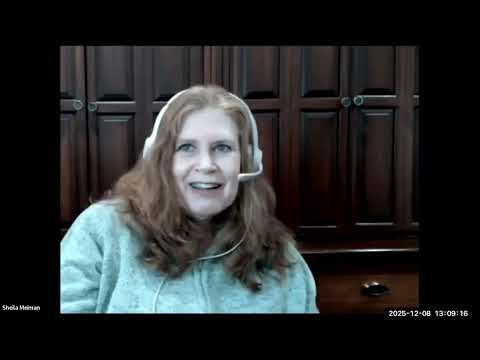
"They are our students in a college," said Sheila Myman, a prison education specialist at the National Association of Student Financial Aid Administrators (NASFAA), summarizing the panel's approach to treating incarcerated learners as full college students while also following stricter PEP (prison education program) rules. Myman outlined what she called the "return of Pell" after the Second Chance Pell experiment, and she walked listeners through Title IV responsibilities that remain in place — satisfactory academic progress, lifetime eligibility limits and administrative-capability requirements — as well as PEP-specific safeguards such as best-interest determinations and carceral-authority oversight.
Two Kansas institutions — the University of Saint Mary and Colby Community College — described different program models and operational choices. Dr. Nicole Hesescalante, associate vice president for academics at the University of Saint Mary, said the university has taught inside prisons since the 1980s, participated in Second Chance Pell, and now operates as a PEP at multiple sites including Lansing Correctional Facility, the federal facility in Leavenworth and disciplinary barracks at Fort Leavenworth. She said the university offers associate degrees at some security levels and bachelor'degree completion at others.
Nicole Nolan of Colby Community College said Colby began classroom work at Norton Correctional Facility in 2008 and expanded over time to add programs such as telecommunications, alternative energy and welding. Nolan said Colby is not yet PEP-approved for all sites because of administrative delays but continues to teach and prepare applications.
The two colleges emphasized program parity with on-campus offerings while making necessary adaptations for facilities: student handbooks that acknowledge KDOC rules take precedence, modified lab or ceremony procedures, and dedicated on-site advising, tutoring and student-advisory councils. "We want this to be successful, and so we've just made it a mission within our admin core that whoever's there, we just take care of it," Nolan said.
The panelists described two opposing FAFSA workflows. The University of Saint Mary uses paper FAFSAs because some facilities limit electronic access; a dedicated financial-aid staffer visits facilities to help students complete and double-check forms before mailing. Colby uses an electronic workflow, creating email accounts and walking students through electronic signatures; the college reported a smooth recent filing cycle after overcoming internet access issues.
Both institutions said Pell frequently does not cover every program cost. "Pell does not cover everything for us," Nolan said, adding that Colby's board and administration have maintained a policy of writing off remaining balances so students do not leave incarceration with debt. Dr. Hesescalante said the university treats non-Pell costs as institutional scholarship awards and also covers books and other site-specific costs when necessary. The colleges emphasized that this approach required early executive and board buy-in.
Panelists highlighted cooperative state-level arrangements. Colleges in Kansas participate in a consortium that includes KDOC and the Kansas Board of Regents (KBOR); the group meets regularly, tours facilities and agreed to exchange student transcripts at no cost so that incarcerated learners can transfer credits without financial barriers. KDOC staff were described as active operational partners, assisting with logistics such as internet troubleshooting, verification documents and coordination inside facilities.
On capacity and recruitment, the University of Saint Mary reported roughly 130 students across three sites and said year-round enrollment often translates to smaller cohorts of 24 to 30 learners; Colby cited a maximum capacity of 91 students per semester determined by vocational equipment and safety limitations. Both colleges use on-site orientations, tablet messaging and partnerships with adult-education programs and local industry advisory boards to recruit and place students.
Panelists also discussed staffing: KDOC requires a minimum of 40 hours of training for instructors and a combination of main-campus faculty, adjuncts and industry practitioners teach inside facilities. Speakers said recruiting can be easier than expected because many faculty value the work, though finding instructors for some specialized subjects (e.g., economics, lab sciences) can be challenging.
The webinar concluded with resources and next steps: slides and a recording will be posted by the Midwestern Higher Education Compact and attendees were asked to complete a follow-up survey. The panel encouraged institutions considering PEPs to plan for dedicated staff for financial aid and advising, build partnerships with corrections agencies and peers, and account for program costs that Pell may not cover.