Get Full Government Meeting Transcripts, Videos, & Alerts Forever!
Get email alerts on the Property Tax topic
No spam. Unsubscribe anytime.
County assessor urges board to oppose House bill 261119, warns split assessment rates could raise costs for land‑intensive properties
Summary
County Assessor Mark Blucher told the El Paso County commissioners that House bill 261119 would separate assessment rates for land and improvements, potentially making taxes regressive and increasing costs for mobile home parks, large‑lot businesses and properties with low‑value improvements. He asked the board to join assessors in opposition.
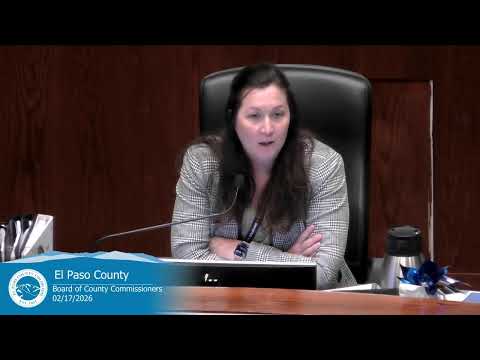
County Assessor Mark Blucher briefed the El Paso County Board of County Commissioners on Feb. 17 about House bill 261119, a legislative proposal to create separate assessment rates for land and improvements that, he said, could shift tax burdens in ways that harm affordable housing and certain types of businesses.
Blucher explained that assessors currently value land and improvements separately as part of mass appraisal but that the bill would require taxing authorities to levy three different mill rates — for land, improvements and other assessed property — to keep total taxes revenue‑neutral in examples. "The land ... would jump up to 140 mills, and the improvement would drop to 33," he said, as an illustrative example. He said that could reduce tax increment financing (TIF) revenue from new construction, increase holding costs, and create incentives that accelerate sales and redevelopment pressure on older, lower‑income properties.
Blucher warned the change could be regressive. "The sponsors believe it's progressive, but assessors believe it's actually gonna turn out to be regressive," he said, and noted that mobile home parks and other land‑intensive businesses could face higher taxes passed on to tenants. He said the assessors' legislative committee voted to oppose the bill and that treasurers also expressed concern.
Board members asked how the bill might affect urban renewal projects and whether it would encourage property owners to build sooner or later. Blucher responded that shifting taxes from improvements to land could reduce revenue produced by new construction and would increase holding costs, thereby encouraging development sooner in some cases. He offered to email his slides to commissioners for further review.
Blucher also raised administrative concerns: implementing separate assessment rates could require costly software updates for assessor offices. "Some assessors believe it will go into the hundreds of thousands [of dollars] based on their vendors," he said, adding the change would complicate tax notices and make it harder for property owners, title companies and brokers to understand assessed values.
What happens next: Blucher asked the board to consider joining assessors and treasurers in opposing House bill 261119 and offered to provide the slide deck and estimates on local impacts.