Lifetime Citizen Portal Access — AI Briefings, Alerts & Unlimited Follows
U.S. energy secretary says shale, infrastructure—not supply—limit LNG exports to Europe
Loading...
Summary
U.S. Secretary Wright told a Paris audience the shale revolution created abundant gas and the U.S. can continue supplying Europe at low prices if infrastructure—pipelines and liquefaction—is built, while arguing policy should emphasize production and innovation over stricter regulation.
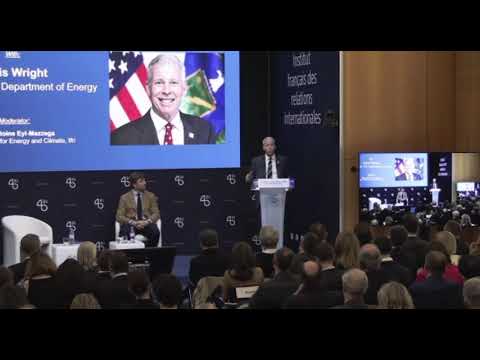
U.S. Secretary Wright said in Paris that the United States has transformed from a net importer of natural gas into the world's largest exporter and can continue to supply Europe if the country builds the pipelines and liquefaction facilities to move gas.
"If we wanted to double United States' exports to Europe, double our exports to Asia, double all of our United States' natural gas exports, we need to add about 15 or 20 drilling rigs," Wright said, adding that the real constraint is movement: "The only limit on natural gas is the ability to move it."
Wright framed the change as a result of the shale revolution. He said the U.S. once ran roughly 1,200 rigs for gas and was the largest importer; today, he said, the country runs about 120 rigs and is the largest exporter while producing more gas. He argued that modest additions in drilling capacity could substantially raise exports.
The secretary told the audience that infrastructure—pipelines, liquefaction plants and global shipping capacity—is the crucial bottleneck. He suggested that, with added transport capacity, the U.S. could keep domestic prices low while increasing exports: "For as far as the eye can see" Wright said, supply can continue at low prices if transport exists.
Wright also placed the issue in a geopolitical context, urging cooperation with European partners to develop pipeline corridors and regional import hubs in countries such as Lithuania, Poland, Croatia and Greece to reduce dependence on unreliable suppliers.
The remarks came during a broader address in which Wright argued for an energy strategy focused on producing "affordable, reliable, and abundant" energy and on enabling allies to reindustrialize. He emphasized practical constraints on the electricity system—peak demand, intermittency and the need for firm capacity—when describing how much gas will be needed to keep grids stable.
Next steps: Wright's comments preview policy priorities focused on permitting and infrastructure to move gas and on bilateral cooperation with European importers. He did not announce new U.S. export approvals or schedules during the session.