Get Full Government Meeting Transcripts, Videos, & Alerts Forever!
Get email alerts on the Infrastructure Roads topic
No spam. Unsubscribe anytime.
Residents, staff spar over who should pay to finish Gentry East roads; county outlines technical fixes and MOU option
Summary
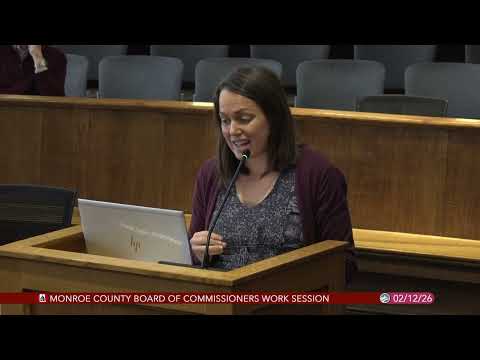
County staff briefed commissioners on unfinished roads in the Gentry East subdivision, saying staff has worked with the HOA and consultant Kelly Abel for years and proposing an MOU and selective technical repairs to reduce costs. Homeowner Mr. Coyne urged county acknowledgement of past bond shortfalls and urged compromise to lower homeowner assessments.
County staff briefed the Monroe County Commissioners on long-running problems in the Gentry East subdivision stemming from a developer who abandoned some public improvements years ago. Staff said planning and highway staff have spent years working with the homeowners association and outside consultants to identify repairs and compromise on standards that will allow the county to accept some roads without imposing full replacement costs.
Ms. Ridge, who led the staff response, said staff has worked with the Gentry East HOA and its consultant, Kelly Abel, and "we have made some compromises, that we will accept those roads" if the HOA follows agreed steps. Staff described three bid projects: two completed and a comprehensive bid returned at $313,568 that homeowners found unaffordable. A more focused sidewalk bid by E & B Paving totaled $56,634; the original developer bond on the subdivision stands at $9,168, leaving an estimated shortfall of roughly $250,000, staff said.
Staff explained that the county must accept roads to current ADA standards at the time of acceptance; older standards cannot be applied retroactively. To reduce costs, staff said they would consider repairs such as saw-cutting and grouting joints and using selective replacement rather than wholesale reconstruction. Staff also proposed a memorandum of understanding with the HOA to ensure remaining bond funds are spent only on specified sections and to require HOA accountability for completing work.
Homeowner and letter author Mr. Coyne praised staff effort but faulted past county practice and inadequate bonds, saying, "I paid my taxes. All these years. You could take general funds and pay for road to street maintenance." Coyne urged the county to acknowledge its role in the shortfall and to consider compromise solutions (including grinding and patching as interim measures) so homeowners avoid crushing special assessments.
Commissioners acknowledged the trade-offs: relying on county general funds to correct developer failures could set a precedent and might disincentivize developers from finishing projects, while insisting homeowners shoulder the cost could damage affordability. Staff said roughly 40 neighborhoods have bonds on file that need updating and reiterated that the county has adopted inflation-adjusted bonds to reduce repeat problems in future developments.
No final funding decision was made; staff will continue working with the HOA and consultant to refine bids and bring options for council consideration.