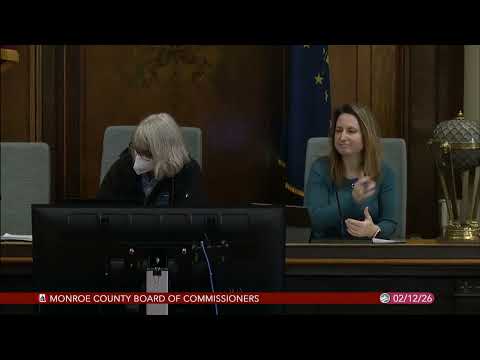
Monroe County approves environmental-constraint exceptions and narrowly passes change to sliding-scale subdivision
Loading...
Summary
The Monroe County Board of Commissioners on Feb. 12 approved text amendments to the County Development Ordinance to allow limited exceptions in the environmental constraints overlay and narrowly approved clarified language on the county’s sliding-scale subdivision option, a 2–1 vote on the latter following debate about property rights and long-term restrictions.
The Monroe County Board of Commissioners on Feb. 12 approved two amendments to the County Development Ordinance, clarifying when exceptions can be granted in the environmental-constraints overlay and revising explanatory language for the county’s sliding-scale subdivision provision.
Nestor Jelen, director of planning, told the board the environmental-constraints amendment (Ordinance 2026-05) allows accessory structures or additions on existing lots of record that meet specified criteria — including a maximum accessory footprint of 1,000 square feet and at least 0.25 acres of contiguous buildable area — while excluding accessory dwelling units and other nonconforming situations. Jelen said the changes also correct scrivener errors, adjust terminology from “parcels” to “lots,” and implement recent state-code changes to permitting procedures.
Commission debate focused most intently on the separate sliding-scale amendment (Ordinance 2026-01). Commissioner Madera, who voted against the measure, argued the 25-year reservation attached to sliding-scale subdivisions "depresses land values and flexibility for a long time," can constrain financing and family planning, and may invite legal challenges on due-process or takings grounds. "I'm concerned it frustrates ordinary family and firm planning," Madera said, urging reliance on variances instead of a long-term recorded restriction.
Commissioner Jones, a member of the ordinance committee when the sliding-scale option was created, defended the policy as a compromise intended to let family members create smaller lots without imposing large new subdivisions that burden county services. "I think this has been pretty effective in doing that," Jones said, adding the 25-year period was chosen after lengthy debate and reflects a generational midpoint.
Chair Powell and other supporters said the amendments mainly clarify existing options — minor, major and sliding-scale subdivisions — and provide applicants with clearer guidance. Powell noted that the sliding scale remains optional for property owners and that the proposed text inserts helpful cross-references to the original 2015 ordinance and implementation guidance.
Votes at a glance Ordinance 2026‑05 (environmental-constraints overlay exceptions): approved 3–0 (Commissioners Thomas, Madera and Jones voted yes). Ordinance 2026‑01 (sliding-scale subdivision clarifications): approved 2–1 (Commissioners Thomas and Jones yes; Commissioner Madera no).
What it means The environmental-constraints amendment creates a clear, narrow pathway for small accessory structures or home additions in constrained lots where ground disturbance can be minimized and septic replacement area is preserved. The sliding-scale clarifications retain the county's existing sliding-scale option while adding explanatory text and references to earlier ordinances; the close 2–1 vote signals continuing local debate over long-term limits on re-subdivision and land-use flexibility.
Next steps Both ordinances passed on final vote at the Feb. 12 meeting and will be reflected in the county’s CDO documents and public packet materials. Planning staff indicated they will continue to monitor related state law changes and field questions from applicants about the new language.