Get Full Government Meeting Transcripts, Videos, & Alerts Forever!
Get email alerts on the Legislation Votes topic
No spam. Unsubscribe anytime.
House advances a package of bills on neighborhood businesses, tax prepayment and condo resale rules; multiple measures pass
Summary
The House passed a set of bills on third reading that would allow small businesses in residential zones with local controls, permit voluntary prepayment of capital-gains taxes, update condominium resale certificate requirements, and create pilot programs for industrial symbiosis and employer-transit partnerships. Vote tallies were announced on the floor.
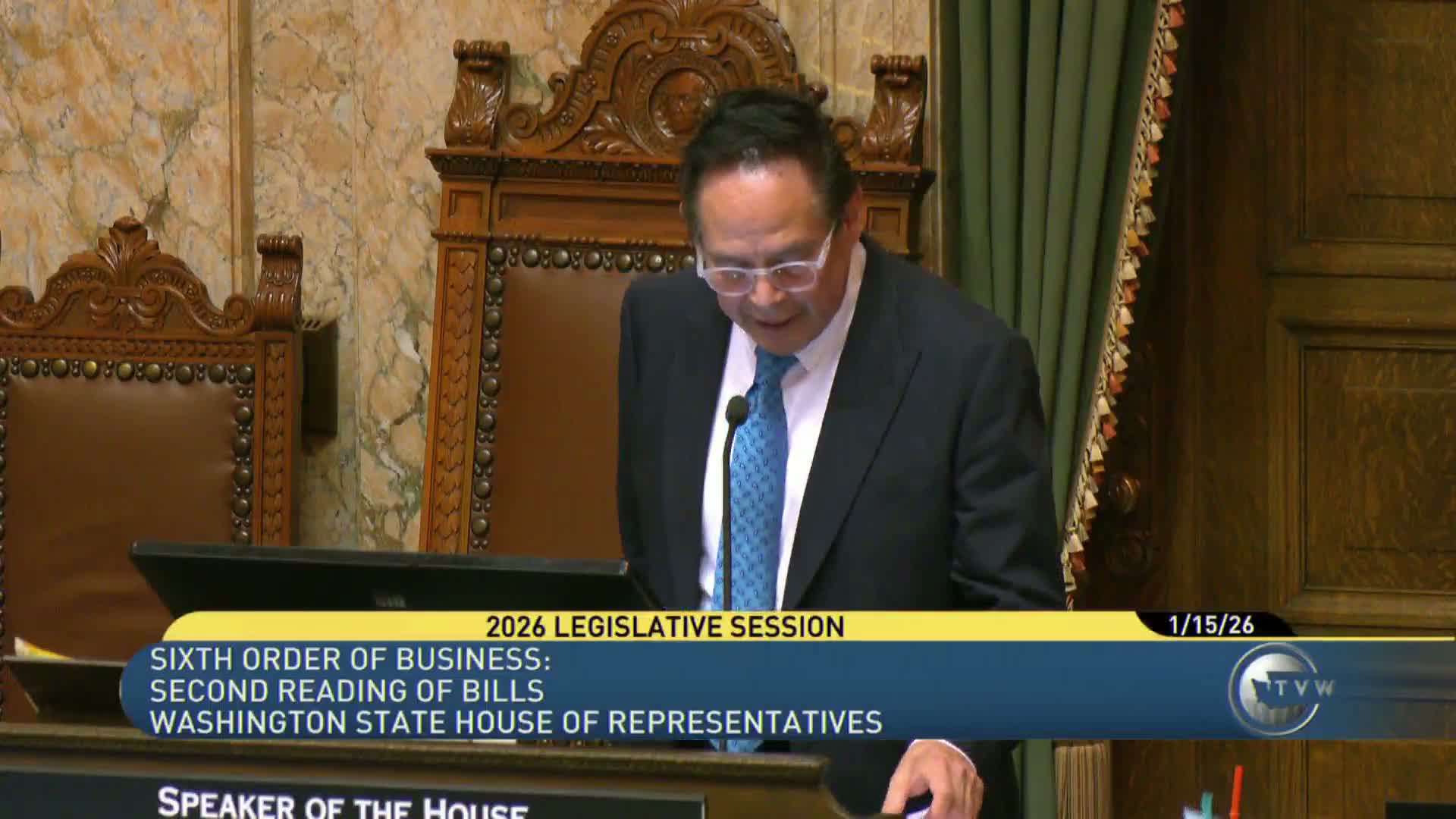
The House of Representatives advanced and passed a series of bills during its session in Olympia, moving measures on neighborhood small businesses, capital-gains prepayment, condominium resale certificates, industrial symbiosis incentives and school financing through final passage.
Several of the bills were advanced under suspension of the rules and took final votes on the floor. Engrossed Second Substitute House Bill 1175, which would allow small businesses to operate in some residential zones with local parameters and added floor-area provisions, passed after amendment and final roll-call vote. Representative Clicker, the bill’s prime sponsor on the floor, said the measure “opens opportunity in neighborhoods” and “brings people together,” arguing it supports small neighborhood markets and community cohesion. Representative Paulette urged support as a way to address parents’ concerns about what is visibly advertised in neighborhood storefronts.
House Bill 1376, permitting taxpayers to prepay capital-gains taxes up to six months early so the payment may fall in the same year as the realized gain for federal deduction purposes, passed unanimously in the recorded vote. Representative Orcutt described the measure as voluntary and a taxpayer benefit, noting the bill includes a provision that the state will not pay interest on refunds from overpayments as a protection for the treasury.
Engrossed Substitute House Bill 1500, concerning resale certificates for units in common-interest communities, was amended with a technical striking amendment to update statutory references and then passed. Representative Reed said the bill is intended to “make it a little bit easier for folks who are trying to sell condos to access the resale certificates” and to ensure certificates include necessary audit reports and disclosures. Representative Dafoe acknowledged concerns that changing rules around private contracts can be sensitive but said the narrower focus on resale certificates supported his vote.
Substitute House Bill 1302 — a measure to give municipalities a tool to waive certain utility connection charges to promote industrial symbiosis and co-location of green-technology businesses — drew mixed comments on the floor. Supporters described potential environmental and resource-efficiency benefits from clustering complementary industries; critics warned the incentives could shift costs to other ratepayers. Representative Dye noted examples of industrial-symbiosis projects seen abroad; Representative Walsh urged caution about affordability impacts. The bill passed on a recorded vote.
House Bill 1796, which allows school districts to bond against levy collections to speed capital projects, drew debate over the balance between voter intent and financing flexibility. Representative Kallen and Representative McClintock framed the bill as a tool to lower construction costs through earlier contracting; Representative Orcutt argued it could erode public trust by allowing bonding without a separate voter authorization. The measure passed on a recorded vote.
Substitute House Bill 1980 was returned for a striking amendment that was adopted; sponsors said it creates a pilot to coordinate employers, transit agencies and infrastructure to improve worker commutes. Representative Zahn urged the body to vote yes, citing partnerships among employers and transit agencies. The bill passed on final passage.
Vote tallies announced on the floor included: HB 1175 — 94 yays, 2 nays, 2 excused (declared passed); HB 1376 — 97 yays, 0 nays, 1 excused (declared passed); HB 1500 — 85 yays, 12 nays, 1 excused (declared passed); SHB 1302 — 76 yays, 21 nays, 1 excused (declared passed); HB 1796 — 78 yays, 19 nays, 1 excused (declared passed); SHB 1980 — 97 yeas, 0 nays, 1 excused (declared passed).
What happens next: Several bills were referred to designated committees earlier in the session and some measures noted coordination with the other chamber; the House adjourned until 9:55 a.m. Friday, January 16 (the fifth legislative day).