
House Committee Advances Substitute for HB 2435 to Expand Gas Surcharge; Opponents Warn of Higher Bills
Get AI-powered insights, summaries, and transcripts
Sign Up Free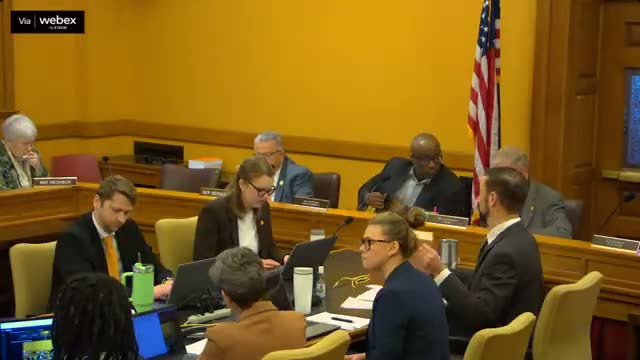
Summary
The Kansas House Committee on Energy, Utilities and Telecommunications voted to untable and pass out a second substitute for HB 2435 that would expand the Gas System Reliability Surcharge (GSRS) to include growth-related capital and raise the residential cap to $1.35; proponents said it reduces regulatory lag while opponents warned it shifts speculative risk and will raise bills between rate cases.
The House Committee on Energy, Utilities and Telecommunications voted Wednesday to take House Bill 2435 off the table, adopt an amendment and pass out a second proposed substitute that would expand the state’s Gas System Reliability Surcharge to include growth-related capital and raise the residential monthly cap from $0.80 to $1.35.
The substitute, as explained by the committee reviser, shortens the Kansas Corporation Commission’s review window for GSRS applications from 120 days to 90 days, allows one GSRS filing per calendar year, removes an automatic inflation adjustment from the proposal, and excludes allocated corporate costs from eligible growth-related capital. The committee adopted an amendment and approved the substitute by voice vote.
Proponents said the measure reduces regulatory lag for utility investments and helps Kansas attract large commercial customers. Patrick Vogelsberg of Kansas Gas Service told the committee the substitute uses an established GSRS mechanism rather than creating a new regime and that GSRS has helped fund safety and reliability upgrades: "About 70% of our overall capital expenditures go to system safety and integrity," Vogelsberg said, adding the company has replaced bare-steel service lines over the past decade to improve safety.
Justin Grady, director of the utilities division at the Kansas Corporation Commission, said the KCC was neutral on the substitute as a policy matter but warned the change "is very likely" to result in higher natural gas rates for residential customers between rate cases because it recognizes capital investments in interim rates that previously were not included. Grady added the longer-term price impact could be mitigated if growth-related investments attract new customers and increase billing units.
Opponents urged more guardrails and evidence that growth-related investments will deliver the promised benefits. Joseph A. Streb, consumer counsel for the Citizens Utility Ratepayer Board (CURB), said CURB remains opposed because the economic-development cases tied to growth are speculative and shifting growth capital into the surcharge would place ongoing risk on ratepayers without a sunset: "To do so, we need to be able to tell our ratepayers what their money is going towards, when we can expect the benefits, and be assured that that's happening," Streb said.
Committee members discussed safety, consumer protections and the prospects for future legislative action. The reviser confirmed that the substitute removes a plant-in-service accounting mechanism that had been in earlier drafts and that the CPI-based automatic escalation was stricken from the version the committee passed.
Votes at a glance: - Motion to remove HB 2435 from the table (mover: Representative Carmichael; second: Representative Hoheisel): passed by voice vote; no opposition recorded. - Amendment to the second substitute (mover: Representative Hoheisel; second: Miss Bojai): passed by voice vote. - Motion to pass out the house substitute for HB 2435 favorably (mover: Representative Hoheisel; second: Miss Bohai): passed by voice vote; Representative Carmichael and the ranking member asked for their votes to be noted.
The committee closed the hearing and passed the substitute out favorably; the bill will proceed to the next stage of the legislative process ahead of the committee's turnaround.