
Kansas committee adopts private-sector hiring preference for service members and spouses, replaces certification with 'evidence'
Get AI-powered insights, summaries, and transcripts
Subscribe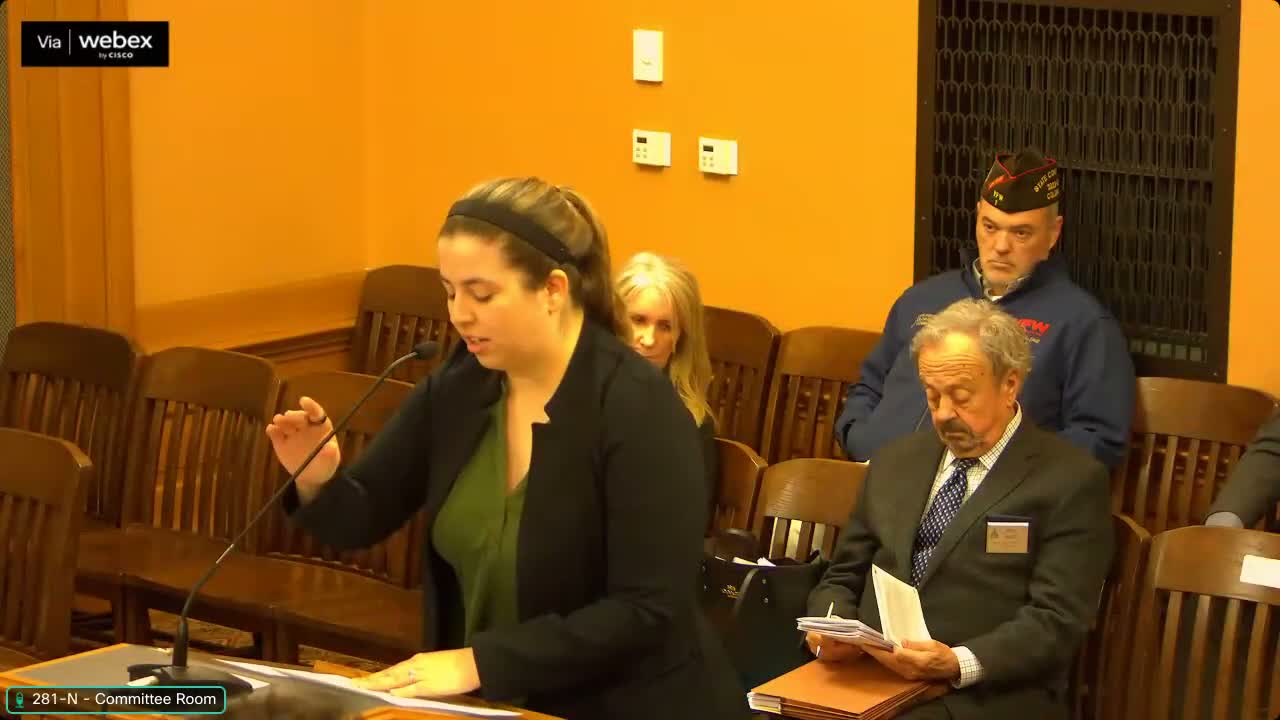
Summary
The Committee on Veterans and Military voted to send House Bill 26-27 to the floor after adopting an amendment replacing a commander-signed certification with 'evidence' for service members and changing 'residency' proof for spouses to 'proof of living in Kansas.' Supporters said the permissive policy protects employers from discrimination claims and helps retain military families.
The Committee on Veterans and Military voted to move House Bill 26-27 to the House floor Monday after adopting a substitute amendment that changes how private employers may verify military status and a spouse's connection to Kansas.
Carly, committee staff, told the committee HB 26-27 "expands permissive preference in private employment to include service members and eligible spouses," and originally required a unit-commander-signed certification and proof of Kansas residency for spouses.
During testimony, Lieutenant Colonel Keith Marshall of the Kansas Adjutant General's Department said the statute is permissive, not mandatory, and provides "top cover protection" for private employers so a hiring preference authorized by state law cannot be challenged under federal discrimination law. "Without that protection in state law...a private employer's preference could be challenged as discriminatory under Title VII," Marshall said.
Michelle Richard, Midwest Regional Liaison for the Defense State Liaison Office, recommended removing the commander signature requirement and altering the residency language. She said military spouses often carry adequate documentation (military ID or orders) and that a commander-signed form could slow hiring: "It places the burden on the unit commander and puts the military spouse at the mercy of the administrative processes that happen at the installation," she said. Richard also warned that a Kansas "residency" requirement could conflict with the Service Members Civil Relief Act, which allows some servicemembers and spouses to maintain legal residency in a different state.
Committee member Representative Carlin moved a substitute amendment that replaced the bill's "certification" requirement with the broader term "evidence" for service members and changed the spouse requirement from "proof of residency" to "proof of living in Kansas." The substitute motion was seconded and carried by voice vote, and the committee subsequently voted to pass HB 26-27 favorably as amended.
Supporters said the measure is voluntary and would let private employers design hiring preferences while shielding them from legal challenge. Opponents and some members asked for future floor amendments to address cross-border edge cases — for example, Kansans who live in Kansas but serve in adjacent-state National Guard units — and to clarify whether the benefit applies to specific reserve or active-duty categories.
The committee sent HB 26-27 to the House floor as amended. Members indicated some technical refinements could follow on the floor to reconcile cross-border service and residency details.