House approves bill tightening voter-registration challenges after lengthy debate
Loading...
Summary
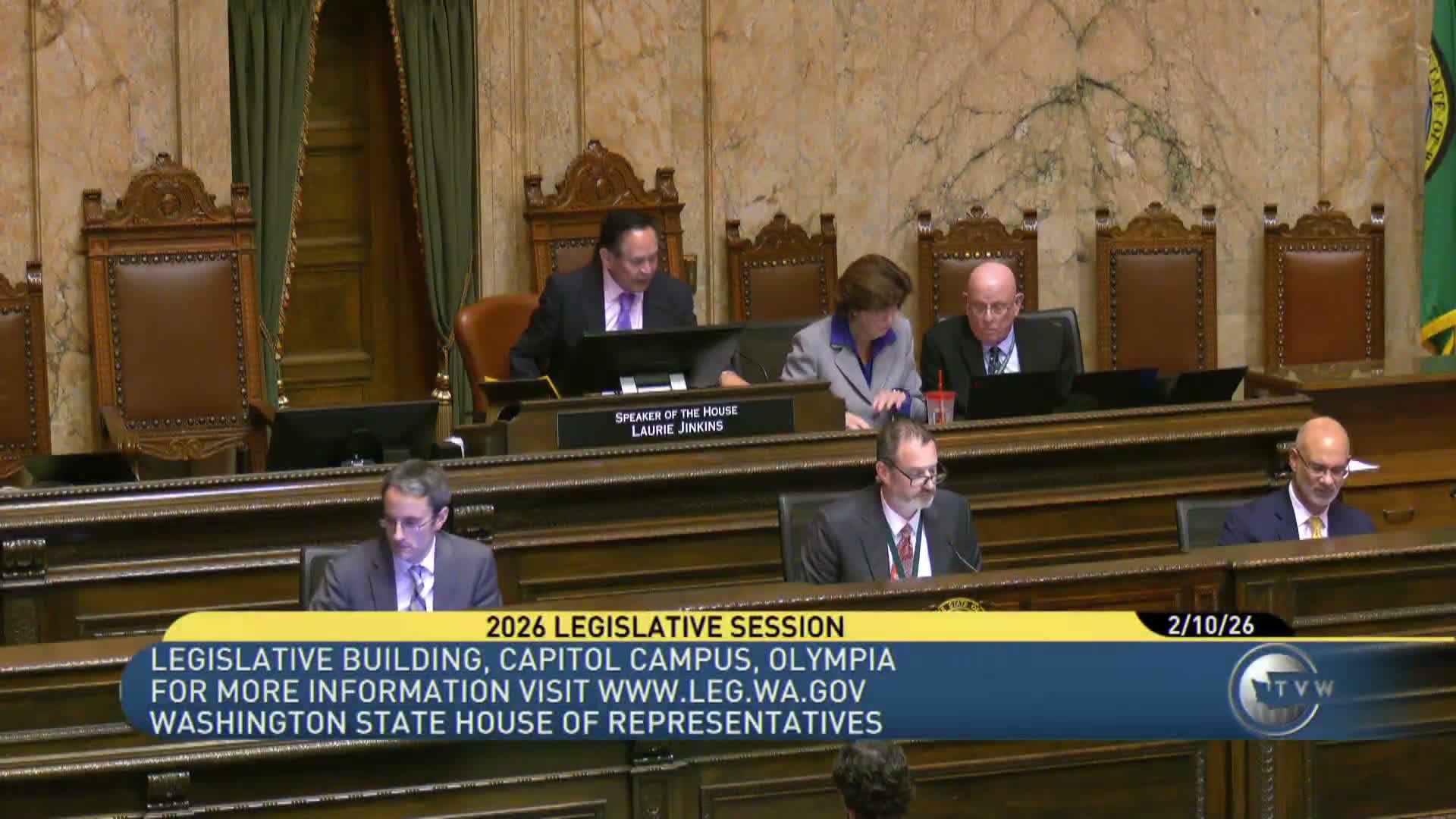
After prolonged debate and votes on multiple amendments, the House passed Engrossed Substitute House Bill 19 16 to revise the process for challenging voter registrations, with supporters saying it guards election officials against meritless mass challenges and opponents saying it raises barriers for lawful citizen oversight.
Engrossed Substitute House Bill 19 16 passed the House after extensive floor debate over amendments that would change criminal penalties and the process for filing voter-registration challenges.
Representative D'Oleo (22nd District), the bill sponsor from the floor, framed the measure as protecting election administrators and voters from meritless mass challenges. “House Bill 19 16 brings clarity, fairness, and uniformity to this process,” D'Oleo said, urging members to vote yes. Supporters argued the bill raises the standard of proof for challenges, requires individualized affidavits, and gives election officials clearer authority to dismiss meritless filings.
Opponents ranged from members concerned about legal penalties to those worried about restricting citizen oversight. Representative Walsh (19th District) warned the bill would make it harder for lawful citizens to act as a check on the voter rolls, saying lawmakers should not “inhibit that and restrict that” process. Representative Waters (17th District) also expressed reservations about potential burdens on small, rural counties, asking whether remote scrutiny could unfairly disadvantage local administrators.
On the floor, members debated several amendments. Amendment 15 14 and related proposals sought to change the offense classification for knowingly providing false information on a voter-challenge affidavit from a felony (perjury) to a gross misdemeanor (false swearing); proponents said the change kept accountability without an overly harsh penalty, while opponents said perjury-level penalties are appropriate for challenges to a constitutional right.
Other amendments addressed whether challenges must include a factual basis, whether electronic submissions and signatures should be allowed, and whether the bill’s provisions should be reworked via a striking amendment that several members described as a compromise crafted with county auditors and election administrators. Multiple amendment votes failed while some were adopted; the House ultimately recorded 58 yays, 38 nays, 2 excused on final passage and declared the bill passed.
The next steps are routine enrollment and transmittal to the Senate (or to the governor depending on processing); the floor record does not specify additional implementation timelines. The transcript included repeated appeals to balance protecting voter access with defending election integrity, and members openly acknowledged divergent views about how to strike that balance.