
Senate committee hears testimony to extend Kansas Angel Investor Tax Credit to 2031
Get AI-powered insights, summaries, and transcripts
Subscribe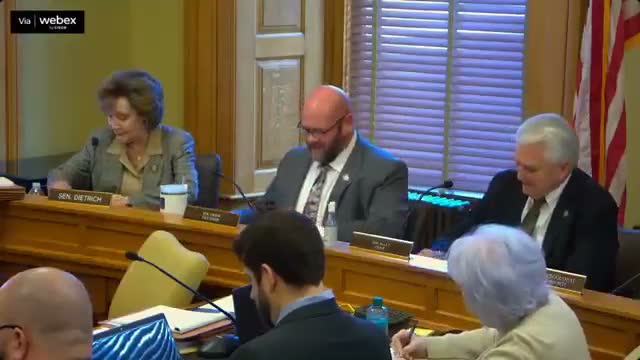
Summary
A Senate Commerce committee heard proponent testimony supporting SB 429, which would extend the Angel Investor Tax Credit sunset to tax year 2031 and cap annual credits at $8 million for 2027–2031; Department of Commerce officials said the program has helped startups statewide and addressed recent audit recommendations.
A Kansas Senate Commerce committee heard testimony on Senate Bill 429 on Feb. 17, which would extend the Angel Investor Tax Credit’s statutory sunset from its current expiration after tax year 2026 to after tax year 2031 and limit annual credits to $8,000,000 for tax years 2027 through 2031.
Amelia Kovar Donahue, assistant reviser, told the committee the bill would amend KSA 74 81 33 to allow unissued credits under the annual cap to be awarded in later years up to 2031 but that transferability and carryforward rules for awarded credits are a separate issue.
Rachel Willis, director of legislative affairs for the Department of Commerce, testified in support of the extension and described the program as “one of our most effective innovation tools.” Willis said the program has enabled Kansas startups to leverage “more than $600,000,000 in private investment” and supported roughly 266 unique companies. She told the committee Commerce has implemented the two recommendations from a recent legislative post audit, establishing quarterly reports and enhanced monitoring, including site visits and new survey processes.
Willis defended the program’s results when questioned about audit findings and comparative outcomes. She said Commerce’s internal tracking shows a program company survival rate of about 49.6%, which she contrasted with a cited national comparator of 46.8%. On geographic reach, Willis said awards and participating companies are statewide, naming Wichita, Manhattan, Kansas City and Garden City as examples, and described uses of investment including hiring, testing, research and development and commercialization.
Committee members also asked procedural questions about how the bill treats unissued credits versus awarded credits and about the program’s data-tracking. Amelia Kovar Donahue clarified that the amendment language being considered addresses the annual issuance cap and the availability of unissued credits in later years but does not change the program’s transferability rules, which currently allow a credit to be transferred one time under the program’s terms.
The committee closed the hearing on SB 429 after noting three written proponents were included in the packet and that there was no neutral or opposition testimony. No committee vote on SB 429 was recorded in the transcript.
What’s next: The hearing record for SB 429 is closed; the bill’s next steps would depend on committee scheduling and any future motions to report the bill out of committee.