
Senate passes bill expanding civil investigative demands for Attorney General with new procedural guardrails
Get AI-powered insights, summaries, and transcripts
Subscribe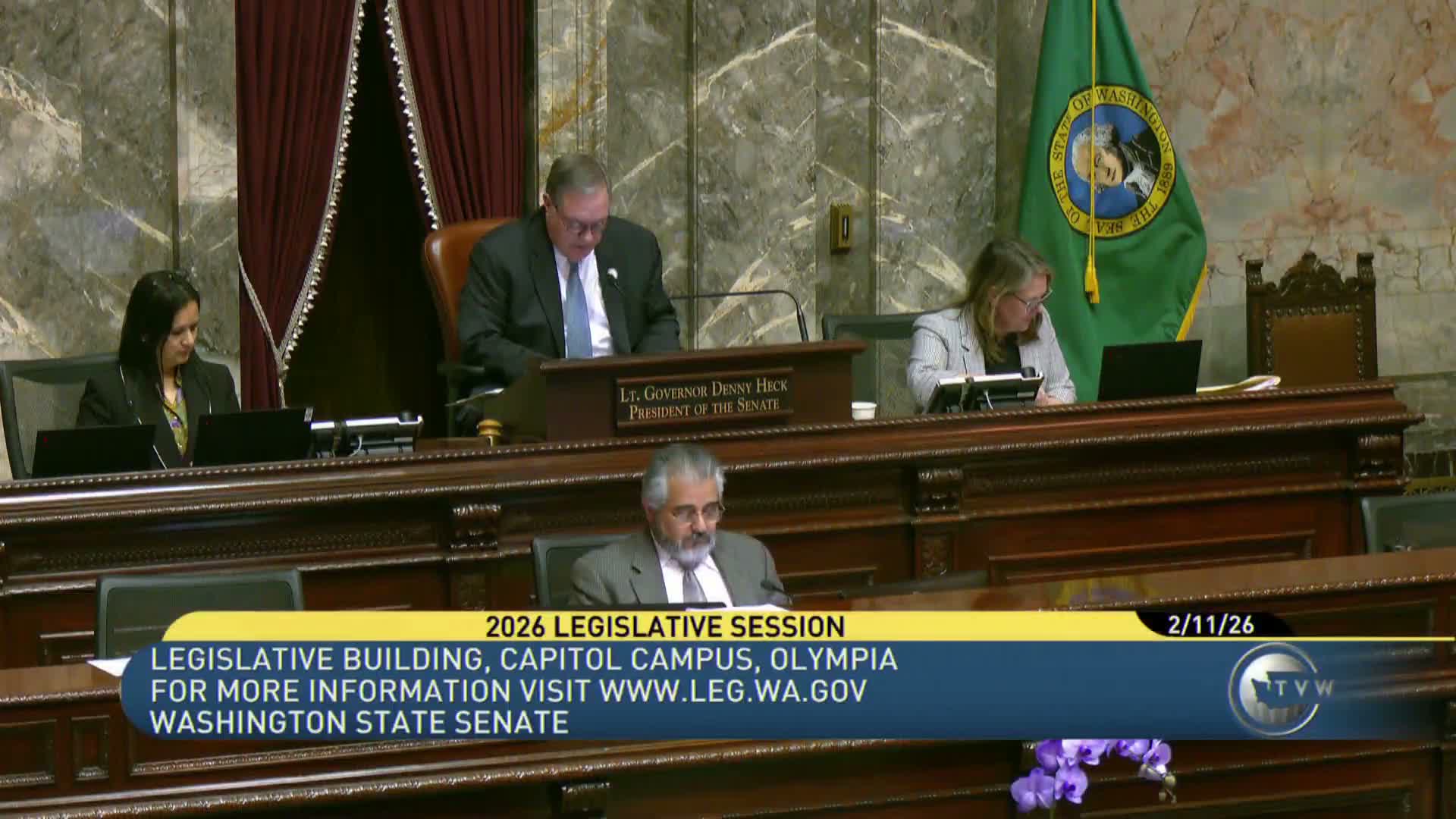
Summary
The Senate voted to pass substitute Senate Bill 5,925, expanding civil investigative demand (CID) authority for the Attorney General while adopting an amendment requiring documented facts and assistant attorney general approval before initiating a CID; several amendments failed and critics warned of business impacts.
The Washington State Senate on final passage approved engrossed substitute Senate Bill 5,925, a measure that expands the Attorney General's civil investigative demand (CID) authority while adding procedural standards for initiating investigations.
Senator M. Hansen, who led floor consideration of the bill, said the measure narrows and clarifies CID authority to targeted areas such as wage-theft and minimum-wage enforcement, certain constitutional issues and discrimination claims, and allows the Attorney General to obtain information before filing suit. "This bill will make it easier for the attorney general to enforce the laws we already have," Hansen said.
The Senate adopted amendment 0616, offered by Senator T. Wagner, which requires documented facts and circumstances supporting a possible violation and an assistant attorney general's review before a CID may be issued. Wagner said the amendment "sets a standard" and creates a record, and Senator Dhingra said it provides guardrails consistent with civil (not criminal) investigative authority.
Several other amendments seeking additional protections for small businesses or changes to penalties were rejected. Senator C. Christian proposed amendment 0584 to exempt minority- and women-owned small businesses with no violations in the prior three years; the roll-call vote failed, 19 ayes to 30 nays. Senator N. Holy sought to change criminal penalties tied to disclosure of a CID to a class 1 civil infraction (amendment 0598) and later to prohibit imprisonment for contempt in CID-related proceedings (amendment 0599); both measures were not adopted after debate.
Senator F. Fortunato offered amendment 0597 to require reimbursement of expenses to CID targets when an investigation produces no violations; opponents, led by Senator Hansen, said a "loser pays" rule would deter the Attorney General from pursuing large, complex investigations and the amendment was rejected.
Opponents warned the bill could be used to overreach against small businesses. "If the attorney general's office comes after these folks, most of them do not have the ability to survive," Senator Christian said, noting many firms have fewer than 50 employees. Senator Holy cautioned the measure could be "weaponized" by future administrations and stressed due-process and free-speech concerns.
In final passage, the clerk recorded 30 ayes and 19 nays, meeting the constitutional majority required. The Senate declared engrossed substitute Senate Bill 5,925 passed; the title of the bill will be the title of the act. No effective date was specified on the floor during the recorded proceedings.
Next steps: the bill proceeds to enrollment for transmittal to the governor under the chamber's rules.