
Washington House advances and passes slate of bills on third reading
Get AI-powered insights, summaries, and transcripts
Subscribe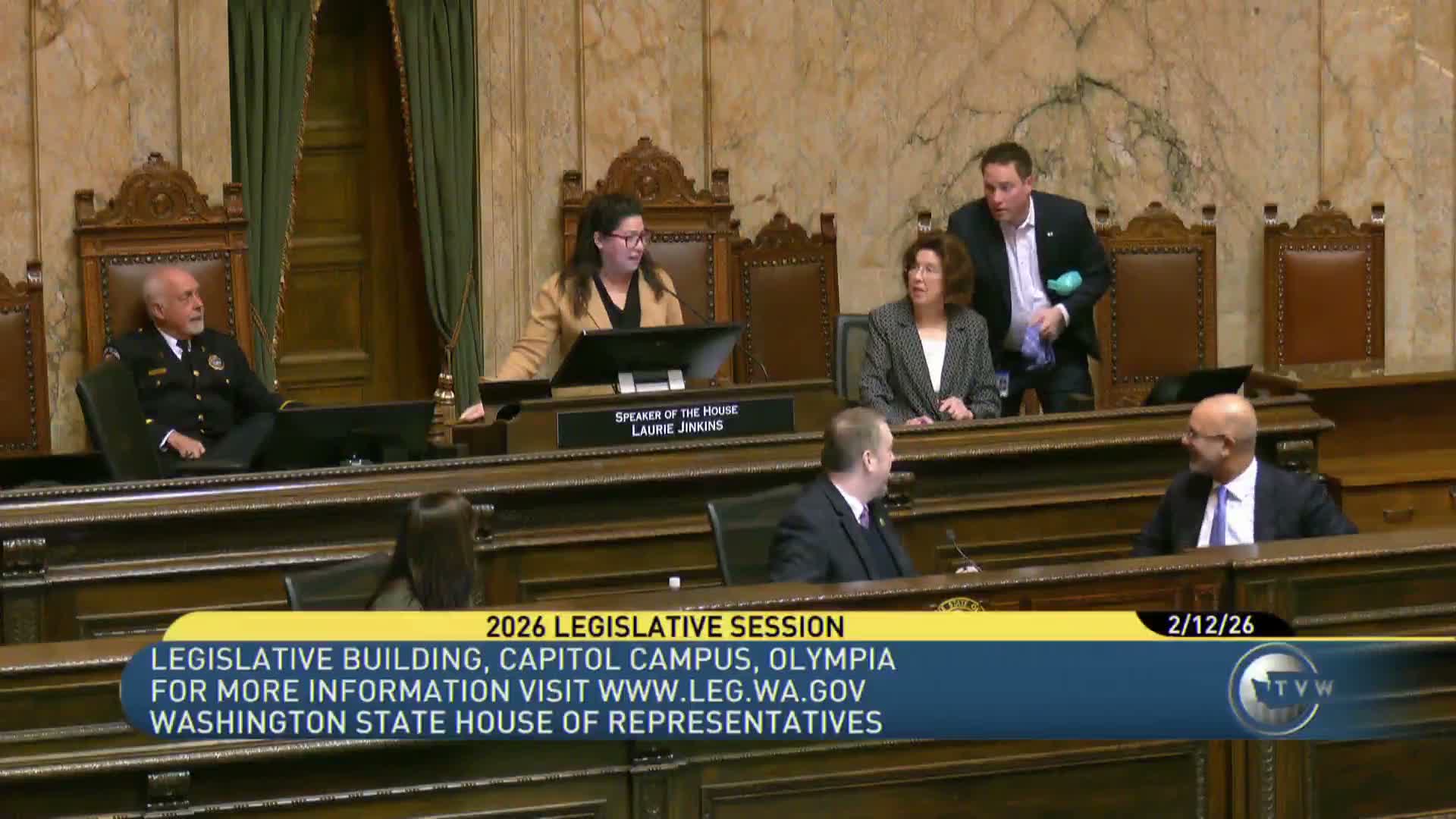
Summary
The Washington House advanced and passed multiple third‑reading bills covering weatherization, construction predesign thresholds, heritage orchards, small‑works rosters, consumer protections and veterinary practice rules. Most measures passed by wide margins; roll calls recorded unanimity in several items.
The Washington House convened for a floor session that advanced and passed a series of third‑reading bills on matters ranging from community weatherization to veterinary practice rules.
By unanimous or near‑unanimous margins, members moved a package of bills forward. House Bill 23‑38, authorizing community‑scaled weatherization projects and expanding low‑income weatherization work to community and multifamily projects, was advanced to third reading and approved after floor remarks from Representative Kallen of the 5th District and Representative Abarno of the 20th District. The clerk recorded 93 yays, 1 nay and 4 excused; HB 23‑38 was declared passed.
Lawmakers also passed House Bill 23‑53, which raises predesign thresholds used in state capital projects from $10 million to $15 million and puts the threshold in an escalator to better match inflation and project scale. Representative Keaton of the 25th District described the change as a government‑efficiency measure to reduce costly predesign requirements; the roll call was 94 yays, 0 nays, 4 excused.
A set of additional bills received floor consideration and passage: substitute House Bill 23‑63 (temporary licensure exemptions allowing supervised practice for certain applicants, effective Jan. 1, 2027), substitute House Bill 25‑25 (establishing a Heritage Orchard Program with a Washington State University registry to preserve rare apple varieties), substitute House Bill 24‑20 (increasing small works roster thresholds, effective July 1, 2026), substitute House Bill 24‑28 (allowing third‑party designees to prevent unintentional life‑insurance lapses), House Bill 26‑04 (permitting electronic signatures for vehicle title transfers), and substitute House Bill 21‑07 (making a workplace hazard notice pilot permanent with a 10‑day written notice requirement from L&I). Most of these measures passed with recorded tallies of 94 yays, 0 nays, 4 excused, as read by the clerk on the floor.
Engrossed substitute House Bill 22‑47, addressing veterinarian‑client‑patient relationships and telehealth use in veterinary practice, was amended on the floor. The House adopted amendment 15‑17 (a striker) after it was moved and seconded; supporters said the change requires annual veterinarian visits for certain animal production contexts and formalizes oversight for food‑safety and breeder operations. After adoption of the amendment, the engrossed substitute was advanced and declared passed with the same recorded majority counts.
Votes at a glance: House Bill 23‑38 — passed (93 yays, 1 nay, 4 excused); House Bill 23‑53 — passed (94 yays, 0 nays, 4 excused); Substitute HB 23‑63 — passed (94 yays, 0 nays, 4 excused); Substitute HB 25‑25 — passed (94 yays, 0 nays, 4 excused); Substitute HB 24‑20 — passed (94 yays, 0 nays, 4 excused); Substitute HB 24‑28 — passed (94 yays, 0 nays, 4 excused); HB 26‑04 — passed (94 yays, 0 nays, 4 excused); Substitute HB 21‑07 — passed (94 yays, 0 nays, 4 excused); Engrossed Substitute HB 22‑47 — amendment adopted and bill passed (94 yays, 0 nays, 4 excused).
What happened next: Members announced immediate caucuses and the House recessed.
Reporting note: Quotations and attributions in this report come directly from remarks recorded on the House floor during third‑reading debate and roll‑call announcements.