Get Full Government Meeting Transcripts, Videos, & Alerts Forever!
Get email alerts on the Voting Rights topic
No spam. Unsubscribe anytime.
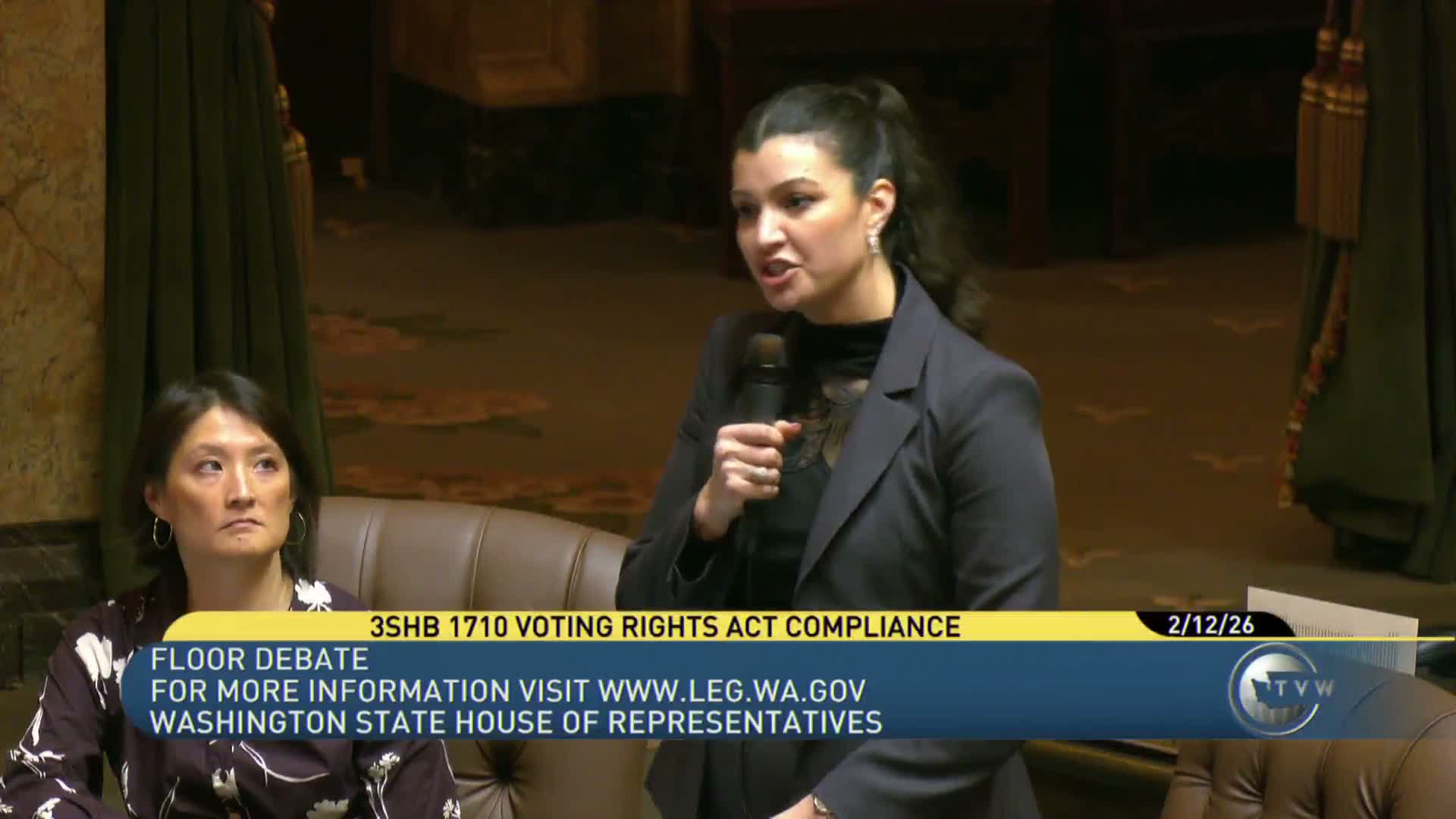
House passes expanded Washington Voting Rights Act after hours of amendments and heated debate
Summary
The House passed a substantially amended House Bill 17 10 to add state preclearance and other changes to the Washington Voting Rights Act after extensive floor debate and dozens of amendment votes. Supporters said it protects voters from dilution; opponents warned it could impose costly mandates on local jurisdictions.
The Washington House on Thursday passed House Bill 17 10, a package of changes to the state Voting Rights Act that creates a state-level preclearance process and new enforcement mechanics after a lengthy floor session marked by dozens of amendment votes.
Representative Mena, the bill sponsor, urged the chamber to approve the measure, saying it would protect ‘‘every Washingtonian’s sacred and constitutionally guaranteed right to vote’’ and restore a ‘‘fair playing field’’ for communities that have faced voting barriers. ‘‘This is about protecting the little guy,’’ she said on the floor.
Supporters framed the bill as an update to state law following federal changes and court decisions that they said reduced available protections. Representative Gregerson called the bill ‘‘time to strengthen the law’’ and said it would add clear, transparent procedures for identifying voter suppression and dilution.
Opponents repeatedly warned the bill could be weaponized and impose heavy costs on local governments. Representative Walsh said the proposal ‘‘turns our law into a weapon of selective prosecution’’ and warned it could create long-running litigation and a ‘‘scarlet letter’’ for jurisdictions. Representative Defoe said small, cash‑strapped counties could be forced into repeated legal battles.
The floor record shows many contested amendments. Some—such as changes to narrow coverage, require reimbursement of attorneys’ fees if the attorney general loses, or to limit repeated challenges—were offered and rejected; others were adopted. Lawmakers debated whether the standard for a claim should focus on impact rather than intent, how long covered jurisdictions should remain listed, and whether the attorney general should have certain rulemaking authorities.
The House ultimately recorded 57 yays, 39 nays, and 2 excused on final passage of the engrossed third substitute. The bill’s backers said the vote reflects the need for state protections if federal remedies shrink; opponents said the measure requires further work to avoid unintended burdens on local jurisdictions.
What happens next: The bill now moves on according to the legislative process (enrollment and any next-chamber steps). Floor debate included detailed proposals on appeals, timelines for attorney general review, and who may intervene in litigation—topics likely to shape implementation and potential legal challenges.