Get Full Government Meeting Transcripts, Videos, & Alerts Forever!
Get email alerts on the Housing topic
No spam. Unsubscribe anytime.
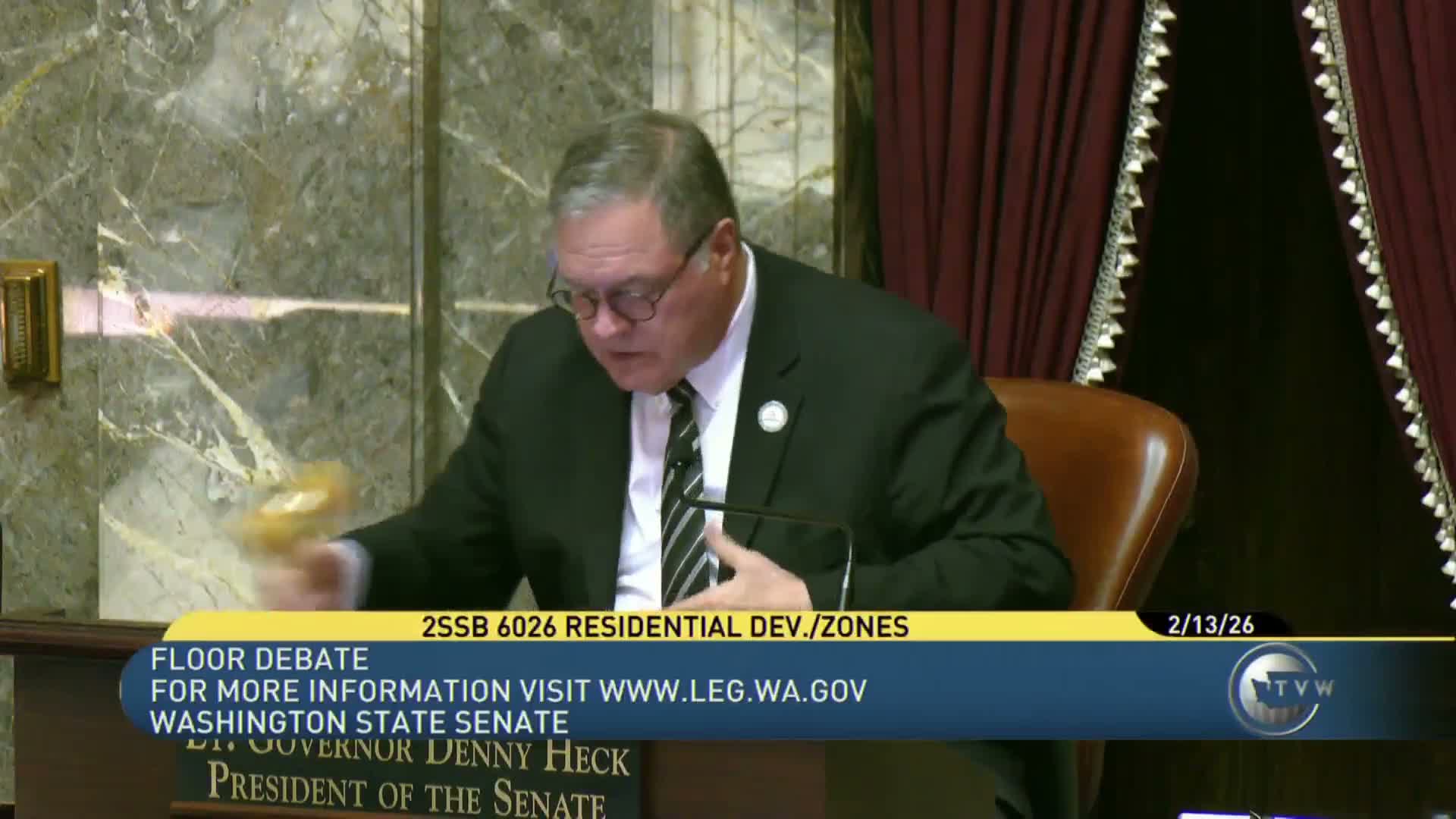
Senate approves bill to allow housing in commercial and mixed-use zones after lengthy debate
Summary
The Washington State Senate passed second substitute Senate Bill 6,026, a zoning reform to permit residential development in commercial and mixed‑use zones, after amendment votes and extended floor debate about local control and implementation (final tally: 36–12–1 excused).
The Washington State Senate on Feb. 12 passed second substitute Senate Bill 6,026, a measure that allows residential development in commercial and mixed‑use zones in the state, a step sponsors said will unlock underused property for housing while critics warned it risks overriding local plans.
Senator Alvarado, the bill sponsor, told the chamber the measure “legalizes housing in commercial and mixed use zones” to convert vacant storefronts and parking lots into homes and ease housing shortages. Supporters said the bill offers temporary flexibility and off‑ramps for cities to reassert local mandates after completing studies; opponents said the measure changes rules mid‑stream and could impose unfunded burdens on local planners.
The bill attracted multiple amendments during floor consideration. Senator Gaynor successfully moved an amendment (No. 0624) to clarify and confine the bill’s application to commercial and mixed‑use areas; that amendment was adopted. An amendment to count municipal amenity spaces as commercial (No. 0623) failed. Senator Alvarado also secured a technical amendment to ensure the measure does not undo existing law related to critical areas (No. 0626). One amendment that was listed for withdrawal (No. 0586) was withdrawn at the desk.
Among lawmakers opposing the bill, Senator Christian said frequent changes to statewide rules make planning more difficult for cities and add costs. Senator Fortunato and others questioned whether the bill’s approach—converting commercial spaces—matched their vision of “homes” and whether the state should instead give local jurisdictions more flexibility. Senator Solomon, a former city council member, urged continued work to “right size” the bill with more city‑level data and cautioned about impacts to municipal revenue and job‑growth areas.
After debate and recorded roll calls on amendments and final passage, the secretary announced the final vote as 36 ayes, 12 nays and 1 excused. The bill was declared passed.
The measure cites a new section to be added to chapter 36 of the Revised Code of Washington (RCW) and references RCW 84.36.560 in its text regarding implementation and commercial zone definitions. Proponents said the bill includes exemptions for primary placemaking areas—such as main streets, transit zones, historic properties and business improvement areas—and offers an off‑ramp for cities that submit studies as part of comprehensive plan updates.
The Senate’s action sends the bill onward in the legislative process; supporters said it is intended to spur more housing production within existing urban growth areas, while critics vowed to press for adjustments and more data on city‑by‑city impacts.
Ending: The Senate declared gross second substitute Senate Bill 6,026 passed on Feb. 12; next steps for the bill will follow the regular legislative process.