Get Full Government Meeting Transcripts, Videos, & Alerts Forever!
Get email alerts on the Education Restraint Isolation topic
No spam. Unsubscribe anytime.
Washington House approves overhaul of school restraint and isolation practices after extended debate
Summary
The House passed Engrossed Substitute House Bill 1795 after extensive floor debate and amendment votes. The bill bans mechanical and chemical restraints, narrows use of isolation, phases changes toward 2031, and adds reporting and training requirements; proponents cited student safety and trauma, opponents warned of implementation and staffing impacts.
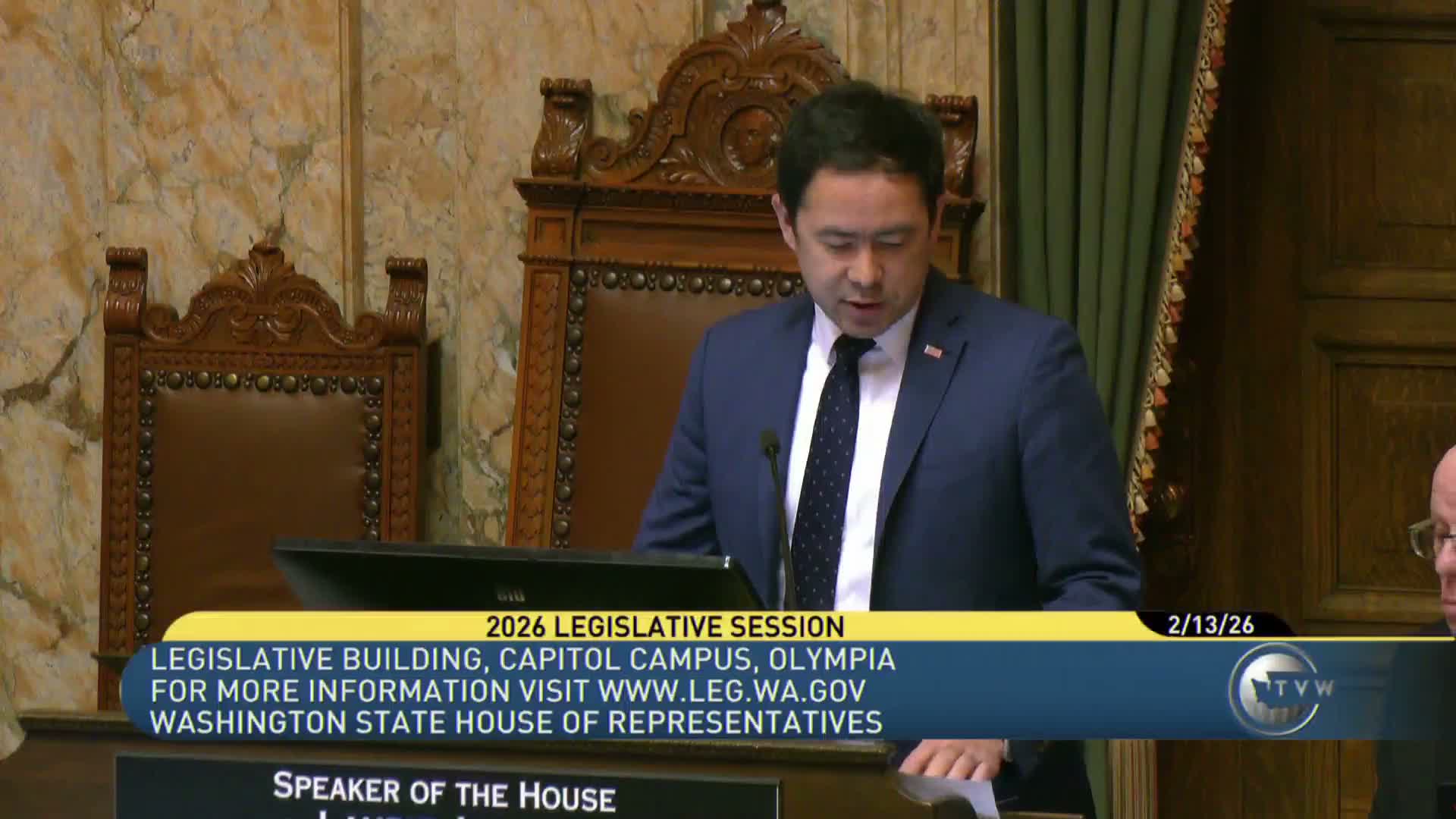
The Washington state House approved Engrossed Substitute House Bill 1795 on reconsideration after a daylong floor debate over the use of isolation and restraint in schools. The bill bans mechanical and chemical restraints, clarifies definitions of isolation and restraint, and sets a policy trajectory with implementation steps and reporting requirements culminating in a phased end to certain isolation practices by 2031.
Supporters framed the legislation as a student-safety and civil-rights measure. Representative Callan, a bill sponsor, said the measure seeks to "ensure that every student and every educator is feeling safe, ready to learn, and capable of learning." Representative Taylor pressed the scale of the problem in stark terms, saying, "87 percent of the kids have disabilities," arguing those populations are disproportionately affected by current practices.
Debate focused on multiple technical amendments adopted or rejected on the floor. Lawmakers disputed whether parents should have an affirmative role in initiating planned behavioral-intervention plans and whether protection for personal medical and assistive devices should be explicitly included. Representative Marshall said the amendment to remove a medical-professional consultation requirement would "allow parents to have more of a say" in planning, while Representative Kallen argued a health professional's role is important to protect children.
Several speakers raised implementation and staffing concerns. Representative McIntyre, drawing on experience in schools, cautioned the bill "treats a symptom and not the underlying disease," arguing insufficient professional development and staffing shortages could leave teachers without the training needed to adopt new approaches. By contrast, Representative Barnard, speaking from personal experience with a family member who is a paraeducator, described situations where a short period in an isolation room allowed a child to calm and rejoin class: "I'm gonna put you in this isolation room for 30 seconds to just allow you to breathe."
The floor also considered narrow amendments on property protection and reporting. One adopted amendment expanded reporting to capture out-of-state placements and other authorized entities, intended to monitor whether students are shifted out of district as implementation proceeds.
The House initially recorded a roll-call of 58 yays, 36 nays and 4 excused for the engrossed substitute; the bill was later reconsidered and declared passed on reconsideration with 57 yays, 37 nays and 4 excused. The bill now moves on to the next steps in the legislative process.
The measure draws on guidance from the Office of Superintendent of Public Instruction and creates new reporting and training requirements for districts as they transition away from certain isolation practices. Lawmakers said the Legislature will need ongoing oversight to evaluate training, implementation, and any unintended consequences.
Representative Santos, who spoke in favor of strengthening supports and training, said the bill "is about making sure that every student can learn" and urged support for the enacted approach. Opponents urged caution, asking for more funding for professional development and implementation details before removing tools that districts currently use.
The House concluded reconsideration and declared the bill passed; further action, including any technical fixes or funding requests, may follow in committee or the other chamber.