
Senate passes Wrongfully Convicted Persons Act after contentious amendment fight
Get AI-powered insights, summaries, and transcripts
Subscribe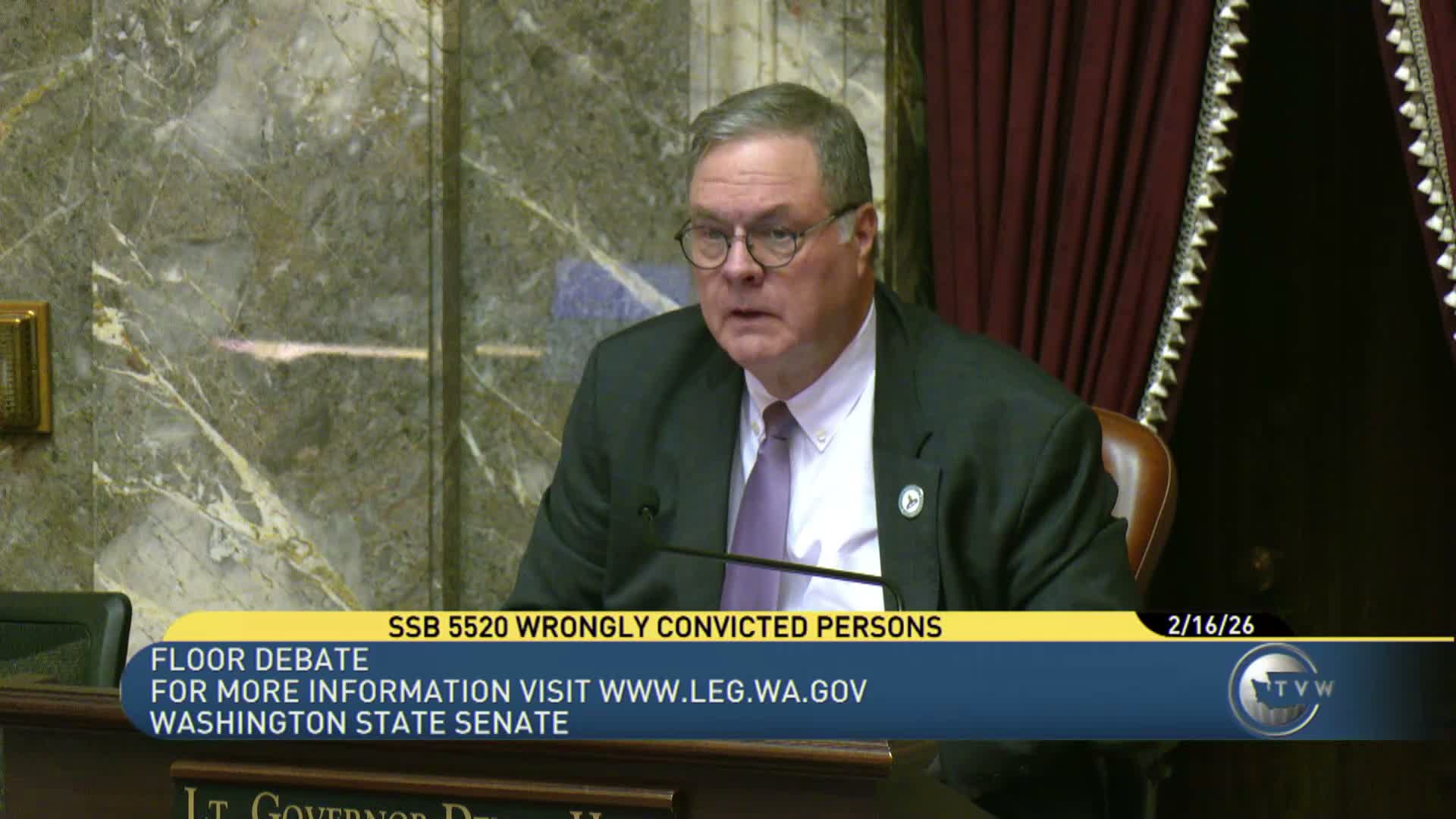
Summary
Substitute S.B. 5,520, a bill to streamline compensation for wrongfully convicted people, passed the Senate after floor amendment debate and a division call; sponsors and opponents disputed whether to include civil confinement language and the amendment to remove it failed in division.
The Senate took up Substitute S.B. 5,520, legislation aimed at improving compensation and restitution procedures for people wrongly convicted. Sponsor Sen. Orwell framed the bill as the result of work with the Innocence Project and the Attorney General’s Office to make it easier for exonerees to receive compensation; she recounted historical exonerations and the human impact on people who lost years behind bars.
Sen. Wagner offered an amendment to remove a provision that would have extended liability in cases involving civil confinement following a conviction; he argued the change would reduce open-ended fiscal exposure to rare circumstances. Sen. Dhingra opposed Wagner’s amendment, saying if the state wrongfully convicts someone it should accept responsibility for consequences, including related federal holds. A division was called on the amendment and the amendment was not adopted; the substitute bill then proceeded to final passage and was declared passed (the roll call announced 31 yea, 18 nay).
The floor debate focused on balancing fiscal risk and moral responsibility to people who were wrongfully convicted; sponsors emphasized that the bill facilitates compensation and recognition of harm to exonerees.