
Senate committee backs substitute to expand calcium scans, allow pharmacists to manage coronary risk
Get AI-powered insights, summaries, and transcripts
Sign Up Free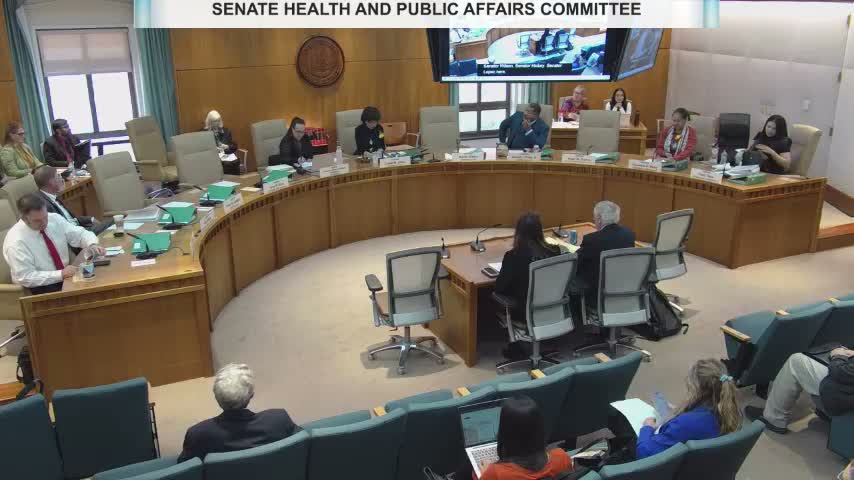
Summary
The Senate Health and Public Affairs Committee gave a due-pass recommendation to a substitute for Senate Bill 130 that would expand calcium CT screening for people over 50, remove patient cost-sharing for certain tests/drugs, and allow trained pharmacists to order scans, manage lipid testing and prescribe drugs to lower LDL.
Senate Health and Public Affairs advanced a committee substitute for Senate Bill 130 after sponsor Senator Hickey argued the measure would increase calcium CT screening and let trained pharmacists manage cholesterol care to reduce coronary artery disease deaths.
Senator Hickey told the committee that coronary artery disease accounts for roughly 20% of U.S. deaths and that about 3,500 New Mexicans die each year from the condition. He described the bill as a package to expand quick calcium CT screening for people over 50, remove financial barriers and allow pharmacists with competency training to order CT calcium scans, manage lipid profiles and provide lipid-lowering medications. "So that's what this bill proposes to do is to allow the pharmacist to manage it and to remove all co pays so there are no financial barriers in a disease that we can treat for next to nothing and save that many lives," he said.
Pat Block of Otero Consulting, representing Prime Therapeutics, testified in opposition. Block said she understood the bill's goals but warned that eliminating patient cost-sharing does not erase underlying costs: "While Senate Bill 1 30 has laudable goals, it's unlikely to save patients money despite eliminating cost sharing," she said, adding that costs would shift to premiums because labs and pharmacies still require payment.
Committee members asked detailed questions about cost estimates, rural access and pharmacist training. Senator Scott and others pressed the sponsor on whether rural areas have enough clinicians and pharmacists with clinical training; the sponsor said UNM provides competency training and estimated about 50 hours of additional training for clinical pharmacists. The sponsor and supporters also argued the measure would produce long-term savings by reducing expensive hospitalizations, catheterizations and other downstream care.
After debate, the chair accepted a due-pass motion on the committee substitute. The roll call was completed in committee and the chair announced a due-pass recommendation for the substitute measure. The committee record lists the roll call on the substitute; the chair announced the committee recommendation at the conclusion of the panel's discussion.