Get AI Briefings, Transcripts & Alerts on Local & National Government Meetings — Forever.
House approves bill to collect demographic data at hospitals after heated debate over immigration impacts
Summary
The House passed Senate Bill 1051 (substituted for HB 2689) requiring certain demographic reporting at health care institutions despite opponents’ warnings it could deter immigrant patients; supporters characterized the change as limited data collection to help hospitals understand cost drivers.
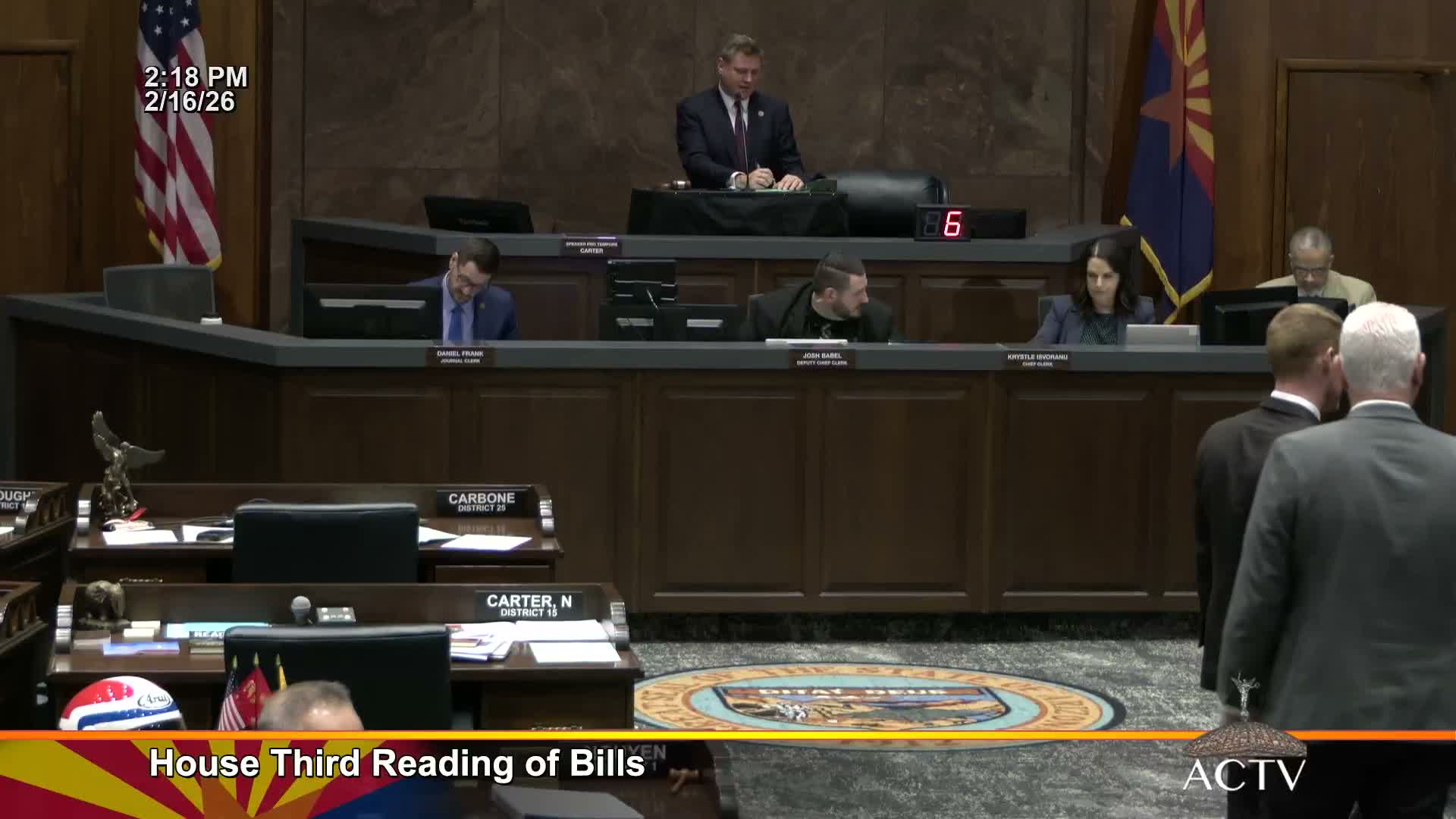
The Arizona House debated and passed Senate Bill 1051 (substituted for House Bill 2689), a measure the transcript records as amending provisions of ARS Title 36 related to health care institutions. The measure drew extended floor explanations and sharply contrasting views before the clerk recorded passage by 33 ayes, 25 nays and 2 not voting.
Opponents argued the bill would effectively make clinicians into immigration agents and could deter patients from seeking care. Representative De Los Santos said, “I simply do not believe that doctors and nurses should become immigration agents,” and Representative Sandoval warned that in parts of her district people are already afraid to go to hospitals because of immigration enforcement presence.
Supporters described the measure as a data‑collection tool that would help hospitals track cost drivers and improve access. Representative Heap said the bill was meant to gather information to address emergency‑department and hospital challenges and asserted: “There’s nothing in the bill that would allow anybody to be identified or reported to ICE.” Representative Martinez and other proponents said hospitals in Yuma and elsewhere had requested the ability to collect demographic information to better understand local costs and access issues.
Speakers also raised equity concerns for rural and tribal communities where transportation and internet access make mandatory training or reporting more burdensome. Representative Peshlakai noted that many tribal constituents rely on SNAP and face barriers to attending centralized training or reporting locations.
Despite the debate, the House passed the measure and the clerk instructed that the bill be conveyed to the Senate. The transcript records members explaining their votes at third reading and notes prior veto history mentioned by opponents during floor debate; the measure now moves to the Senate for further action.