
Arizona House advances suite of measures on SNAP, licensure and health policy; memorial resolution adopted
Get AI-powered insights, summaries, and transcripts
Subscribe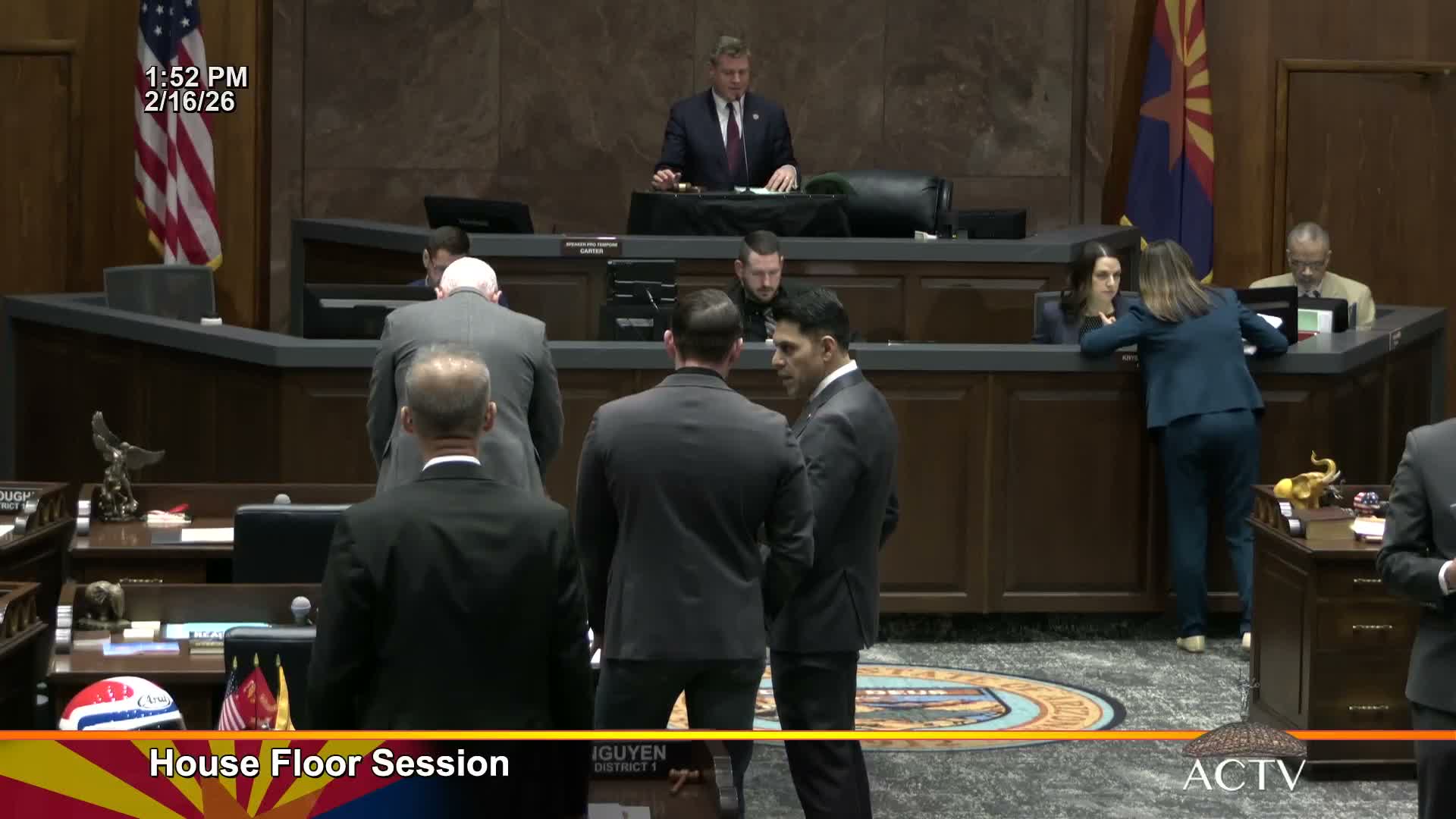
Summary
The Arizona House adopted a ceremonial resolution mourning the Rev. Victor E. Hardy and passed multiple third‑reading bills including measures affecting SNAP, physician‑assistant licensure and health‑care reporting. Several bills prompted extended debate; votes were recorded and measures were sent to the Senate.
The Arizona House opened its floor session with a recorded prayer honoring the Rev. Victor Ellsbury Hardy and unanimously adopted House Concurrent Resolution 2055 recognizing his life and community service. Family members were introduced to the chamber following the measure’s passage.
After procedural business and guest introductions for Early Childhood Day, the House took up a series of third‑reading bills. On HB 2396 — recorded in the session as amending provisions of ARS Title 46, Chapter 2, Article 2 relating to the Supplemental Nutrition Assistance Program — the clerk recorded passage by a vote of 33 ayes, 25 nays and 2 not voting. The bill was signed in open session and conveyed to the Senate.
The House also passed HB 2190 (adding an Article relating to the Arizona Regulatory Board of Physician Assistants) on reconsideration, 45 ayes, 13 nays and 2 not voting. Supporters, including Representative Martinez, framed the bill as recognition of physician assistants’ role in the health workforce: “these folks work really, really hard,” Martinez said while explaining an aye vote. Opponents raised concerns about administrative capacity; Representative Sandoval voted no, saying the physician‑assistant board cannot currently process fingerprint clearance cards that would be required for background checks.
Other measures passed included HB 2796 (relating to the Arizona Health Care Cost Containment System), and a series of Senate‑substituted bills on public assistance and health care that the clerk recorded as passed and prepared for transmittal to the Senate.
Several bills provoked extended floor explanations and contesting viewpoints. Members offered recorded explanations of their votes, discussing practical impacts on rural and tribal communities, hospital operations and state agency capacity. Where members explained their votes, they emphasized local experiences — for example, a representative noted hospitals in Yuma raised the original concerns that informed one bill’s sponsors.
All passed measures from the floor were entered into the journal and instructed to be conveyed to the Senate. The House recessed after announcements and committee scheduling.