
Committee on Taxation hears divided testimony on bill to cap property-tax revenue growth and create $60M relief fund
Get AI-powered insights, summaries, and transcripts
Subscribe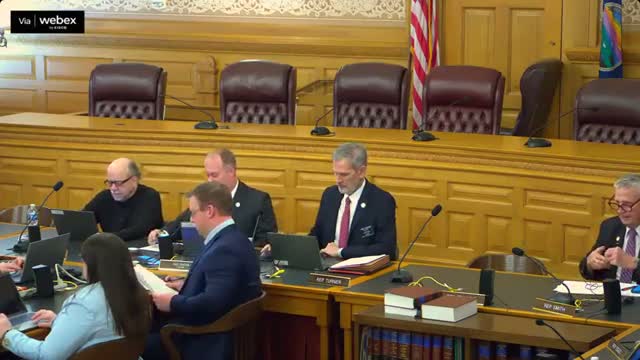
Summary
Lawmakers heard hours of testimony on House Bill 27-45, which would require voter approval for most property-tax revenue increases above 3% and create a $60 million state-funded property tax relief fund; proponents framed it as taxpayer protection, while cities warned it would disrupt budgeting, bonding and services.
The House Committee on Taxation held a hearing on House Bill 27-45, a proposal to require voter approval before most local taxing jurisdictions may increase property-tax revenues more than 3% from the prior year and to establish a state-funded property tax relief fund seeded at $60,000,000.
The bill’s reviser summarized the measure as replacing most elements of the revenue-neutral-rate framework with a 3% property-tax revenue limit, excluding revenues from new construction and voter-approved bond issuances, and continuing a taxpayer-notification-cost fund slated to expire. Kathleen Smith of the Department of Revenue testified that the fiscal note estimates a demand transfer from the State General Fund to the relief fund of roughly $60,000,000 in fiscal 2027, $61,200,000 in fiscal 2028 and $62,400,000 in fiscal 2029.
Proponents told the committee the proposal would provide stability and transparency for households and align with organizational policy. Leah Fleiter of the Kansas Association of School Boards said the bill reduces duplication of notices and hearings for school-district budgets and can lessen public confusion. John Donnelly of the Kansas Farm Bureau and Nathan Kessler of Kansas Action for Children urged the committee to advance the bill; Kessler presented analysis estimating that, had a levy limit been in place since 2014, local property-tax collections in 2024 would have been nearly $900 million lower and the average household would have saved about $717 in that year.
Municipal officials and city associations, however, urged caution and changes. Nathan Eberlein of the League of Kansas Municipalities said the bill “reaches far beyond” accountability goals and would change how cities budget and deliver services. City attorneys and managers from Overland Park, Derby and other cities warned the election timing—calling for voter approval a year before the budget year—would force jurisdictions to make long-range revenue decisions without up-to-date sales-tax and other revenue projections. Mike Koss, city attorney for Overland Park, told the committee that holding an election so far ahead could leave cities bound by decisions made by a prior governing body and deprive officials of crucial revenue data.
Several municipal witnesses said the bill could affect municipal credit and borrowing. Kyle Mangus, city manager of Derby, said the proposal “destabilizes that foundation” of bond markets and could, by introducing legal or practical uncertainty, raise borrowing costs that ultimately increase infrastructure costs for residents. City managers and municipal-utilities representatives asked for explicit exemptions for enterprise funds, obligations tied to outstanding debt and routine financing tools such as industrial revenue bonds and rural-housing incentive districts.
Neutral witnesses and policy groups described trade-offs and suggested design changes. Dave Trabert of the Kansas Policy Institute said his group is neutral but cited a statewide poll showing 82% of Kansans support voter approval of property-tax revenue increases; he recommended clearer scheduling and protections against perverse incentives. The Kansas Chamber and the Kansas Association of Counties urged preserving elements of the revenue-neutral framework, reconsidering special exceptions for debt or new construction, and exploring protest-petition alternatives to special elections.
Committee members pressed witnesses on practical examples of cost-cutting or budget trade-offs. Multiple city managers described measures such as fleet consolidation, fee-based services, delaying hires and targeted rebate programs for low-income households that they said have helped moderate local property-tax growth in their communities.
The hearing closed after more than two hours of testimony and questions; no committee vote was taken on the bill during the session. Chair Smith said the committee would continue work on the legislation in committee deliberations.