
Kansas bill would let domestic-violence survivors challenge and clear ‘coerced’ debts
Get AI-powered insights, summaries, and transcripts
Sign Up Free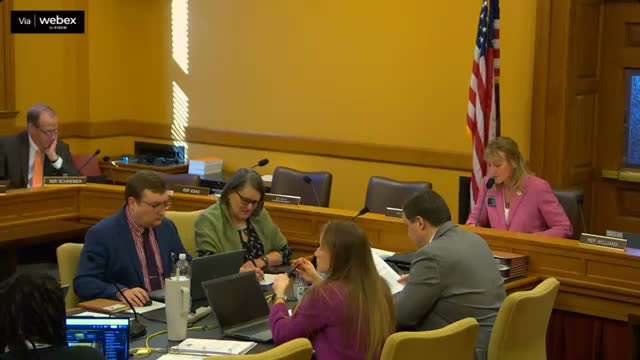
Summary
A bill before the House Judiciary Committee would allow people who incurred debt because of abuse — including identity theft, fraud, duress or coercion — to have that debt treated as ‘coerced,’ require creditors to notify consumer reporting agencies, and offer remedies including shifting collection to identified perpetrators.
Chair Humphries heard testimony Feb. 12 on House Bill 27-54, which Jason Thompson of the Office of Reviser of Statutes described as the “Providing Civil Relief from Coerced Debt Act.” Thompson told the Committee the bill creates four new statutory sections that define coerced debt, set notice and procedural requirements for creditors and credit-reporting, and provide civil remedies for victims.
The bill’s definition of ‘coerced debt’ includes obligations incurred because of identity theft, fraud, duress, intimidation, threat, force, coercion, manipulation, undue influence, misinformation or nonconsensual use of a person’s identifying information, Thompson said. He noted the bill excludes debts secured by real property (for example, mortgages) from the definition.
Andrea Bob Stark, a senior attorney at the National Consumer Law Center, urged lawmakers to advance the measure, saying coerced debt is “a pervasive tool of control in domestic violence, human trafficking, and elder abuse” and that state statutes modeled on the National Consumer Law Center’s work have produced relief for survivors. “This bill is a balanced survivor-centered approach,” Stark said.
Under the bill, Thompson explained, a debtor who submits a ‘statement of coerced debt’ triggers a clock: within 10 business days the creditor must notify any consumer reporting agency to which it furnished adverse information that the debtor disputes that information and claims it is coerced debt. Creditors then have defined deadlines and procedural steps, including a requirement that the State Bank Commissioner produce a standard form for statements of coerced debt in coordination with the National Consumer Law Center model.
Section 4 provides remedies: “A debtor is not liable for a coerced debt,” Thompson said, and creditors remain able to pursue identified perpetrators. The bill includes a private-right-of-action and damages for creditors’ willful noncompliance, including reasonable attorney fees and potentially punitive damages.
Kale Beam of the Kansas Credit Union Association testified as neutral and commended the committee for considering the issue, but raised concerns that the bill’s definitions are broad and that creditor obligations should be tied to an objective trigger such as a court order. Beam said credit unions already unwind debts in cases of confirmed fraud or identity theft but urged clearer procedural safeguards so creditors have predictable obligations.
The Committee did not take a vote on HB 27-54 at this hearing but indicated it would take the measure up for further consideration on Monday. If enacted, the bill would take effect July 1, Thompson said.