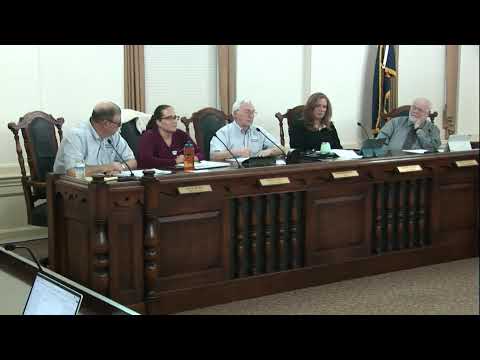
Grand Haven council grants conditioned easement for community solar at airport amid safety, FAA questions
Get AI-powered insights, summaries, and transcripts
SubscribeSummary
The Grand Haven City Council voted unanimously to grant a conditional easement to allow the Board of Light and Power to pursue a community solar installation on a portion of the city airport, contingent on FAA/MDOT approvals, continued planning review and protections related to prior federal grant assurances.
Grand Haven — The City Council voted Feb. 16 to grant a conditional easement enabling the Board of Light and Power (BLP) to pursue design and permitting for a community solar installation on city‑owned airport property, while keeping the project subject to FAA and state approvals.
BLP general manager Rob Sholly told council the proposal targets the westernmost 300 feet of airport property and would start as a roughly 0.3‑megawatt, community‑subscription project with a planned project life of about 20 years. Sholly said the board will not proceed into detailed design or FAA permitting until one‑third of panels are committed by subscribers and the required regulatory approvals are secured. “We need that certainty so we can move forward into the design phase,” he said.
Why it matters: The site lies near aviation safety zones and was acquired with federal funds in part to serve as a clear zone, and airport stakeholders raised concerns about any new obstacles in approach and departure areas. Airport manager Earl Bares and several pilots urged caution, citing federal grant‑assurance obligations and safety standards. “The obligation of the sponsor of the airport is to keep that zone as clear of objects as possible,” Bares said, referencing federal grant assurances. An air traffic controller who called in, Tricia Harold, also emphasized FAA rules and potential additional costs tied to appraisals and compliance.
Council debate centered on that tension. Supporters noted the Sustainability and Energy Commission’s endorsement and the community benefits of providing solar access to renters and shaded properties. The mayor and other council members described an institutional “catch‑22”: BLP needs a council‑level commitment to justify the design costs and FAA submittal, but FAA will not act until design details and a sponsoring commitment exist. “This chicken and egg thing… somebody needs to go first,” the mayor said.
Council members repeatedly stressed that the easement is conditioned on regulatory approvals and that any FAA determination requiring repayment of federal funds or other remediation would prevent the project from proceeding. Sholly said the easement and subsequent approvals would require additional city processes including a special land‑use permit and planning commission review.
The vote: Council approved the easement motion (moved by Doris, second by Calio) by roll call; individual votes were recorded as Fritz: yes; Calio: yes; Lyon: yes; Dora: yes; Maneta: yes.
Next steps: If the BLP proceeds, staff said the utility will prepare design details, seek FAA and MDOT review, and return to the council and planning commission for the remaining conditional approvals. The easement explicitly conditions construction on positive regulatory determinations and compliance with grant assurances.